Digital growth has been fast in the UAE and the GCC. Strong internet, high smartphone use, and government programs support it. This shift creates new mobile chances for many companies. App development is growing across many industries. These include logistics, eCommerce, travel, fintech, and healthcare.
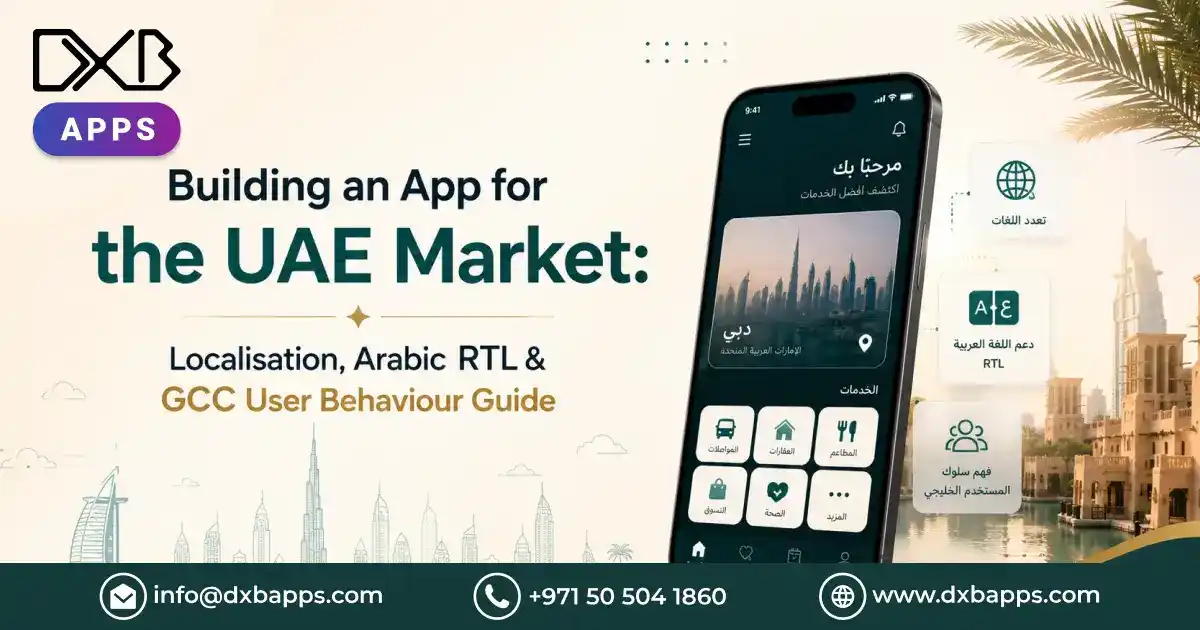
A strong UAE app needs more than basic features. Businesses must meet local user needs and expectations. They must also match local digital habits. App localisation Arabic RTL development is a key success factor. UAE app localization must support Arabic and RTL design. This helps Arabic users move through the app with ease. Without localization, even great apps may struggle to grow.
Understanding GCC user behavior is also critical. UAE users often use apps for shopping and banking. They also use apps for travel booking and daily services. Apps that match these habits can raise engagement. They must also respect culture and language choices.
This guide explains how to design and build apps for the UAE market.
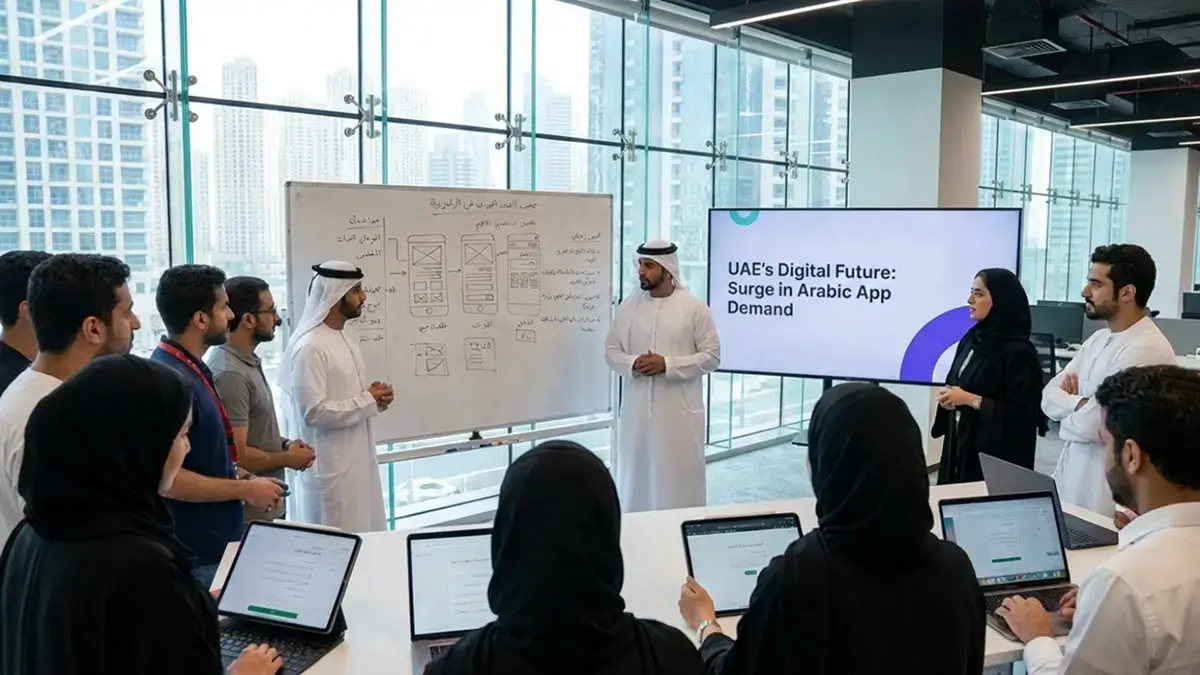
Understanding the UAE and GCC Mobile App Market
High Smartphone Use in the UAE
The UAE has very high smartphone use. Mobile devices are the main way people go online. Many people use phones for shopping, banking, transport, and messaging. This makes mobile apps vital for reach and engagement.
The UAE also has strong digital systems and fast internet. This supports smooth and stable app use. Many businesses now use mobile-first strategies. They do this to meet needs for speed and ease.
Key factors driving mobile use include:
- Very high smartphone adoption across the UAE
- Strong mobile internet access and 5G growth
- User demand for mobile-first digital services
- Rising demand in retail, banking, and services
Growth of the GCC App Economy
The GCC app economy has grown fast in recent years. Governments and businesses are investing in digital change. Digital platforms now matter for service delivery. Mobile apps are often the main user touchpoint.
Many industries now rely on mobile apps. Apps help automate tasks and improve interaction. They also make online tasks easier.
Industries leading mobile adoption include:
- Fintech and payment apps in banking
- Travel and tourism apps for booking and planning
- eCommerce apps for shopping and delivery
- Government apps for public services
This growth drives demand for high-quality GCC apps. These apps should be built with local needs in mind.
Diverse User Groups in the UAE
The UAE has a diverse population. It includes Emirati citizens and many expatriates. This mix creates unique app design needs.
To serve more users, apps should support many languages. They should also use simple layouts for different cultures.
Important considerations include:
- Multilingual support, mainly Arabic and English
- UI that supports RTL and LTR layouts
- Strong accessibility and usability for many users
This helps teams build inclusive apps. It also helps boost adoption across the UAE.
Why Localization Is Essential for Apps in the UAE
What App Localization Means
App localization means adapting an app for a local market. It includes language, culture, and local preferences. An app should feel natural to UAE users. It should not be a word-for-word translation.
Good localization is more than translation. It updates content, layout, design, and user flows. It matches local needs and cultural norms. This makes the app easier to use and understand.
Benefits of Localized Mobile Apps
Localization can improve app success in the UAE. Users trust and use apps more when they feel familiar. Many users also prefer their own language.
Key benefits include:
- Higher engagement with local content
- More trust and stronger credibility
- Better app store results from higher relevance
- Higher adoption for Arabic and expat users
Key Elements of App Localization
To localize an app for the UAE, teams must adjust key parts. These parts shape the UI and core features.
Key localization elements include:
- Arabic and English language support
- AED currency and regional payment gateways
- Local date and time formats
- Local units and address formats
These updates make apps feel built for the UAE. They also improve the user experience.
Arabic Language Integration in Mobile Apps
Importance of Arabic for UAE Users
Arabic is the official language of the UAE. It shapes how many users access digital services. Government services and banks often use Arabic first. Many local businesses also prefer Arabic interfaces. Apps with Arabic support can reach more users. They also create a more inclusive experience.
Arabic support matters for Emirati users and public services. An Arabic RTL mobile app interface shows cultural respect. It also builds trust with Arabic-first users.
Key reasons to support Arabic include:
- Arabic is the UAE’s official language
- Many government services use Arabic
- Arabic improves access for local users
- Local language support boosts trust and engagement
Dual-Language Interface (Arabic + English)
Many top UAE apps support Arabic and English. This serves Emiratis and expatriates. It also supports users from many regions.
Apps should let users switch languages easily. Both languages should have the same features. The experience should feel consistent in both.
Best practices include:
- Easy language switching in settings
- Matching content and features in both languages
- Equal design quality in both versions
Challenges in Arabic App Design
Arabic app design has unique challenges. Arabic reads from right to left. The layout must change to keep reading natural. User flows should also feel correct. Teams must plan for Arabic typography too. The UI should stay clear and balanced.
Common challenges include:
- Arabic text can be longer than English
- Picking readable Arabic fonts
- Fixing alignment for RTL screens
- Adapting icons, menus, and UI for RTL
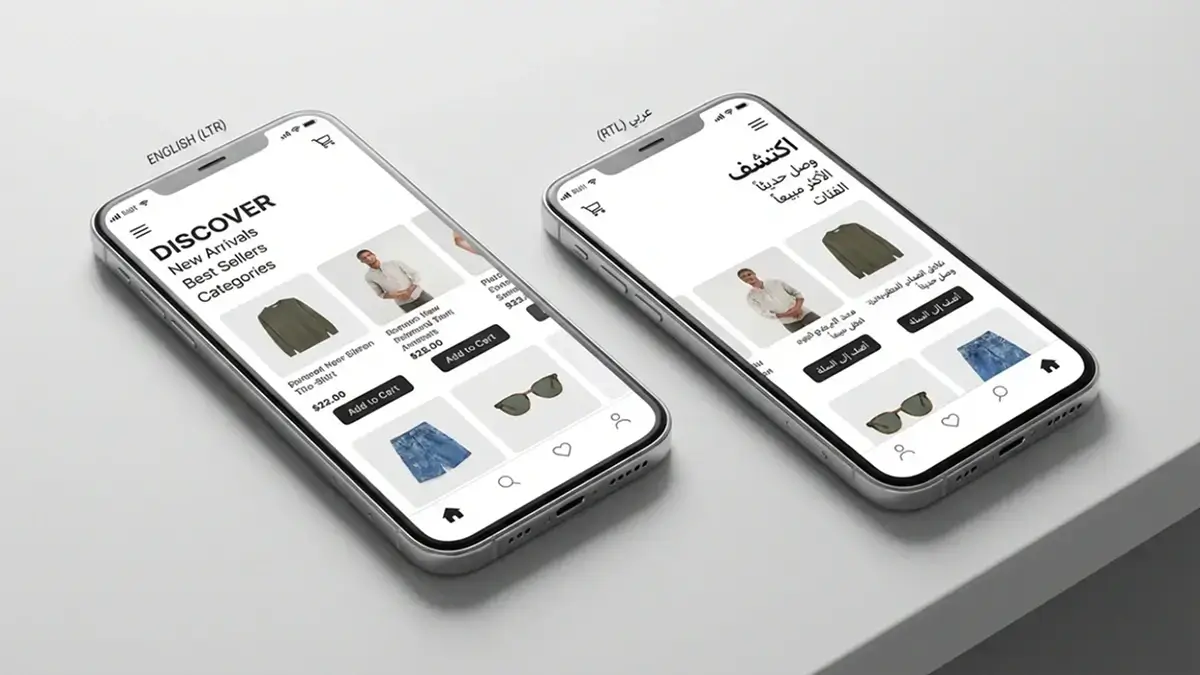
Understanding Arabic RTL (Right-to-Left) Design
What Is RTL Layout in Mobile Applications?
RTL layout supports languages like Arabic. In the Arabic RTL mobile app, content starts on the right. It moves toward the left. This is different from LTR layouts used for English.
When an app supports Arabic, the UI often needs mirroring. This makes menus and content feel natural.
Key differences include:
- Content flows right to left
- Navigation often appears on the right
- Layouts are mirrored for Arabic reading
Key RTL Design Considerations
Good RTL design is more than translated text. The whole UI must follow RTL reading direction. This helps usability and consistency.
Important RTL design points include:
- Mirrored navigation bars, menus, and icons
- Right-aligned text for easier reading
- Correct placement of buttons and controls
- Animations that move right to left
When done well, RTL design feels natural. It also makes the app easier for Arabic users.
Common Mistakes in RTL App Development
Many apps struggle with RTL for one main reason. Teams translate text but keep the LTR layout. This can cause broken screens and confusion. It can also reduce trust and usage.
Common mistakes include:
- Icons stay placed for LTR screens
- UI breaks when text length changes
- Mixed RTL and LTR elements on one screen
- Menus, arrows, and controls are not mirrored
Avoiding these issues keeps the app consistent. It also improves the experience for Arabic users.
GCC User Behaviour and Mobile App Usage Patterns
Preference for Mobile-First Experiences
Mobile-first digital experiences are in high demand of the consumers in GCC region and UAE in particular. Some of the most common functions that are performed daily using Smartphones include online shopping, online banking, online transportation booking, and services. Because of this high reliance on mobile devices, the businesses must ensure that their applications are mobile friendly and fast.
Key characteristics of mobile-first behaviour include:
- Use of smartphones on a massive scale as service and transaction providers.
- Frequent shopping, payment and booking through mobile applications.
- Favoring mobile services that are convenient and fast as compared to the traditional web platform.
Importance of Speed and Seamless UX
The consumers in UAE demand swift functionality of mobile applications and pleasant UAE user experience design. Use of too long loading times, disorientation, or technical problems may force users to leave an app and go to competitors.
An appropriate application ought to be performance-based, designed in a way that it is easy to navigate without any delays during loading so that users are not bored.
Important factors influencing user experience include:
- Quick loading applications with optimized performance.
- Simple and intuitive navigation structures
- Smooth interactions and responsive design
- Reliable functionality without crashes or delays
Trust and Security Expectations
Trust and security are major factors influencing mobile app adoption in the GCC app market. Users expect apps to protect their personal information and provide secure payment systems for transactions.
Businesses must implement strong security measures and build credibility to gain user confidence.
Key security expectations include:
- Secure payment gateways and encrypted transactions
- Protection of personal and financial data
- Preference for trusted brands and verified mobile apps
- Clear privacy policies and secure authentication systems
Meeting these expectations helps businesses build user trust and encourages long-term engagement with their mobile applications.
Payment Preferences in UAE Mobile Apps
Popular Payment Methods
In the UAE, mobile applications should be able to accept the diversity of payment methods to satisfy the users. The population in the area tends to pay online using the digital payment methods to shop, make their bookings, and even make financial transactions. The availability of various methods of payment would contribute to enhanced convenience, and more transactions are likely to be finalized.
In the UAE mobile apps, the most popular ways of payment are:
- Local and international banks have credit and debit cards.
- Fast mobile payment: Apple Pay and Google Pay.
- Online transfers and purchases made with the help of the digital wallets.
- Payment gateways that are popular in the UAE and GCC.
The provision of various payment options will mean that the user has an opportunity to select the one that will best fit their needs.
Cash on Delivery Still Matters
Even with the high rate of development of digital payments, Cash on Delivery (COD) continues to hold a significant position in the UAE payment system especially in eCommerce use. A significant number of users continue to use cash when receiving goods, and in particular, buying on new or unknown sites.
Provision of COD has the potential of assisting businesses to gain trust and customer attraction among those that might be reluctant to use online payment. The latter option is particularly good when it comes to the first-time users who wish to test the quality of the products before paying.
Importance of Secure Payment Integration
The issue of security is very important when payment systems are being incorporated in mobile applications. The UAE users require the apps to have secure and trustworthy payment systems that safeguard their financial records.
Key security measures include:
- PCI compliance to guarantee the handling of payment data in a safe manner.
- Safe payment gateways ensure that details of transactions are safe.
- Powerful authentication systems like OTP check or biometric authentication.
- Coded information processing to ensure information is not compromised.
The introduction of safe payment systems will help establish confidence among users and have a safer digital transaction experience.
Cultural and Design Considerations for GCC Apps
Visual Preferences in GCC Markets
The GCC region users tend to have clean, modern and high class appearances. Minimum clutters, clean designs, and high-quality graphics in mobile apps should be more successful in user interaction and satisfaction. A professional and smooth design can be used to create credibility and to make the user take more time on the app.
The designers must also be keen that the visuals are in line with the local culture and values. All images, icons, and illustrations used should be well chosen in such a way that they are relevant and familiar to the people in the region.
Key design preferences include:
- Clean and modern user interfaces
- Premium visual aesthetics that reflect quality and professionalism
- Culturally appropriate images and graphics
- Balanced layouts with clear visual hierarchy
Color and Branding Considerations
The color used is also relevant to the experience of the visitors of a mobile application. The perception of colors in the GCC region is such that it is trusted, luxurious and professional. A suitable palette of colors could be selected to improve the brand and promote the user experience.
Firms should also avoid photos or branding contents that might either be culturally sensitive or unacceptable to the local environment.
The key factors to be considered are:
- Operating in trust, professionalism and luxury colors.
- Being loyal to the brand all through the app.
- The avoidance of culturally dependent or inappropriate images.
- Development of color schemes that are equally appealing to the eyes and enhance readability.
User-Friendly Navigation
Mobile apps that are created to reach GCC users should have simple and intuitive navigation. The applications must be so created that a user will be able to accomplish tasks fast without getting lost or taking up unnecessary steps.
The well-defined layout and simple onboarding contribute to users getting an immediate understanding of the app and, thus, generates more engagement and a longer retention period.
Best practices include:
- No complex procedures during onboarding that showcase the capabilities of the app.
- Obvious and visible calls to action (CTA) to instruct the users.
- Navigation menus that are easy to follow.
- Very few procedures are needed in order to do important processes like payments or booking.
Mobile App Features Popular in the UAE
AI-Powered Personalisation
AI-powered personalisation is becoming a key feature in many mobile apps across the UAE. By analyzing user behavior and preferences, apps can deliver tailored recommendations and content that improve the overall user experience. This approach helps businesses engage users more effectively and increase customer satisfaction.
Common AI-powered features include:
- Personalized product or service recommendations
- Content suggestions based on browsing or purchase history
- Intelligent search and filtering options
- Customized notifications and promotions
Multi-Language Support
Due to the UAE’s diverse population, multi-language support is essential for most mobile applications. Providing both Arabic and English interfaces ensures that apps are accessible to local Emirati users as well as expatriates from different countries.
Key advantages of the multilingual app Arabic English include:
- Improved accessibility for a diverse user base
- Better engagement among Arabic-speaking and international users
- Wider market reach across the UAE and GCC region
Location-Based Services
Location-based features are widely used in UAE mobile apps, particularly in sectors such as transportation, delivery services, travel, and retail. GPS-enabled functionality allows businesses to provide real-time services and personalized location-based experiences.
Examples of location-based features include:
- Delivery tracking and real-time driver location
- Nearby service recommendations
- Map navigation and route guidance
- Location-based offers and promotions
Integrated Customer Support
Customer support integration is an important feature for mobile apps in the UAE, where users expect quick responses and reliable service. Many businesses integrate support channels directly within the app to provide immediate assistance.
Popular support features include:
- Live chat support within the app
- WhatsApp integration for direct communication
- In-app help centers and FAQs
- Automated chatbots for instant responses
Compliance and Regulations for Apps in the UAE
UAE Data Protection and Privacy Laws
Mobile applications operating in the UAE must comply with regional data protection and privacy regulations to ensure the safe handling of user information. Businesses collecting personal data through apps must follow legal requirements related to data storage, user consent, and data protection practices.
Key compliance considerations include:
- Protecting user personal and financial data
- Obtaining clear user consent for data collection
- Following UAE data privacy and cybersecurity regulations
- Implementing secure data storage and processing practices
Compliance with these regulations helps businesses build trust and avoid legal risks.
App Store and Google Play Compliance
Before launching a mobile app, developers must ensure it meets the guidelines and policies of both the Apple App Store and Google Play Store. These platforms require strict standards related to privacy, content, performance, and security.
Important requirements include:
- Compliance with app store privacy policies and data usage rules
- Transparent terms of service and privacy policies
- Proper testing to ensure app stability and performance
- Adhering to platform guidelines for app functionality and content
Meeting these requirements is essential for successfully publishing and maintaining apps on major app marketplaces.
Security and Authentication Standards
Security is a critical factor for mobile apps in the UAE, especially for apps handling sensitive information such as financial transactions or personal data. Strong authentication methods help protect user accounts and prevent unauthorized access.
Common security measures include:
- Biometric authentication, such as fingerprint or facial recognition
- Secure login systems with multi-factor authentication (MFA)
- Encrypted communication between the app and servers
- Secure password management and account protection
Implementing strong security standards ensures safer user experiences and strengthens the credibility of mobile applications.
Choosing the Right Technology Stack for UAE Apps
Native vs Cross-Platform Development
Choosing the right development approach is an important step when building mobile apps for the UAE market. Businesses must decide whether to develop native apps for each platform or use cross-platform frameworks that allow a single codebase to run on multiple platforms.
Native development involves building separate apps for Android and iOS using platform-specific technologies. This approach typically offers better performance and deeper integration with device features.
Advantages of native apps include:
- Higher performance and faster response times
- Better integration with device features such as camera and GPS
- Improved user experience tailored to each platform
On the other hand, cross-platform frameworks such as Flutter and React Native allow developers to build apps that work on both Android and iOS with a shared codebase.
Benefits of cross-platform development include:
- Faster development timelines
- Reduced development costs
- Easier maintenance across multiple platforms
Cloud Integration
Cloud integration plays a key role in building scalable and reliable mobile applications. Cloud-based infrastructure allows apps to handle large amounts of data, manage user traffic efficiently, and support real-time services.
Key advantages of cloud integration include:
- Scalable backend infrastructure that grows with user demand
- Secure data storage and backup systems
- Faster data processing and real-time updates
- Improved app performance and reliability
API Integration
APIs (Application Programming Interfaces) allow mobile apps to connect with external systems and services. Proper API integration enables apps to extend their functionality and interact with third-party platforms.
Common API integrations for UAE mobile apps include:
- Payment gateways for secure online transactions
- Logistics and delivery systems for tracking shipments and orders
- CRM platforms for managing customer data and communication
- Third-party services such as maps, notifications, and analytics
Integrating the right technologies ensures that mobile apps are flexible, scalable, and capable of supporting advanced digital services.
Testing Apps for the GCC Market
Language and RTL Testing
Language testing is essential when building mobile apps for the GCC region, particularly for apps that support Arabic interfaces and RTL (right-to-left) layouts. Developers must ensure that Arabic text displays correctly and that the interface aligns properly with RTL design standards.
Key aspects of language and RTL testing include:
- Ensuring Arabic translations are accurate and culturally appropriate
- Verifying that RTL layouts function correctly across all screens
- Checking text alignment, spacing, and UI elements after translation
- Confirming that language switching between Arabic and English works smoothly
Device Compatibility Testing
Mobile apps must perform well across a wide range of devices commonly used in the UAE. Since users access apps through different smartphone brands, screen sizes, and operating systems, compatibility testing ensures the app functions consistently across all devices.
Important testing considerations include:
- Testing on popular smartphones used in the UAE such as iPhone and Samsung devices
- Ensuring compatibility with different screen sizes and resolutions
- Verifying performance across multiple Android and iOS versions
- Checking app stability on both high-end and mid-range devices
Performance Testing
Performance testing ensures that the mobile app delivers a fast and reliable user experience. Users in the UAE expect apps to load quickly and function smoothly without delays or crashes.
Key performance testing factors include:
- Fast loading times across different network conditions
- Smooth navigation between app screens
- Stable performance during high user activity
- Efficient handling of background processes and data requests
Thorough testing helps ensure the app performs well for GCC users and provides a seamless digital experience.
Best Practices for Launching an App in the UAE
App Store Optimization (ASO) for UAE Market
App Store Optimization (ASO) is essential for improving the visibility of mobile apps in the Apple App Store and Google Play Store. For the UAE market, apps should be optimized using both Arabic and English keywords to reach a broader audience and increase download potential.Businesses looking to reach regional users should localise app UAE store listings with Arabic language support, local payment options, and culturally relevant content.
Important ASO strategies include:
- Using Arabic and English keywords in app titles and descriptions
- Writing clear and localized app descriptions
- Adding high-quality screenshots and preview videos
- Encouraging positive user ratings and reviews
These steps help improve app discoverability and attract more users from the UAE market.
Local Marketing Strategies
Launching a mobile app in the UAE requires marketing strategies tailored to the region’s digital landscape. Social media platforms play a major role in promoting apps and engaging potential users.
Effective marketing approaches include:
- Promoting apps on popular UAE social media platforms such as Instagram, TikTok, LinkedIn, and Snapchat
- Collaborating with local influencers and digital creators
- Running targeted digital advertising campaigns
- Creating localized content that appeals to GCC audiences
These strategies help businesses reach the right audience and increase app downloads after launch.
Continuous Updates and User Feedback
Successful mobile apps require ongoing improvements even after launch. Regular updates ensure that the application remains secure, functional, and aligned with user expectations.
Key practices include:
- Monitoring user reviews and ratings in app stores
- Fixing bugs and improving performance through regular updates
- Introducing new features based on user feedback
- Enhancing security and compatibility with new operating system updates
Continuous improvement helps maintain user satisfaction and ensures long-term success for mobile applications in the UAE market.Ensuring Dubai app compliance is essential for businesses launching mobile applications in the UAE, as it helps meet local regulations related to data privacy, security, and digital services.
Why Do Businesses Choose DXB APPS for Mobile App Development in the UAE?
Businesses searching for the best app development companies in Dubai often look for a partner that combines technical expertise, modern design, and reliable support. DXB APPS stands out by delivering scalable Android, iOS, and cross-platform applications tailored to different industries.
With a strong focus on performance, security, and user experience, DXB APPS helps startups and enterprises turn innovative ideas into high-quality mobile applications for the UAE’s rapidly growing digital market.
Deep Understanding of GCC Market Behaviour
DXB APPS being the best mobile app development agency in Dubai has strong experience building applications for businesses operating in the UAE and wider GCC region. The team understands regional user preferences, mobile usage patterns, and customer expectations. This knowledge helps create mobile apps that align with how users in Dubai and the GCC interact with digital platforms.
Expertise in Arabic Localisation and RTL App Design
DXB APPS being one of the top app development companies in Dubai specializes in building apps that support Arabic language localisation and Right-to-Left (RTL) layouts. DXB APPS as top app development companies in Dubai ensures that both Arabic and English interfaces maintain consistent design, smooth navigation, and accurate content alignment to deliver an optimal user experience.
Integration of Regional Payment Systems
Mobile apps built by DXB APPS, a best mobile app development company in Dubai, support popular payment options used in the UAE and GCC. These include credit and debit cards, Apple Pay, Google Pay, and regional payment gateways, ensuring secure and convenient transactions for users across different industries such as eCommerce, travel, and fintech.
Scalable and Secure Mobile App Architecture
DXB APPS is one of the best android app development company in Dubai that develops high-performance mobile applications using modern technologies and scalable architecture. As one of the top mobile app development companies in Dubai, we focus on security, performance, and long-term scalability so businesses can confidently grow their digital platforms while maintaining reliable and secure user experiences.

Conclusion
Building a successful mobile application for the UAE market requires more than just strong technical development. Businesses must focus on localisation, Arabic RTL (right-to-left) support, and a clear understanding of GCC user behaviour to create apps that feel natural and accessible to regional users. From language preferences to cultural design considerations and mobile-first usage patterns, adapting an app to local expectations significantly improves user engagement and adoption.
Apps that are designed specifically for the UAE and GCC market tend to perform better than generic applications because they address the needs of local users more effectively. By partnering with experienced mobile app developers in the UAE, businesses can ensure proper localisation, secure integrations, and a user experience tailored to regional audiences, helping them achieve a stronger and more successful entry into the competitive digital market.
FAQS
Why is localisation important for mobile apps in the UAE?
Localisation ensures that the app language, design, and content match the expectations of UAE users. This improves user experience, builds trust, and increases engagement in the regional market.
What is Arabic RTL in mobile app development?
Arabic RTL refers to designing the app interface to support right-to-left reading and navigation. This includes mirrored layouts, right-aligned text, and proper icon placement for Arabic language users.
Do apps in the UAE need to support Arabic?
Yes, most successful apps in the UAE support both Arabic and English. Providing Arabic support improves accessibility and ensures compliance with local market expectations.
What payment methods should UAE mobile apps support?
Apps should support credit cards, digital wallets like Apple Pay and Google Pay, regional payment gateways, and sometimes cash on delivery for eCommerce platforms.
How can businesses optimize their apps for GCC users?
Businesses should focus on localisation, fast performance, strong security, culturally relevant design, and seamless payment systems tailored to GCC user behaviour.
What industries benefit the most from mobile apps in the UAE?
Industries such as fintech, eCommerce, travel, healthcare, logistics, and government services benefit significantly from mobile applications in the UAE.