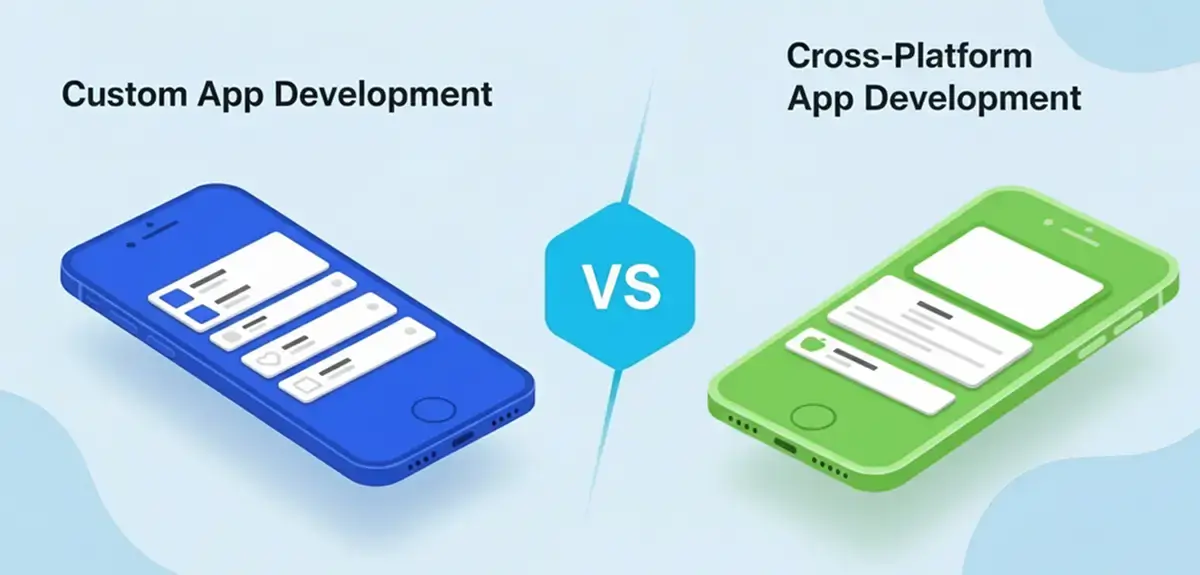
Custom application development is better in performance, security and customization, it is costly and time consuming. Cross-platform development is cheaper, faster and involves a single codebase that can be used across multiple platforms but may be restricted in terms of hardware and performance.
Custom app development works best when a business needs high performance, custom features, and long-term scaling. Cross platform app development works best when a business wants a faster, lower-cost app for many platforms.
Custom apps: Performance, security, and full customization. Cross-platform apps: Faster launch, lower cost, and wider platform reach.
Key Takeaways:
- Custom Apps are very fast, secure and can be customized but more expensive and require more time to build.
- Cross-Platform Apps offer savings on costs and accelerated development using a single codebase at the expense of performance.
- Custom apps are more costly, whereas cross-platform apps save money with common code.
- Cross-platform apps accelerate the process since custom apps require time.
- Custom applications are ideal in their scaling and cross-platform is ideal in the ease of needs.
- Custom apps are better in terms of UX, whereas cross-platform can have a poor UI.
Introduction to App Development Approaches
In the fast-changing mobile app environment, choosing custom or cross platform app development can shape your business success in 2026. The global mobile app market may pass $900 billion, and smartphone use keeps rising. As businesses need smarter apps and faster delivery, Flutter and React Native can help. They may let you reuse at least 70 percent of your code. This can cut time and cost by about 30 to 40 percent. It also offers near-native performance for most common use cases.
However, custom app development still offers the best hardware access and speed. It can also deliver the best user experience. This is most true for native apps written in Swift or Kotlin. The choice between native vs cross-platform apps depends on goals, budget, and timeline. By reviewing trends, benchmarks, and costs, businesses can make an informed choice. This can add more value and efficiency to their mobile presence in a growing digital market.
What is Custom App Development?
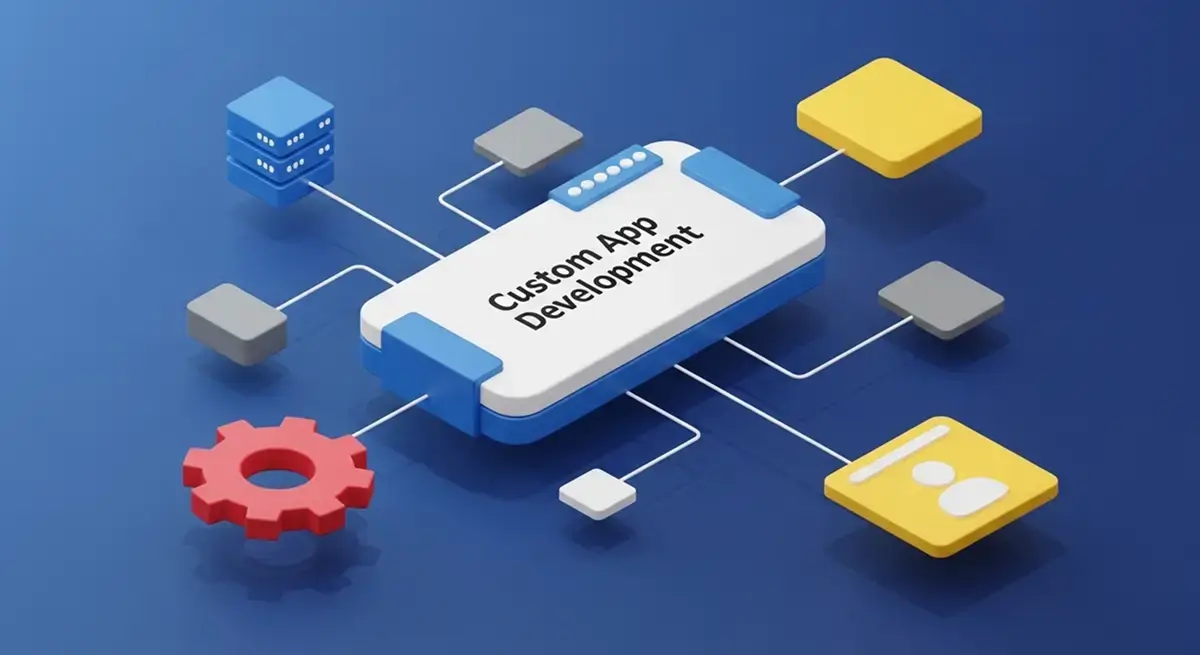
Custom app development is the process of building an app for a specific business or user need. Unlike off-the-shelf apps, custom apps focus on a small set of goals. They can offer unique features, stronger security, and better integration. This helps when a team needs a special app for work or user interaction.
Custom apps are often platform-specific, like iOS or Android. They use platform tools that support strong performance and good UX. This gives full control over features, design, and user flows. It also helps match business goals with the product vision.
Key Features
Fully Customized Functionality
Custom mobile app development services let you build features for exact business needs. This can include custom workflows, unique UI, and system integrations. It helps the app add value at each step of the user journey.
Platform-Specific Performance
With custom app development services, you can build for iOS or Android directly. You can use platform features to improve speed and user experience. It also supports better use of device hardware and system services.
High Security and Scalability
Security is a key part of any custom app development plan. Custom apps can use strong security rules, encryption, and tailored updates. They can also scale as the business grows and needs change.
Custom iOS App Development
If you target iPhone or iPad users, custom iOS app development may be best. iOS apps use Swift or Objective-C for strong performance and stable behavior. They integrate well with Apple services and device features. Examples include Face ID, camera tools, and device-to-device connections. This approach supports unique, high-performance apps for Apple platforms.
Role of Mobile App Developers
Mobile app developers help turn a custom app development idea into a real product.
- They handle coding, integration, testing, and performance tuning.
- They work with teams to turn needs into working app features.
- They help pick tools, including app development frameworks, based on goals.
- They weigh trade-offs in native vs cross-platform apps for each project.
- They use custom software solutions to improve business efficiency.
- They build for iOS, Android, or both, based on user needs.
- Custom app development services can help businesses keep up with change.
What is Cross-Platform App Development?
Cross-platform app development creates a single app, which is compatible with both iOS and Android. It has one codebase to minimize effort and cut costs. The app is written by the developers and implemented on various platforms. It is also useful in maintaining similar user experience.
Key Features
Single Codebase
Cross-platform development uses one codebase for iOS and Android. This reduces duplicate work and makes maintenance simpler. Teams can ship updates in one place for faster rollouts.
Faster Development
Shared code and reusable parts can speed up development. This supports faster launches and better use of team time.
Reduced Costs
One shared app can reduce the need for separate platform teams. This can lower build and maintenance costs over time.
Popular Frameworks
Flutter
Flutter is made by Google and uses the Dart language. It supports fast builds and strong performance across platforms. It is a good fit for rich, responsive app designs.
React Native
React Native is made by Facebook and uses JavaScript with React. It uses native parts and supports code reuse across platforms. It often delivers strong performance for many app types.
Xamarin
Xamarin is based on the C 5.Application development software framework. It is capable of targeting iOS, Android, and Windows using identical code. It has powerful tooling of custom features and continued maintenance.
The teams can balance trade-offs with frameworks such as Flutter, React Native or Xamarin. They are able to align cost, time, and performance to the general business objectives.

Custom vs Cross-Platform App Development
| Feature | Custom App Development | Cross-Platform App Development |
|---|---|---|
| Performance | High | Moderate |
| Cost | High | Low |
| Development Time | Longer | Faster |
| Code Reusability | No | Yes |
| User Experience | Best | Good |
Key Takeaway
Companies have to balance their priorities and requirements to select the most suitable type of development to be applied either through the custom app development or the cross-platform app development. Both custom application development is the most performant and user-friendly, but more expensive and time-consuming to develop.
Conversely, cross-platform app development offers a more affordable and quicker solution with an average performance, suitable to businesses that want to expand its reach to a wider audience using a similar codebase. This move must be in line with your mobile app development strategies, considering such aspects as budget, schedule, and platform-specific features. The knowledge of trade offs between native vs cross platform apps will enable you to choose the app development approach that suits your project.
Advantages of Custom App Development
1. High Performance
The development of a custom application provides high performance through optimizing the application to the target platform. In contrast to cross-platform applications, the custom software solutions are built to use the full capabilities of a device hardware and make them operate quickly and smoothly.
2. Strong Security
In custom application development, companies are able to incorporate customized safety protocols like data encryption and authenticated access. A custom mobile app development company would have high security of sensitive data and therefore suits such industries as finance and healthcare.
3. Scalability
Custom applications are developed by top mobile app developers to expand with your company. They are scalable and can be easily expanded to accommodate more users, data, and functionality. This is because custom apps are a great option to companies with long-term objectives.
4. Custom UX/UI
Mobile applications can be developed by the company as a bespoke app, which can be customized to a specific UX/UI design that improves the user experience. An interface designed by a custom app development company will help in improving user engagement and satisfaction, as it would be in line with your brand.
Partnering with a custom app development firm and implementing mobile app development strategies can enable a business to create high performance, secure, scalable and user friendly apps that are specific to a business.
Advantages of Cross-Platform App Development
1. Cost Efficiency
Cross platform app development applies one codebase to both iOS and Android, and this saves on development and maintenance. Hybrid app development enables companies to target more customers without having to have different teams on each platform.
2. Faster Development
Cross-platform apps development has the benefit of enabling developers to create apps across platforms at the same time, accelerating the creation of apps. This is best suited when the business wants to launch in the market at a fast rate.
3. Easy Maintenance
Cross platform apps are also easier to maintain because updates are done on a single codebase and it is more efficient and cost effective compared to managing different native apps.
With the cross-platform app development, businesses can enjoy cost-effectiveness, expedited application development, and simple maintenance through app development frameworks and appropriate app development approaches.

Disadvantages of Custom App Development
Key Limitations
In the case of native vs cross-platform apps, companies are to consider whether the benefits of a custom solution exceed the extended development time and increased cost of the development.
- Expensive: Custom applications will be very expensive since every application is built on a particular platform hence making it costly to develop.
- High Cost: Custom apps will be highly costly because each application is developed on a specific platform, which increases the cost of development.
- More Resources and Time to develop: Custom apps are more difficult to develop because they are designed to work on specific devices and operating systems using more resources and effort.
- Development on multiple platforms: Multiple platform development implies that each platform has to be developed separately, and thus incurs greater maintenance and time expenses, which may affect business agility.
Among the core aspects to be considered when choosing between native vs cross-platform apps, businesses ought to examine the benefits of custom solutions and compare them with longer development and greater costs.
Disadvantages of Cross-Platform App Development
Key Limitations
- Limits to Performance: Cross-platform apps may not be developed as effectively as native apps due to the separation between the code and hardware. This has the ability to impact speed and responsiveness, particularly with intensive apps.
- Reduced Hardware Access: In comparison to the custom applications, cross-platform applications might experience restrictions regarding the access to some device specific features and hardware elements, which affect their functionality and user experience.
- UI Inconsistencies: Overall, despite the application of hybrid app development frameworks, cross-platform applications do not always provide a consistent or native-like user interface across different devices, which leads to a weaker user experience.
Being aware of the app development frameworks and the mobile app development plans of the two approaches, the business can make the trade-offs and come up with the most appropriate solution that suits their needs.
When to Choose Custom App Development?
The custom app development services are suitable to those businesses that need applications of high performance, security and scalability. Consider it when:
- Complex Features: Your app needs complex functionality or hardware integration.
- Scalability: When your application requires your company to expand.
- Brand Identity: To develop an original, branded user experience.
- Security Needs: In case of industries that are intensive in security, such as healthcare or finance.
A custom mobile app development company will be able to design something that fits your requirements and business objectives.
When to Choose Cross-Platform Development?
Cross-platform app development is the best in moments when you should release in a short time and with low cost. Select this alternative when:
- Reduced Time to Market: To develop and release on several platforms at the same time.
- Budget Constraints: You have to save on development expenses using one codebase.
- Basic Capabilities: Basic capabilities are needed by apps that do not need advanced capabilities or access to in-depth hardware.
- Unity on Both Platforms: To offer a similar experience both on iOS and Android.
Through app development approaches such as hybrid app development, companies will save money and time and reach out to more people.
Cost Comparison
Cost Factors
When comparing custom app development and cross-platform app development, key cost factors include:
- Development Team: Custom apps require specialized teams, increasing costs.
- Design and UX: Custom apps have higher design costs; cross-platform apps reuse elements.
- Development Time: Custom apps take longer, while cross-platform apps are faster.
- Maintenance: Custom apps require separate updates, increasing maintenance costs.
Understanding mobile app development strategies and app development approaches helps businesses estimate costs.
Mobile App Development in UAE
Mobile App Development Dubai
Mobile app development in Dubai is growing, with top mobile app development companies in UAE offering custom and cross-platform solutions.
Mobile App Development Abu Dhabi
Mobile app development Abu Dhabi provides local expertise for businesses needing tailored apps across iOS and Android.
Why Choose DXB APPS?
Key Strengths
DXB APPS stands out as a leading custom mobile app development company in UAE, offering cutting-edge solutions tailored to your business needs. Their deep expertise in mobile app development Dubai and mobile app development company in Abu Dhabi ensures high-quality, scalable, and secure apps that align with your business goals. By leveraging the latest app development frameworks the team delivers apps with superior performance and user experience.
Services Offered
DXB APPS provides a range of custom app development services to help businesses across various industries succeed in the digital world. Their services include:
- Custom Mobile App Development: Tailored mobile app development strategies, for iOS, Android, and cross-platform apps.
- UI/UX Design: Creating intuitive, user-friendly interfaces.
- App Maintenance & Support: Ensuring long-term performance with continuous updates.
- Consulting: Strategic advice on app development and market integration.
Whether you're looking for mobile app development in Dubai or Abu Dhabi, DXB APPS offers top-tier solutions to elevate your business.
How to Choose the Right Approach?
Choosing the right app development approach depends on your business goals, budget, and timeline. Here's a decision checklist to guide you:
Decision Checklist
- Custom App Development is ideal for businesses that need tailored functionality, high performance, and advanced security. This approach is best when your app requires deep integration with device features and aims to provide a unique user experience.
- Cross-Platform App Development is suitable for businesses seeking faster time to market and cost-efficiency. This approach works well if you need to target multiple platforms with a single codebase, but are willing to compromise on certain hardware access and performance.
Consider your app’s specific needs, required features, and the trade-offs between cost and customization when making your decision.
Future Trends in App Development
The world of app development is constantly evolving, with new technologies and frameworks shaping the future. Here are some key trends to watch out for:
Key Trends
- Cross-Platform App Development continues to rise in popularity due to its ability to streamline development across platforms. Frameworks like Flutter and React Native allow developers to create high-performance apps for iOS and Android with a single codebase, improving efficiency and reducing costs.
- Custom App Development remains a top choice for businesses looking to provide a unique and highly optimized user experience. As user expectations rise, custom solutions will remain essential for companies that need advanced functionality and specialized features.
- Hybrid App Development is gaining momentum as businesses seek flexible solutions that combine the best of both worlds offering the efficiency of cross-platform development with the performance benefits of native apps. These apps are built using web technologies but wrapped in a native shell, providing a consistent experience across platforms.
Understanding these trends will help businesses make informed decisions about their mobile app development frameworks, ensuring they stay ahead in a competitive market.

Conclusion
When choosing between custom app development and cross-platform app development, businesses must weigh their unique needs, budget, and timeline. Custom app development offers high performance, security, and a tailored user experience, but at a higher cost and longer development time. On the other hand, cross-platform app development provides a cost-effective, quicker solution with a single codebase, but may come with some performance and hardware limitations. The right choice depends on the specific requirements of your business, and collaborating with a mobile app development company can help guide this decision to ensure a successful app.
FAQ
Which is better: custom or cross-platform app development?
It depends on your needs. Custom app development is better for high-performance, security, and unique features, while cross-platform app development is ideal for faster, cost-effective solutions with a broader reach across platforms.
Is cross-platform cheaper than custom development?
Yes, cross-platform development is generally cheaper since it uses a single codebase for multiple platforms, reducing development time and costs compared to building separate custom apps for each platform.
What are hybrid apps?
Hybrid apps are a type of cross-platform app development that combines elements of both native and web apps. They use web technologies (like HTML, CSS, and JavaScript) and run inside a native container, enabling them to be deployed across multiple platforms with a single codebase.