Key Takeaways
- Modern healthcare improves with apps that support care, access, and daily use.
- Security and compliance protect patient data, including HIPAA and GDPR, and build trust.
- AI, IoT, and telemedicine are shaping the future of healthcare apps.
- Pricing depends on complexity, from simple apps to large enterprise systems.
- A clear plan, from validation to scaling, helps you build an effective app.
Healthcare is rapidly undergoing digital transformation, with mobile applications playing a pivotal role in enhancing accessibility, improving efficiency, and delivering better patient outcomes. Healthcare app development is changing patient and provider connections. It makes care more personal and easier to reach.
But a healthcare app is not a basic mobile app. It needs strict compliance with health laws. It also needs strong data security. It must use a user-first design that builds trust. In today’s digital health world, mobile apps are essential. They boost patient engagement and improve clinic workflows. Some apps support urgent and life-saving care.
Healthcare apps are central to modern care delivery. You may be building your first app. You may be upgrading an existing one. In both cases, you need to understand the process. You also need to know what is possible. This guide covers healthcare app development in 2026. It includes trends, compliance needs, and proven strategies. It helps you build secure and high-performing apps. It also helps you build apps that are easy to use.
What is Healthcare App Development?
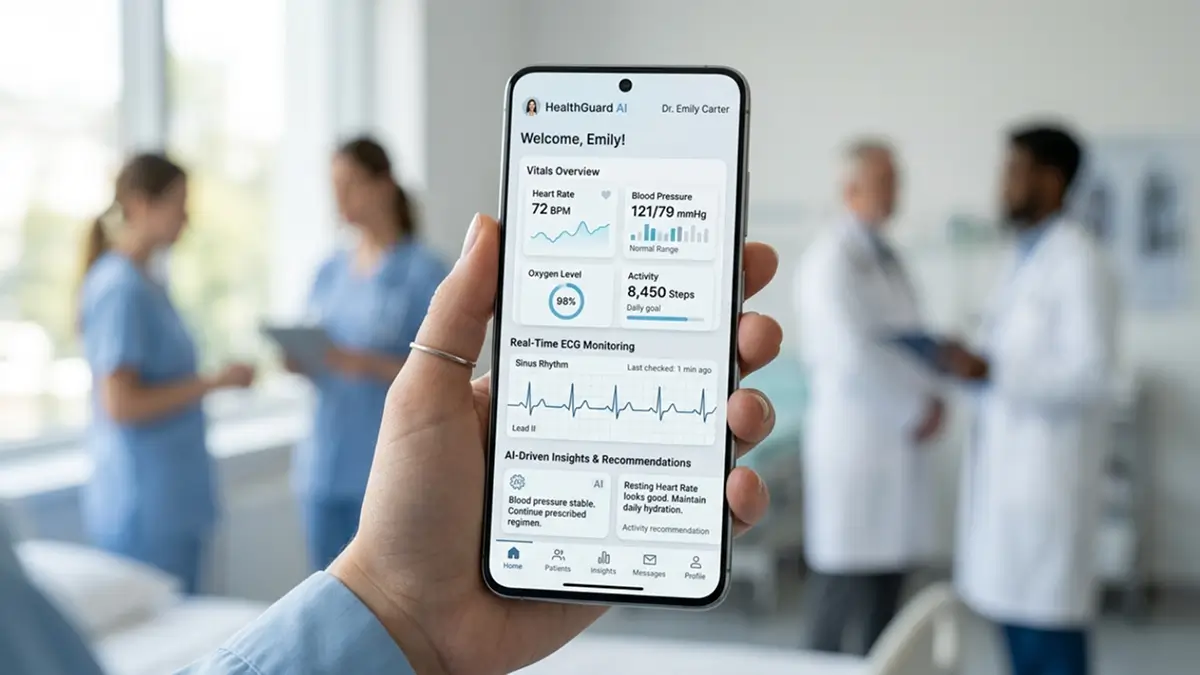
Healthcare app development is the process of making healthcare apps. These can be mobile apps or web apps. They are built for the healthcare industry. These apps support patients, providers, and healthcare groups.
They improve access to care and communication. They also help streamline medical tasks. At its core, this blends tech and medical knowledge. It also follows strict health rules. The goal is secure, reliable digital health tools.
Types of Healthcare Apps
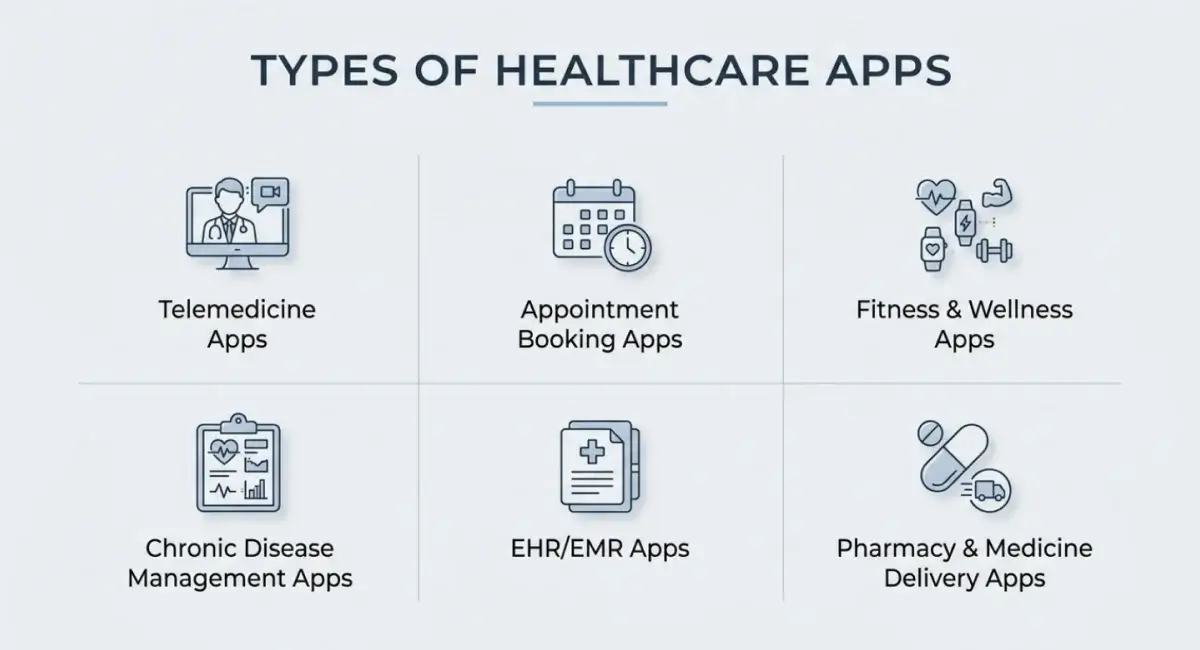
Healthcare apps come in many types. Each type supports a specific healthcare need. They can improve access and reduce delays. They can also improve clinical efficiency.
Telemedicine Apps
Telemedicine apps are common today. Their use grew with digital healthcare. These apps let patients have video visits with doctors. This reduces the need for in-person visits.
They support remote diagnosis and treatment plans. They also support follow-up after visits. This helps people in rural areas get care. It also helps people with limited mobility. Many telemedicine apps include chat support. They can also provide online prescriptions. They should support secure data transfer.
Appointment Booking Apps
Appointment booking apps make scheduling easier. Patients can book, change, or cancel visits in the app. They do not need to call a clinic.
These apps can send automatic reminders. This helps reduce missed appointments. It also improves clinic efficiency. Many apps connect with hospital systems. They show real-time provider availability. This makes scheduling easier for everyone.
Fitness & Wellness Apps
Fitness and wellness apps support prevention. The DHA healthcare app guidelines help users build healthier habits. They may include activity tracking and calorie tracking. They can also offer guided workouts.
Many apps also support mental health. They may include meditation and stress relief tools. They can help support anxiety and well-being. These apps promote long-term health goals. They can also lower chronic disease risk.
Chronic Disease Management Apps
These apps help patients with long-term conditions. Common examples include diabetes and heart disease. They track key health measures over time.
Users can track blood sugar and blood pressure. They can also track heart rate and other vital signs. Medication reminders help users follow treatment plans. Data insights help patients and doctors make better decisions.
EHR/EMR Apps
EHR and EMR apps store medical records digitally. They allow secure access to medical history. They also support secure sharing between providers. These MOHAP compliance UAE apps improve care coordination across teams. They can reduce errors from missing data. They can also improve treatment outcomes.
Pharmacy & Medicine Delivery Apps
Pharmacy apps let users order medicine online. Patients can upload a prescription in the app. They can also browse and order approved medicines. Many apps offer home delivery. They may include dosage instructions and refill reminders. Some also let users chat with a pharmacist.
Key Features of a Successful Healthcare App
A strong healthcare app needs more than basic tools. It should feel smooth, safe, and easy to use. It should work well for patients and providers. It should also support admins who manage the system.
The best apps combine core, advanced, and admin features. This mix supports efficiency, engagement, and trust.
Core Features
These features form the base of most healthcare apps.
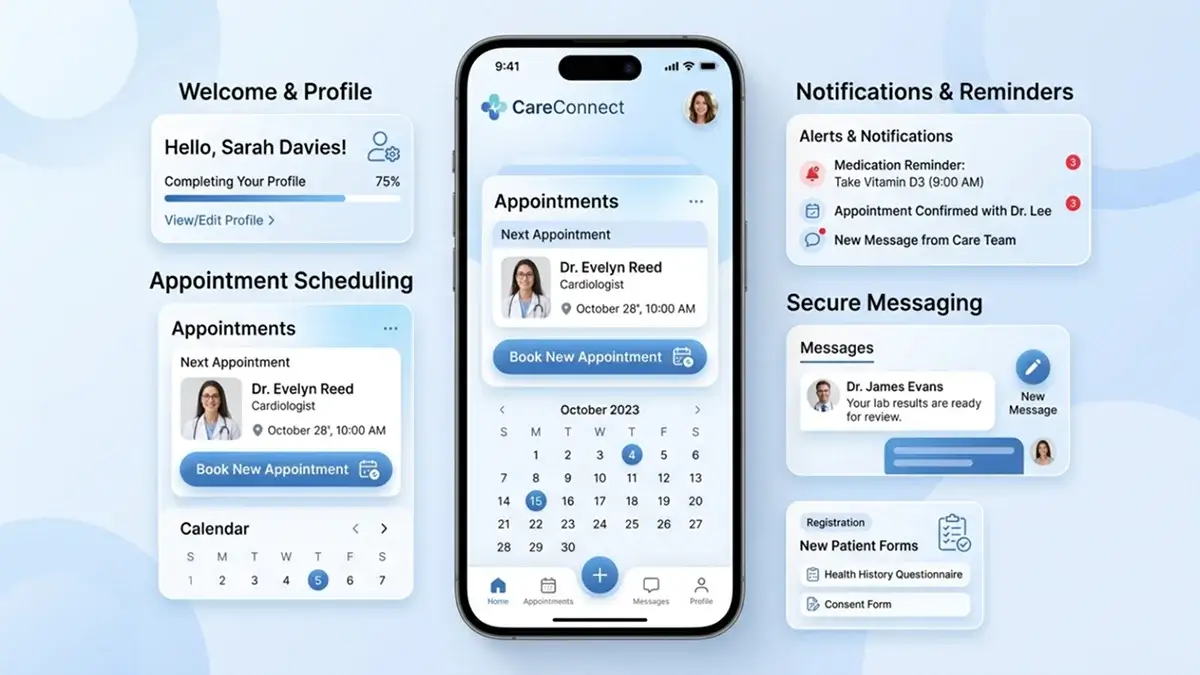
User Registration & Profiles
Onboarding should be secure and simple. Users should be able to create a personal profile. Profiles can store medical history and preferences. They can also store contact details. This supports more personal care.
Appointment Scheduling
Users should be able to book and manage appointments. They should be able to reschedule or cancel easily. Real-time availability improves convenience for users. Calendar sync can also reduce missed visits.
Notifications & Reminders
Automated alerts help users stay on track. They can remind users about appointments and medications. They can also remind users about checkups. This helps reduce missed visits.
Secure Messaging
Secure messaging should use encryption. It lets patients and providers share updates privately. It also lets users ask questions and get guidance.
Advanced Features
Many healthcare apps now use advanced tech. These features help apps stay competitive in 2026.
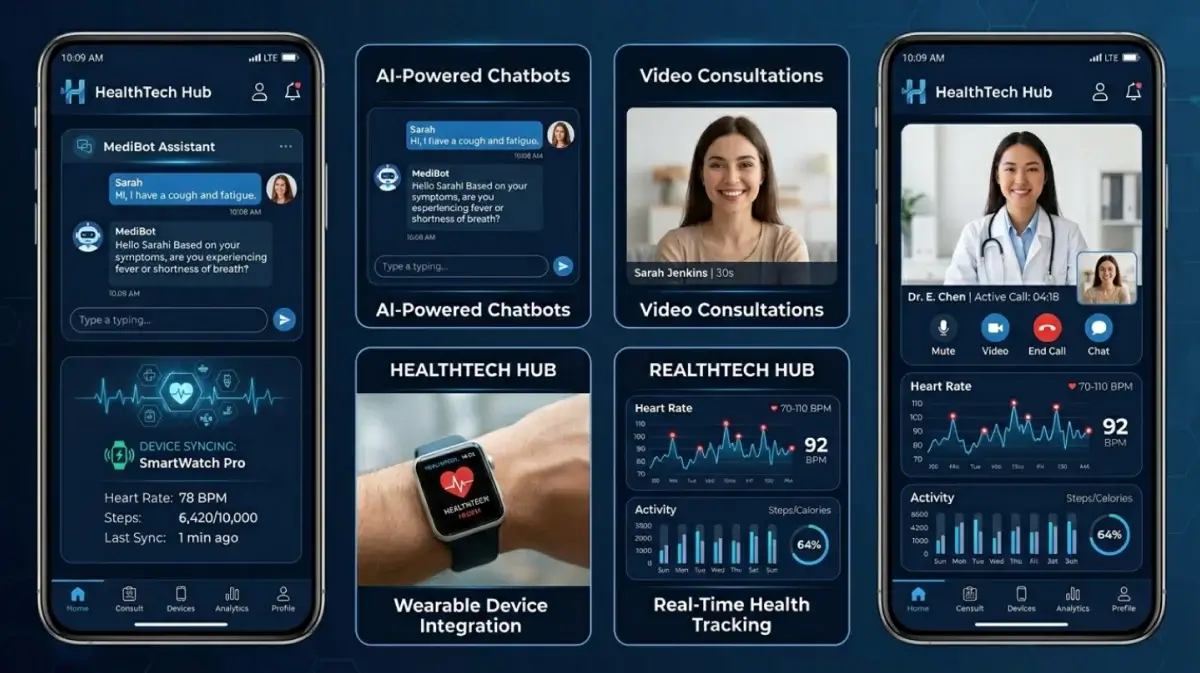
AI-Powered Chatbots
Chatbots can answer common questions quickly. They can guide users through symptoms. They can also help with booking an appointment. This reduces staff workload.
Video Consultations
In-app video calls support virtual visits. They allow real-time care from home. This improves access without travel.
Wearable Device Integration
Apps can connect to smartwatches and fitness bands. This supports automatic health data tracking. Common data includes heart rate, steps, and sleep.
Real-Time Health Tracking
Continuous tracking can monitor vital signs. It gives fast insights to users and doctors. This supports proactive and preventive care.
Admin Panel Features
Admin tools help manage the platform. They also help keep the system stable and secure.
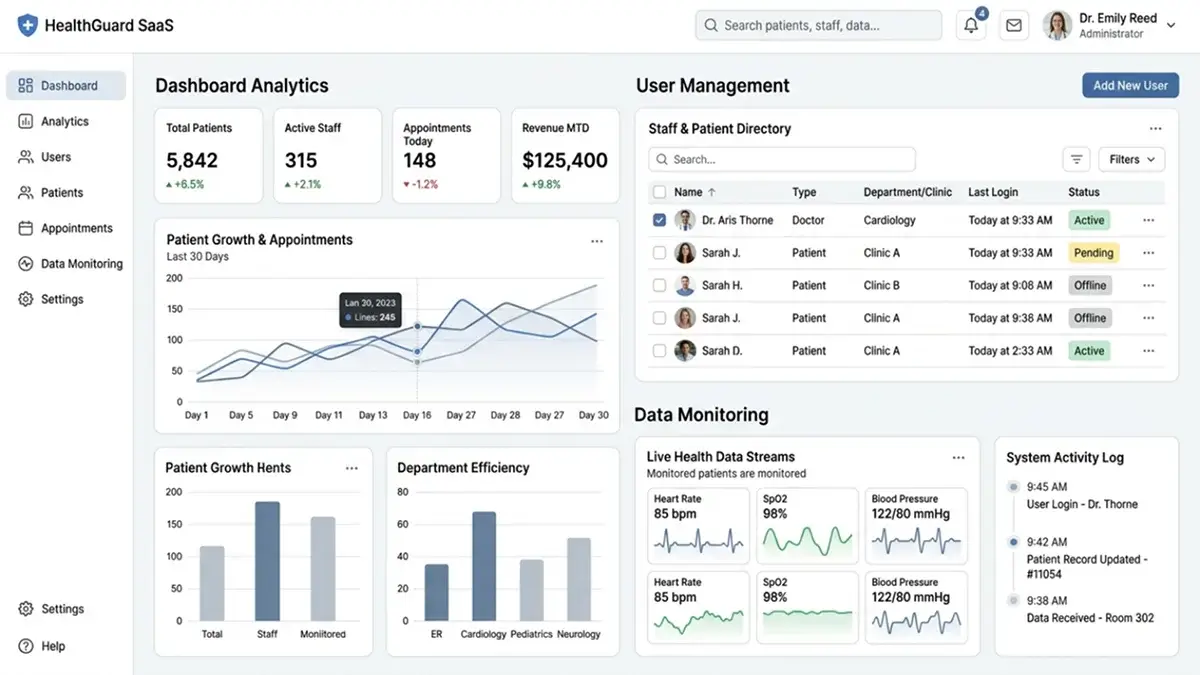
Dashboard Analytics
Dashboards show key app metrics. They can show user activity and appointment trends. They can also show system performance. This supports better decisions.
User Management
Admins need tools to manage accounts. They manage patient and doctor profiles. They also manage roles and permissions. This keeps access organized and secure.
Data Monitoring
Admins must monitor stored health data. Data must stay secure and compliant with health laws. Monitoring helps protect data integrity and privacy. These features support a complete healthcare app. They improve patient experience and clinical results. They also help streamline healthcare operations.
Step-by-Step Healthcare App Development Process
If you’re wondering how to develop a healthcare app in UAE, start by focusing on regulatory compliance, secure data handling, and partnering with an experienced local development team to build a scalable, user-friendly solution. Below mentioned is step by step process:
Step 1: Planning – Define Goals, Users & Features
A plan is the key to any successful healthcare app. Determine the purpose of your app, who you are targeting and the main capability of the app you need to accomplish to avoid unnecessary costs to be incurred in future.
Define Purpose & Audience
Knowledge: Decide whether your application is patient-based, healthcare provider-based or both. Solve a specific problem that should be addressed, such as the decrease in missed appointments, telehealth communication, or remote monitoring.
Market & Competitor Research
Observe the apps in the options of Google Play Store and Apple App Store. Check the user comments and find a way to spot a gap, such as missing integrations, user experience, and an unproductive workflow.
Wireframes & Data Models
Draw up the layout of your app and how information will be organized (patients and appointments, medical records). Programs such as Figma and Balsamiq are useful in picturing the app prior to the development.
Step 2: Choose Development Method
The top Healthcare App Development Company uses the advanced app development approach that affects cost, performance, and scalability.
Native Apps
Built specifically for iOS or Android using platform-specific languages.
- High performance and full device integration
- Higher cost and longer development time
Web Apps
Browser-based applications accessible on any device.
- Cost-effective and quick to deploy
- Limited offline functionality and device access
Hybrid Apps
Built using frameworks like React Native and Flutter.
- Single codebase for multiple platforms
- Moderate performance compared to native apps
No-Code Development
Platforms like Knack allow rapid development without coding.
- Faster launch and lower cost
- Best suited for workflow-based and administrative apps

Step 3: Build & Test – Ensure Compliance
This phase is about developing a practical, safe and easy to use application.
Build Core Features
Design the necessary functions like user authentication, bookings, and data forms as well as secure access to medical records.
Make Permissions and Automations
Assign user roles (patients, doctors, administrators) and automate such processes as appointment confirmations and notifications.
Testing & Compliance
You should test your app on various devices and ensure that it is compliant with the HIPAA standards and healthcare data privacy UAE such as data encryption, secure storage, and controlled access. Have real users perform usability testing to identify further improvements.
Step 4: Launch & Market
An organized launch process is assuring to get your app to the correct audience.
Prepare Branding & Assets
Create attractive icons, screen shots and compose clear, SEO awakened descriptions. Add a privacy policy to develop trust.
Launch Platforms
Whichever development method you may choose, publish your app on app stores or develop it as a web application.
Promotion Strategy
Combine email marketing and social media campaigns, online advertisements, and collaborations. Highlight how your UAE healthcare regulations app will enhance efficiency, accessibility and patient care.
Step 5: Optimize & Scale
There is also constant progress to guarantee success in the long run.
Analyze User Behavior
Track the activity, user paths, and abandonment points with such tools as Google Analytics.
Improve & Expand Features
Optimize the user experience through feedback, add new features, and through regulation in healthcare.
Scale Strategically
As you increase users, improve system performance, integrate, and increase functions to accommodate changing healthcare needs.
Technologies Used in Healthcare App Development
The modern technologies are needed to ensure performance, security, and scalability, which are the basis of app development healthcare. Selecting an adequate tech stack is crucial in developing stable and convenient healthcare solutions.
Frontend Technologies
Frontend technologies are concerned with the user interface and experience. Cross-platform applications construction frameworks such as Flutter and React Native are popular to create applications with a single code base that has the opportunity to be handled and run on multiple platforms, saving time and money on development. Swift is applied to iOS apps and Kotlin to Android in order to develop native. These technologies guarantee smooth performance, resistant design, and user-cogent interactions.
Backend Technologies
Backend technologies deal with processing of data, server logic and database management. Both Node.js and Python are fast and scalable server-side development platforms, but Python is popular because of its simplicity and data-driven application support. Java is a stable system with which to create secure and enterprise-level healthcare systems. Such technologies guarantee effective management of extensive amounts of sensitive healthcare information.
Emerging Technologies
Healthcare App Development Dubai is taking a new direction with the emergence of new technologies. Artificial Intelligence and Machine Learning makes it possible to do predictive analytics, personalised treatment suggestions, and chatbots with AI. The Internet of Things also enables it to be integrated with wearable devices to monitor health in real-time. Also, Blockchain improves the safety of data, as it introduces decentralization and impossibility of its manipulation in medical records.
Cost of Healthcare App Development
The cost to build telemedicine app UAE can differ greatly based on the complexity of the app, the features and the way in which the app is developed. The knowledge of various cost levels can assist companies to design budgets and select the appropriate solution.
Basic Apps - Estimated Cost: $10,000 – $40,000
Basic healthcare apps are simple with a low level of functionality and are best suited in simple healthcare applications like booking of appointments, simple patient records or sharing of health information. These applications are the ones with a low design complexity and number of integrations. They can be used on a startup or small clinic that wants to open as fast as possible with the required functionality.
Advanced Apps - Estimated Cost: $40,000 – $120,000
More complex healthcare applications have more advanced features like telemedicine (video calls), chatbots powered by AI, real-time health tracking, and wearable and third-party systems integration. Such apps need more potent back-end service and security. They suit well to expand healthcare providers that would enhance patient interaction and efficiency.
Enterprise-Level Apps - Estimated Cost: $120,000 – $300,000+
Enterprise healthcare mobile app development Abu Dhabi are intensive applications that are used to accommodate entire healthcare ecosystems, including hospitals, insurance systems, and multi-user systems. Electronic Health Records (EHR), sophisticated analytics, system integrations, and high-level compliance on security are frequent components. These applications are designed to be scalable, high performance and long term.
Also Read:- How much does it cost to develop an app in UAE?
Benefits of Healthcare Apps
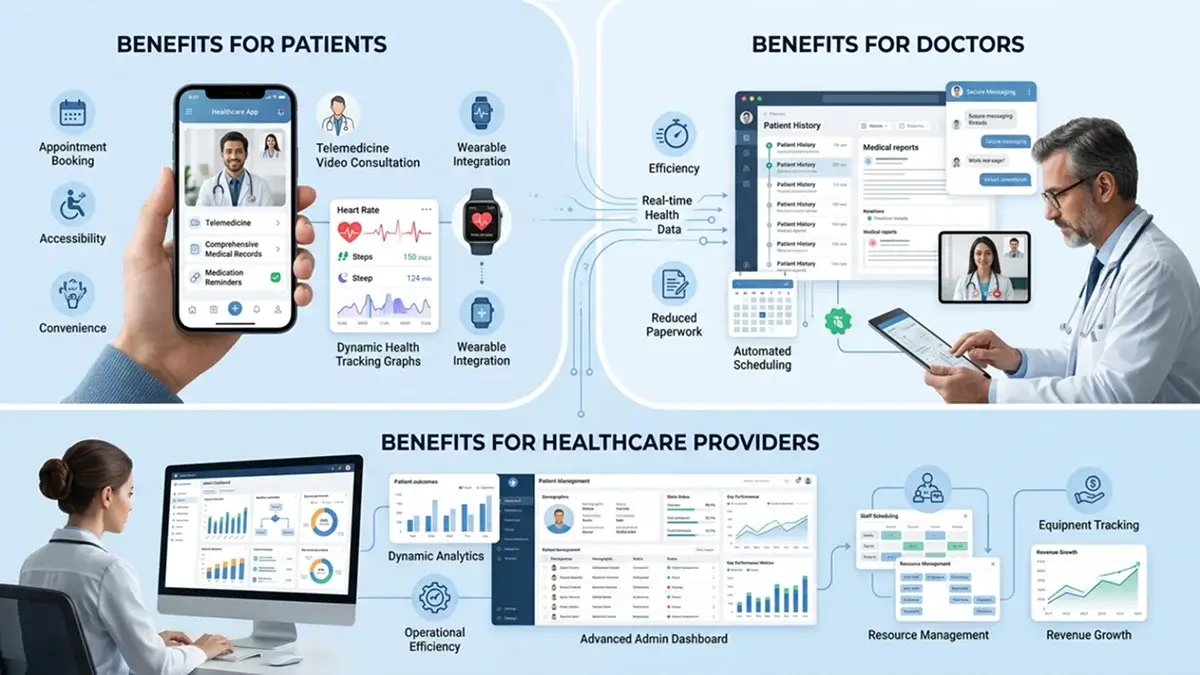
The role of healthcare application development is crucial in revolutionising the provision of healthcare services by enhancing access, efficiency and general patient outcomes. They positively impact the whole healthcare eco-system, patients, doctors and providers, with regard to streamlining the processes in addition to improving communication.
For Patients
Healthcare mobile apps make medical services more accessible and convenient:
- Easy access to healthcare services anytime, anywhere
- Ability to book appointments and access digital medical records
- Remote consultations through telemedicine, reducing the need for physical visits
- Continuous health monitoring via wearable integrations and in-app tracking
- Medication reminders and personalized health insights
These features empower patients to take control of their health while saving time and effort.
For Doctors
Custom healthcare app development help medical professionals work more efficiently:
- Quick access to patient history, reports, and treatment plans
- Improved diagnosis and decision-making with real-time data
- Reduced paperwork through automated documentation and scheduling
- Better communication with patients via secure messaging and virtual consultations
This allows doctors to focus more on delivering quality care rather than administrative tasks.
For Healthcare Providers
Healthcare organizations benefit from improved operations and financial growth:
- Enhanced operational efficiency through automated workflows
- Reduced administrative costs and fewer manual errors
- Better resource management and patient flow optimization
- Increased revenue through telehealth services and digital platforms
Overall, healthcare apps by healthcare app developers contribute to a more efficient, accessible, and patient-centered healthcare system.
Challenges in Healthcare App Development
While the best healthcare apps offer significant benefits, their development comes with a unique set of challenges that require careful planning and expertise. These challenges are often more complex than those in standard app development due to the sensitive nature of healthcare data and strict industry requirements.
Data Privacy Concerns
Protecting patient data is one of the biggest challenges:
- Handling sensitive health information securely
- Compliance with regulations like HIPAA and GDPR
- Risk of data breaches and cyberattacks
- Need for strong encryption and secure authentication systems
High Development Costs
Healthcare apps are resource-intensive to build:
- Advanced features like telemedicine and AI increase costs
- Requirement for high-level security infrastructure
- Ongoing maintenance, updates, and compliance costs
- Skilled developers and healthcare consultants add to expenses
Integration with Legacy Systems
Many healthcare providers still rely on outdated systems:
- Difficulty in integrating with existing hospital management software
- Compatibility issues with older databases and technologies
- Risk of data inconsistency during system integration
- Need for custom APIs and middleware solutions
Regulatory Complexities
Strict healthcare regulations must be followed:
- Compliance with multiple regional and international laws
- Regular audits and certifications required
- Frequent updates to meet changing legal standards
- Time-consuming approval processes
User Adoption Barriers
Even well-built apps may face resistance:
- Lack of digital literacy among some users
- Trust issues regarding technology and data security
- Resistance to change from traditional healthcare methods
- Need for intuitive and user-friendly design
Addressing these challenges is essential for building secure, scalable, and successful healthcare applications.
Future of Healthcare Apps
The future of healthcare mobile app development Dubai is driven by innovation, making care more connected, personalized, and efficient.
Remote Patient Monitoring Growth
- Real-time tracking through wearables
- Better chronic disease management
- Fewer hospital visits
Virtual Reality in Healthcare
- Medical training and simulations
- Pain and anxiety management
- Support for rehabilitation
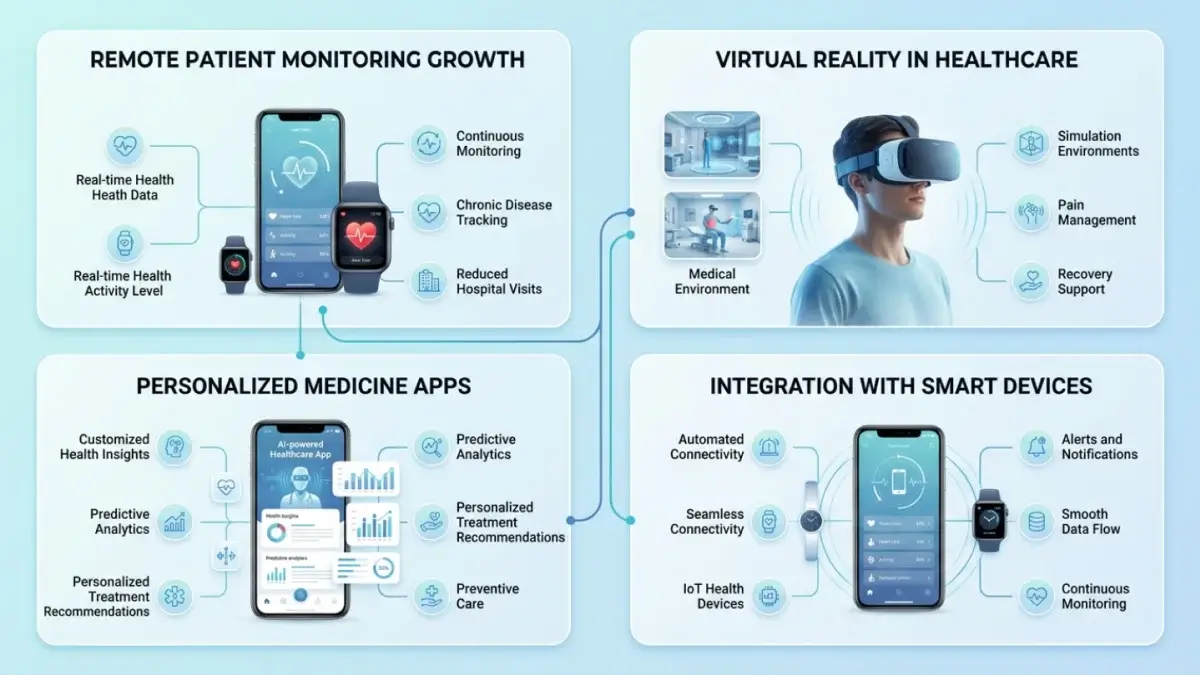
Personalized Medicine Apps
- AI-based health insights
- Customized treatments and recommendations
- Focus on preventive care
Integration with Smart Devices
- Connectivity with smartwatches and IoT devices
- Continuous health monitoring
- Automated alerts and notifications
Why Choose DXB APPS for Healthcare App Development?
Choosing DXB APPS as a top mobile app development company in Dubai for healthcare app development ensures your project is handled by a team that understands both technology and the unique dynamics of the UAE market. With deep regional expertise, DXB APPS builds app solutions that align with local healthcare regulations, user expectations, and industry standards.
The team focus on custom healthcare app solutions means every app is tailored to specific business needs whether it’s telemedicine, patient management, or fitness tracking. By prioritizing security and scalability, they develop applications that protect sensitive patient data while remaining flexible enough to grow with your organization.
In addition, DXB APPS offers a highly experienced development team skilled in modern technologies and healthcare compliance requirements. The end-to-end app services cover everything from initial planning and UI/UX design to development, testing, deployment, and ongoing support. This comprehensive approach ensures a seamless development process and high-quality final product. By combining innovation, reliability, and customer-focused strategies, DXB APPS helps healthcare businesses build powerful digital solutions that enhance patient care and drive long-term success.
Conclusion
Healthcare app development has become a cornerstone of modern healthcare, transforming how patients, doctors, and providers interact and deliver care. From enabling remote consultations and real-time health monitoring to streamlining administrative processes, these applications significantly improve accessibility, efficiency, and patient outcomes. As discussed throughout this guide, healthcare app development is not just a technological advancement, it is a strategic necessity in today’s fast-evolving digital landscape.
The ongoing digital transformation in healthcare continues to reshape the industry, making it more patient-centric, data-driven, and accessible than ever before. Organizations that embrace this shift are better positioned to enhance service quality, optimize operations, and remain competitive in a rapidly changing market.
For businesses and healthcare providers, investing in healthcare app development is no longer optional, it is essential for long-term growth and sustainability. Now is the time to leverage innovative technologies and build secure, scalable, and user-friendly healthcare solutions. Partner with the right development experts to turn your vision into reality and stay ahead in the future of digital healthcare.
FAQS
1. How long does it take to develop a healthcare app?
The development timeline depends on complexity and features. A basic healthcare app may take 3–6 months, while advanced apps with telemedicine, AI, or integrations can take 6–12 months or longer, including testing, compliance checks, and deployment stages.
2. What is the cost of building a healthcare app?
Costs vary based on app complexity. Basic apps with limited features may cost $20,000–$50,000, while advanced apps with AI, integrations, and telehealth features range from $50,000–$150,000. Enterprise-level solutions can exceed $200,000 depending on customization and scalability requirements.
3. Are healthcare apps secure?
Yes, healthcare apps can be highly secure when built correctly. They follow strict compliance standards like HIPAA or GDPR, use data encryption, secure APIs, and authentication protocols to protect sensitive patient information from breaches, ensuring privacy and trust in digital healthcare systems.
4. Which platform is best for healthcare apps?
The best platform depends on your audience and budget. iOS offers better security and premium users, Android provides wider reach, while cross-platform frameworks like Flutter or React Native allow faster development and cost efficiency across both platforms simultaneously.
5. What features are essential in a healthcare app?
Core features include user registration, appointment booking, telemedicine, electronic health records (EHR), secure messaging, push notifications, and payment integration. Advanced apps may include AI diagnostics, wearable device integration, and real-time health monitoring for improved patient outcomes.