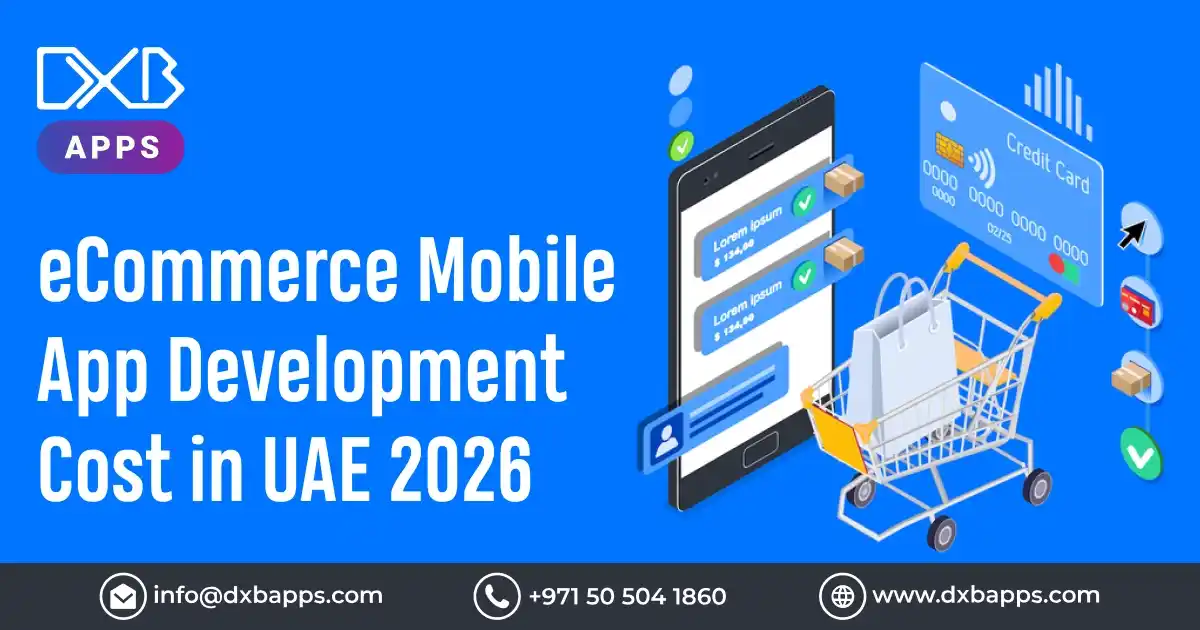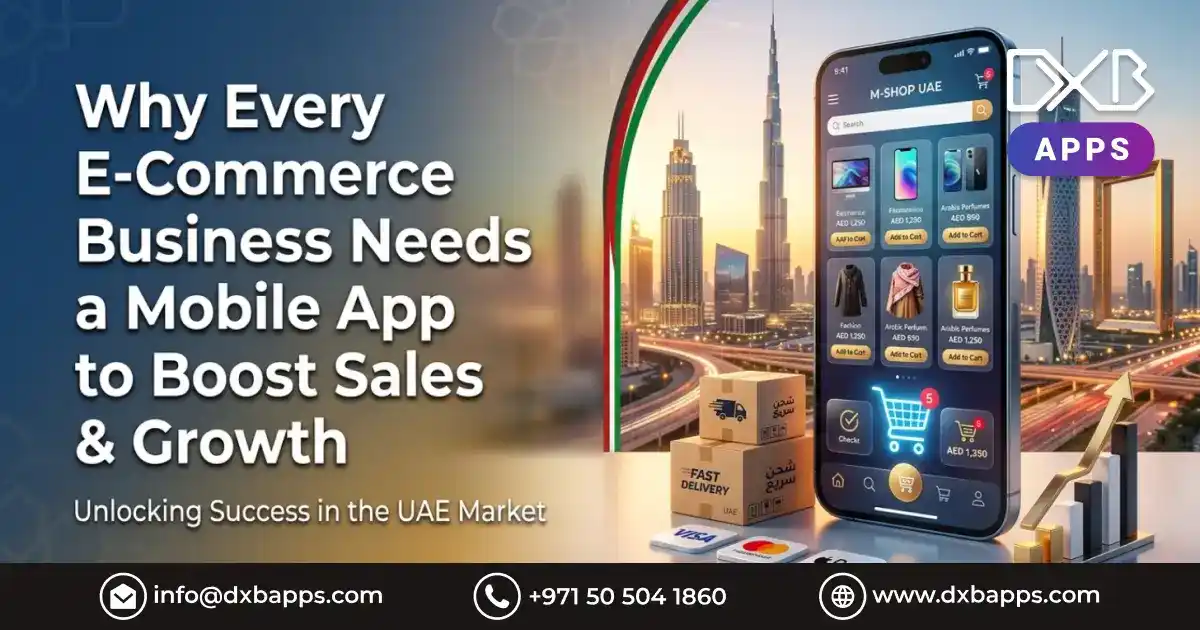
In today’s mobile-first world, e-commerce businesses need mobile apps. Apps boost engagement, increase sales, and help businesses stay competitive. They offer personalized experiences and faster checkout. They also add features that build loyalty and raise conversion rates.
In the current digital age and era of fast life, customers desire shopping to be fast, effortless and nomadic. That is why mobile applications became an effective tool of e-commerce businesses. With the trend of increased phone usage, a larger population of people give shopping over the desktop. They shop, do comparisons and purchase through mobile gadgets.
In the case of online companies, this change presents a huge opportunity of targeting customers more personally. No longer just a big brand, a mobile app. It has become an intelligent solution to the development of e-commerce enterprises, both big and small. Apps are not only easier to navigate, but they have a smoother experience than websites.
They also provide personal suggestions and notices via push notifications. These capabilities have the potential to enhance satisfaction and boost repeat purchases. They also get the opportunity to accomplish greater brand loyalty in the long-run.
This blog discusses why ecommerce app development Dubai companies need to spend on a mobile application. It aims at ensuring increase in sales and long term growth. It demonstrates experience-enhancing effects of apps, high levels of engagement, and conversions. It also includes the ways in which apps can make businesses remain competitive in the realms of the Internet.

What is an Ecommerce Mobile App?
An e-commerce mobile app is a smartphone app that lets businesses sell to customers. It offers a smooth shopping experience built for mobile devices. Users can browse items, pay securely, track orders, and get recommendations in the app.
Types of Ecommerce Apps
- B2C (Business to consumer) Apps: The business sells directly to the consumer via the app.Customers are able to shop, purchase and engage with the brand.
- B2B (Business to Business) Apps: These ecommerce mobile app solutions UAE are used to facilitate business-to-business sales.They assist in bulk schedules, price and accounts control.
- Marketplace Apps: Applications such as Amazon or eBay link numerous sellers and buyers.There are numerous traders who trade on a single platform.
- Native Apps: The shopping app development Dubai are developed on iOS or Android.They are cross-platform, however they require different builds on each platform.
- Cross-Platform Apps: These apps use one codebase for multiple platforms.They will be time and cost savings, but with certain tradeoffs.
Both types aid certain objectives. They assist companies in getting to the correct audience and making sales.
Must-Have Features in Mobile App for E-Commerce Business
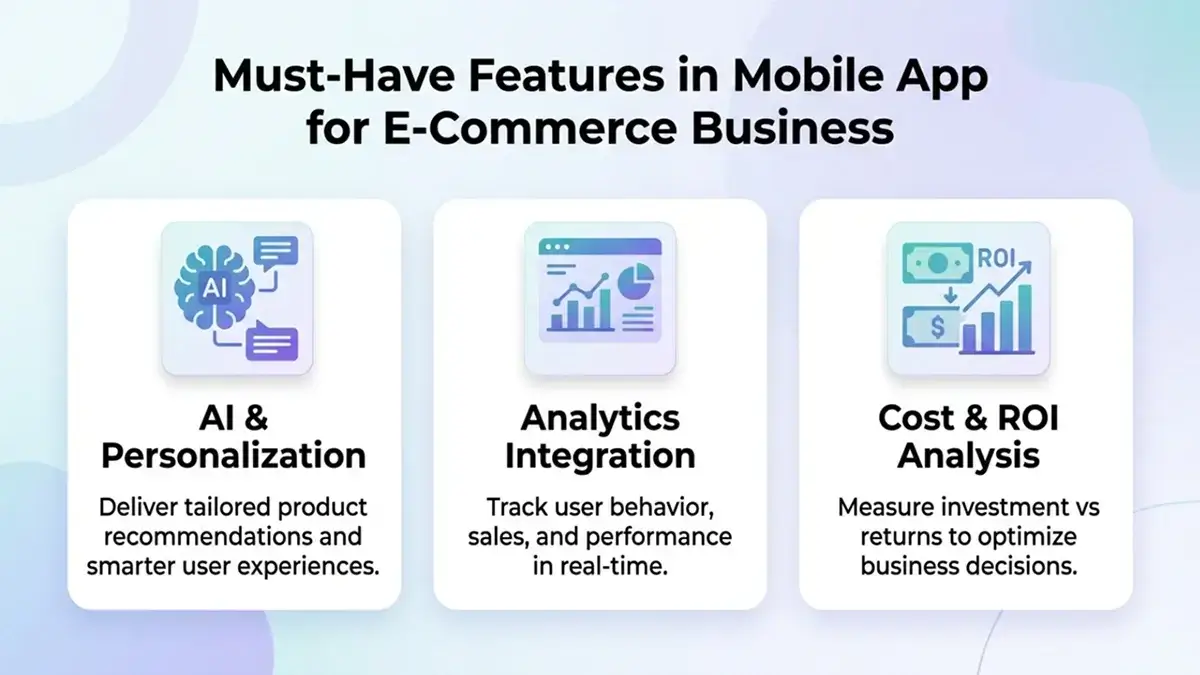
AI & Personalization
Extremely new applications apply AI to enhance buying and boost sales. Many aspects of the user experience can be personalized by AI.
- Recommend Products: AI examines behavior and provides recommendations based on the products the user might find enjoyable. This would raise the possibility of a purchase.
- Personalize User Journeys: AI learns to personalise the experience depending on previous behaviours. Users view more relevant content, offers and products.
- Anticipate Purchase: AI can anticipate the next thing a user might purchase. This assists companies to make fast promotions.
Analytics Integration
Analytics assists businesses to make superior choices based on real information. It demonstrates the user engagement with the app in time. This assists in enhancing the sales strategies and the user experience.
- Session Duration: This indicates duration that users spend in the app. It assists in gauging interest.
- Conversion Rates: This is the number of people that would manage to buy. It is an important sales indicator.
- Customer Lifetime Value (CLV): This approximates the amount of revenue per customer. It is used to determine high-value customers.
Cost & ROI Analysis
Building an ecommerce iphone app development takes investment, but ROI can be strong. Businesses should review costs and returns before they begin.
Costs include:
- Development: The cost to design and build the online shopping app.
- Maintenance: Ongoing fixes and updates to keep it stable.
- Updates: New features to meet customer needs and market changes.
ROI comes from:
- Increased Sales: Apps make buying fast and convenient for customers. This often leads to increase online sales.
- Higher Retention: Apps support loyalty with personalization and rewards. They also make re-engagement easy.
- Better Brand Visibility: The app icon stays on the home screen. This keeps the brand easy to find.
Working with a trusted ecommerce app development company UAE can help manage costs. It can also improve app quality and long-term value.
Why Every Ecommerce Business Needs a Mobile App?
Mobile Commerce is Dominating
- Mobile devices contribute over 70 percent of the traffic on e-commerce.
- Users spend considerable time on apps, not on websites.
- One of the requirements of mobile users is fast access and rapid loading.
- A ecommerce android app development can assist a business to remain competitive in a mobile-first world.
Better User Experience and Convenience
- Concise Shopping: Apps are quicker and simpler to use when compared to sites.
- Push Notifications: Information and discounts reach the users directly.
- One-Click Purchases: Cart abandonment is minimized through easy checkout.
- Premium Customer Experiences: Customized recommendations enhance shopping experience.
Enhanced Customer Retention and Loyalty
- Loyalty Programs: Rewards and points are to encourage repeat purchases.
- Push Notifications: Pushes show offers and reminders to customers to keep them interested.
- Enhanced Retention: Apps can have a long-term customer relationship.
Increased Brand Visibility
- The Clockwork Presence: The app icon reminds your brand on hand.
- Mobile App Marketing: In-app purchasing and notifications ensure that your brand is kept in mind.
Ecommerce Mobile App Benefits
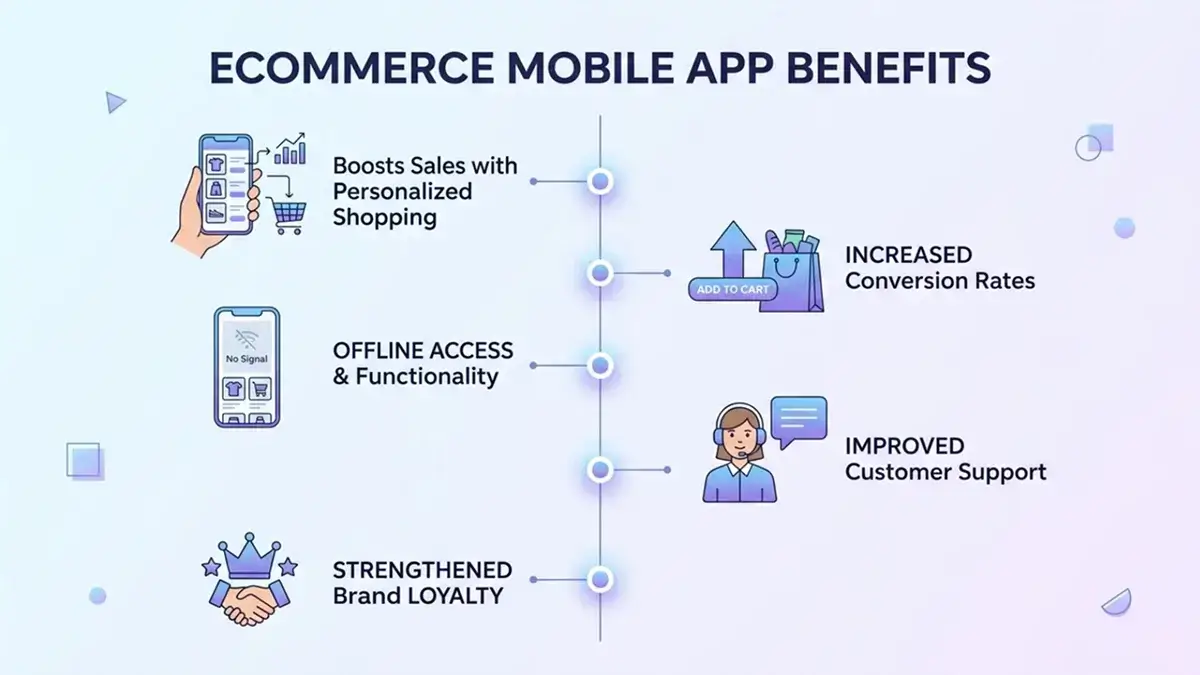
Boosts Sales with Personalized Shopping
Personal shopping experiences can be more easily delivered with the help of apps. This would be able to contribute to sales and satisfaction upsurge. Tracking and AIs can recommend products considering previous activities. These recommendations may capture the behavior, interests and the history of purchases.
- Individualised Product Recommendations: AI provides suggestions of things that users might desire. This may add impulse purchases and reorder.
- Customer Tracking: Tracking assists the brands to know what the customers need. It helps in superior campaign and promotion targeting.
Customers usually will spend more on a more personal experience. It further enhances long-term satisfaction.
Increased Conversion Rates
Product catalog app can raise conversions by making buying easier. Less friction often means more completed purchases.
- Faster Checkout: Apps can save payment and shipping details. Customers can buy in a few taps.
- One-Click Buying: Customers do not need to re-enter details each time.
- Push Notifications: Reminders can bring users back to finish purchases. They can also highlight limited-time offers.
These features reduce barriers and drive faster decisions. That can boost conversion rates.
Offline Access and Functionality
Apps can work even when the internet is weak or unavailable. This helps users in areas with limited connectivity.
- Offline Functionality: Users can still view products and wish lists. They can also revisit previously viewed items.
- Seamless Experience: Users can browse and add items while offline. They can stay engaged with the app.
This keeps customers connected to the brand in more situations. It also supports shopping at any time.
Improved Customer Support
Strong support helps e-commerce businesses succeed. Apps can offer quick help with built-in support tools. This includes in-app chat and AI support.
- In-App Chat: Users can message support inside the app. This reduces wait time.
- AI Assistance: AI can answer common questions fast. It frees agents to handle harder issues.
- CRM Integration: Support teams can view customer history quickly. This helps solve issues faster.
Better support builds trust and improves loyalty over time.
Strengthened Brand Loyalty with Mobile Features
Android ecommerce app development can be a great way of building brand loyalty. By incorporating such elements as exclusive deals, reward programs, personalised discounts, businesses can motivate users to remain active on the app and brand.
- Unique Promotions: Applications can be used to send push notifications regarding special offers, discounts or offers which can only be used by application users.
- Rewards Programs: Loyalty programs are built into the app, which enables customers to receive points, discounts, or gifts, which encourages them to conduct business again.
- Personalized Discounts: With customer behavior, apps could provide recommended discounts to frequent buyers, which helps to retain such customers.
With the availability of these mobile capabilities, ecommerce app development company can make sure that customers feel appreciated and thus will be more likely to stick with the brand, and later on purchase the products of the brand.

Ecommerce Mobile App vs Website
| Feature | Mobile App | Website |
|---|---|---|
| Speed | Very Fast | Moderate |
| Personalization | High | Limited |
| Engagement | Push Notifications | Email Based |
| Offline Access | Partial | No |
While websites are essential, apps provide a deeper and more engaging experience.
The Cost of Not Having a Mobile App
Losing Out on the Mobile-First Customer Base
Since more than 70 percent of e-commerce traffic is through mobile, companies that fail to have a mobile application are not getting a mobile-first customer base, which will impact sales as well as the business brand. Personalized shopping experience can be more convenient and quicker with mobile apps and the absence of one can demonstrate to businesses that they risk losing their customers to their competitors that provide a smooth mobile experience.
- Influence on Sales: Mobile-first strategy enhances the probability of purchasing as they are fast and convenient.
- Competitor Advantage: Mobile app-based businesses have an increased visibility, leaving non-app based businesses behind.
Missed Opportunities for Customer Engagement
By using websites and social media alone, it will restrict real time interaction with the customers. Push notifications and in-app messages are a possibility with mobile apps, leading to improved communication and purchases.
- Narrow Reach: Websites simply do not have the immediate interactions that apps provide.
- Lost Interaction: Not using an app means that businesses will lose the opportunity to re-engage users and provide individualized promotions.
The businesses lose a critical customer connection and sales opportunities without a mobile app.
How to Get Started with Developing an E-Commerce Mobile App?
Defining Your Objectives and Features
Before taking the plunge into developing an app, it is important that you identify what you want or what you aim to achieve with your mobile app. These include:
- E-Commerce Platform Integration: Make sure the app can be connected to your current e-commerce platform to operate products, inventory and orders.
- Payment Gateways: Select the secure payment solutions (e.g., credit card, PayPal, mobile wallets) that offer safe transactions.
- Loyalty Programs: Adding a rewards program may be considered to influence customers to make repeat purchases and engage with the program.
- Push Notifications: Introduce a reminder mechanism to notify users at the right time of updates, promotions and alternating reduce cart abandonment.
Upfront identification of the main characteristics can help you smooth out the development process and only concentrate on what is of the greatest importance to your customers.
Choosing the Right Development Approach (Native vs. Hybrid)
There are two ways to go on developing an app:
-
Native Apps: an application that is coded into an iOS or Android platform using a programming language. Native applications are more performative and can enable superlative user experience but without the development costs and platform development which are enormous.
-
Hybrid Apps: Hybrid apps are implemented using a cross-platform platform (e.g. React Native, Flutter), and they may of course work on both iOS and Android. They will be cheaper and require less time to be released, although may be less performance-wise and user-friendly compared to native applications.
The correct strategy will rely on your budget, intended audience and expected performance.
Partnering with the Right Mobile App Development Team
Having an efficient mobile app development team is essential to construct a quality e-commerce app.
Key considerations include:
- Experience: Find ecommerce app developers that have experience in developing e-commerce applications and have experience in your industry.
- Portfolio: Examine their past production to determine the quality of design, functionality and performance.
- Communication: Provide effective communication and keep updating on the development process.
A solution to this is by asking important questions related to hiring a development company:
- How many years have you been working with e-commerce apps development?
- Will you be able to incorporate payment gateways and other e-commerce tools?
- How do you go about app security and data protection?
- How much time do you expect to take to develop?
By teaming up with the right team, it is guaranteed that the development will go smoothly with a successful app.
Best Practices for Ecommerce App Development
- Make UI Simple and Intuitive: Have the interface be clean, simple and easily navigable to ensure a smooth shopping experience.
- Maximize Speed and Performance: Have quick loading and seamless transitions to live up to user expectations.
- Secure payment Systems: Adopt secure payment gateway using encryption and two factor authentication; to secure transactions.
- Constant Enhancement on the Feedback of the users: Keep improving the app regularly, based on user feedback including the improvement of the functionality and correction of the defects.
- Select Ecommerce Mobile App Development that is Reliable: Find an established ecommerce app development company in Dubai to provide ecommerce app development services that are high-quality and scalable with continuous support.
Future of Ecommerce Mobile Apps
The innovative technologies will be the future of e-commerce mobile applications:
- Augmented Reality Virtual Try-Ons Installed: AR will be used to enable customers to have a virtual try-on of their products.
- Voice-Enabled Shopping: Voice assistants will allow the customers to shop with the help of a simple voice command.
- AI-Powered Chatbots: The chatbots based on AI will be used to offer personalized services and real-time support.
- Quicker and more secure Payments: Biometric authentication and one-click payment options will simplify transactions.
Implementation of these trends will set the businesses that embrace the trends ahead in an advantageous position in the market, which is shifting.
Cost to Develop an E-Commerce App
The ecommerce app development cost varies based on complexity, features, and development approach. Here’s a breakdown of ecommerce mobile app development cost:
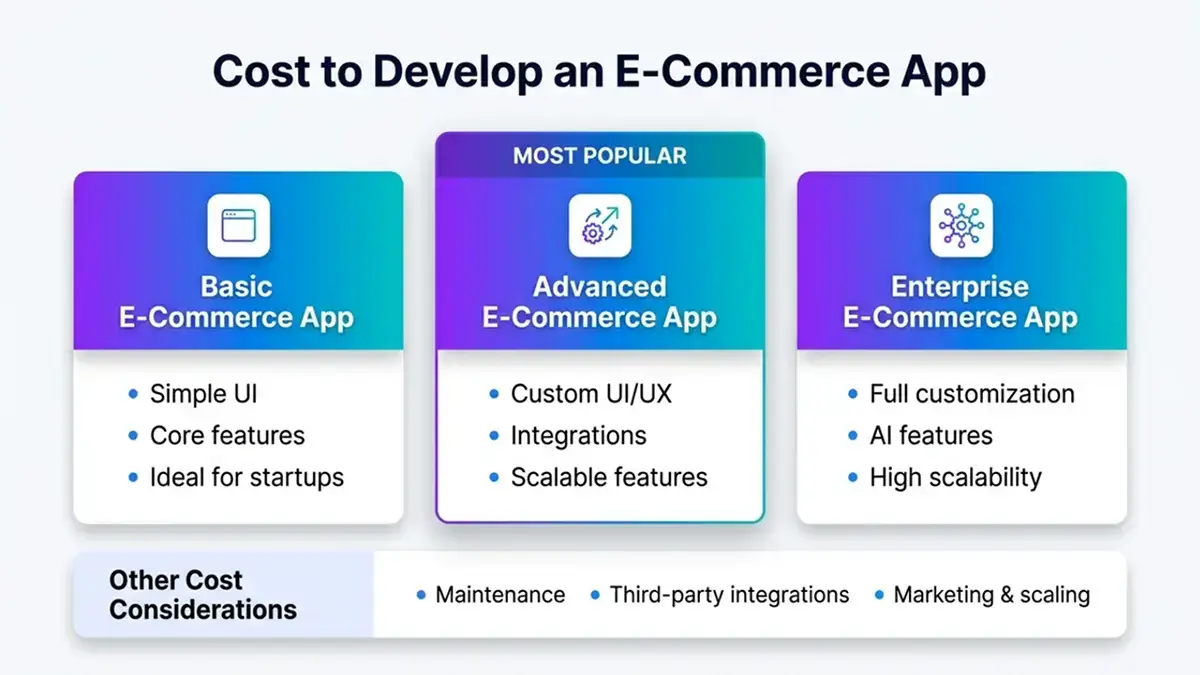
Basic E-Commerce App
- Cost: $10,000 – $40,000
- Features: Product browsing, shopping cart, payment integration, basic user accounts, push notifications.
- Development: Suitable for businesses looking for essential e-commerce functionality.
Advanced E-Commerce App
- Cost: $40,000 – $80,000
- Features: AI-powered recommendations, multi-currency support, advanced user profiles, loyalty programs, real-time order tracking.
- Development: Ideal for businesses seeking a more customized app with enhanced functionality and user experience.
Enterprise E-Commerce App
- Cost: $80,000 – $150,000+
- Features: Multi-platform support, advanced integrations (CRM, ERP), augmented reality, complex analytics, high-end design.
- Development: Best for large businesses or brands with complex needs, requiring scalability, custom features, and extensive integrations.
Other Cost Considerations
- Maintenance: 15-20% of initial development costs annually.
- App Store Fees: One-time fee for Google Play ($25) and annual fee for Apple’s App Store ($99).
| App Type | Cost Range | Features | Development Focus |
|---|---|---|---|
| Basic E-Commerce App | $10,000 – $40,000 | Product browsing, shopping cart, payment integration, basic user accounts, push notifications | Essential e-commerce functionality for small businesses |
| Advanced E-Commerce App | $40,000 – $80,000 | AI recommendations, multi-currency support, loyalty programs, real-time order tracking | Custom features and enhanced user experience |
| Enterprise E-Commerce App | $80,000 – $150,000+ | Multi-platform support, advanced integrations (CRM, ERP), AR, complex analytics | Large businesses with complex needs, high-end features |
DXB APPS: A Leading E-Commerce App Development Company in Dubai
DXB APPS is a premier e-commerce mobile app development company in Dubai recognized for creating cutting-edge, customized mobile app development Dubai solutions that help businesses excel in the digital marketplace. With years of experience in the field, DXB APPS offers a range of mobile app development Abu Dhabi services, from simple e-commerce solutions to complex, feature-rich mobile platforms that cater to businesses of all sizes. The team of highly expert app developers uses the latest technologies such as AI, augmented reality, and advanced analytics to build intuitive, scalable, and secure mobile apps that provide seamless shopping experiences for users.
Whether it's integrating multi-payment systems, building loyalty programs, or adding AI-powered recommendations, DXB APPS tailors every feature to enhance customer satisfaction and increase conversions. The expertise in cross-platform development ensures that businesses can reach a wider audience with apps that work flawlessly across both iOS and Android. Additionally, DXB APPS as a top mobile app development agency provides ongoing support and updates to keep the app functioning optimally and aligned with market trends.

Conclusion
In today’s competitive e-commerce landscape, having a mobile app is no longer a luxury but a necessity for businesses aiming to boost sales and foster growth. A mobile app not only enhances the shopping experience through personalization, convenience, and faster transactions but also provides businesses with valuable tools for increasing customer engagement, brand loyalty, and visibility.
By integrating advanced features like push notifications, loyalty programs, and AI-driven recommendations, businesses can keep customers coming back, ultimately driving repeat sales and increasing customer lifetime value. As mobile commerce continues to dominate, adopting a mobile app is the key to staying ahead of the competition and reaching your target audience effectively.
FAQs
1. Why is a mobile app important for e-commerce businesses?
A mobile app provides a streamlined and personalized shopping experience, improves customer engagement, and increases sales through features like push notifications, faster checkout, and product recommendations.
2. How can a mobile app boost customer loyalty?
Mobile apps offer loyalty programs, personalized offers, and exclusive deals, which encourage customers to return and make repeat purchases, enhancing brand loyalty.
3. What features should an e-commerce mobile app have?
Essential features include product browsing, shopping cart, secure payment gateways, user accounts, push notifications, AI-powered recommendations, and loyalty programs.
4. Can a mobile app increase conversion rates for my e-commerce business?
Yes, by simplifying the buying process, offering one-click purchases, reducing cart abandonment with timely reminders, and providing personalized experiences, a mobile app can significantly boost conversion rates.
5. How much does it cost to develop an e-commerce mobile app?
The cost depends on the complexity of the app, the features included, and the development approach. Basic apps can cost $10,000–$40,000, while advanced and enterprise apps may range from $40,000 to $150,000 or more.