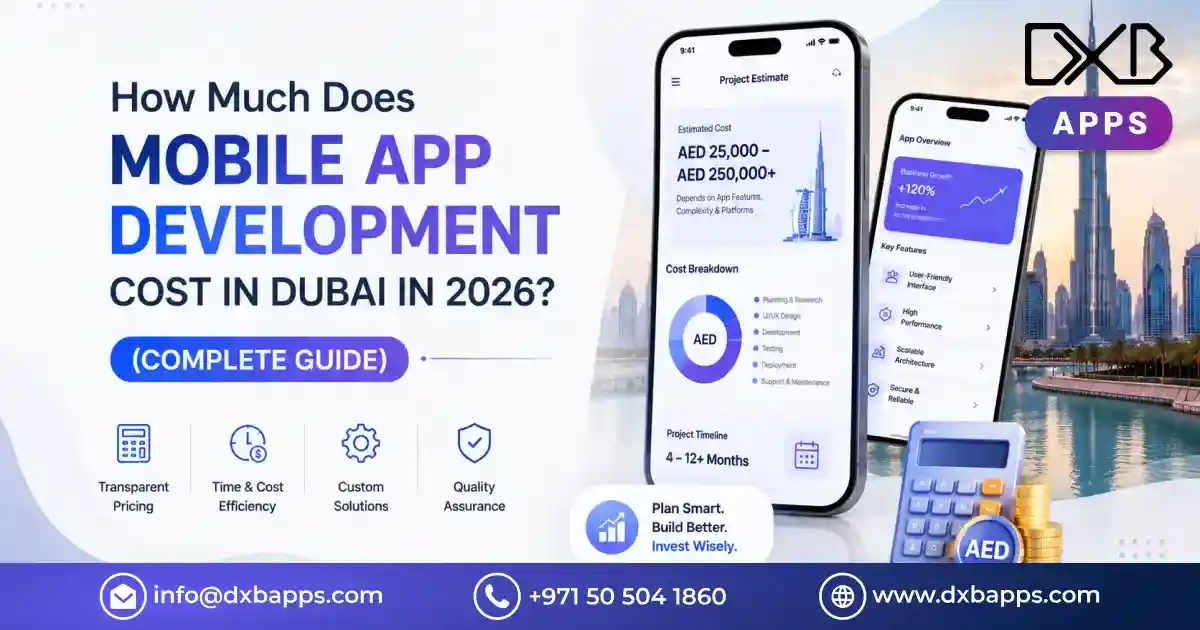
The Mobile App Development Cost in Dubai in 2026 depends on how hard the app is to build. It also depends on what platform you choose. Cost also changes based on features, design, security, integrations, and the team. A simple app costs less than a big business app. If you know these things early, you can plan your budget. This helps you avoid surprise costs later.
Dubai is becoming a big tech and business city. Many industries use mobile apps to grow and work better. This includes retail, services, healthcare, and finance. Apps can help with users, sales, and daily work.
Factors That Affect Mobile App Development Cost in Dubai
There is no one fixed price. Every app is different. The final cost depends on what the app must do. It also depends on the app structure and how many features you want. Cost also depends on the platform and how custom the app is.
App Complexity
Complexity is a big cost factor. Simple apps take less time. They cost less. Hard apps take more time to plan, build, and test. They may need extra systems and integrations.
Simple app examples are login screens, contact forms, and apps with basic pages. These are good for startups that want to launch fast.
Enterprise apps are for large companies. They support many users and big workflows. They may use cloud tools, AI, and analytics. They often have user roles, CRM or ERP tools, and stronger security.
Platform Selection
The platform you choose affects cost. You can build for iOS, Android, or both with one cross-platform app.
Building two native apps usually costs more. That is because each one needs its own work and updates. Building only one platform can cost less. The best choice depends on your app goals and performance needs.
UI and UX Design
Good UI and UX helps people use the app easily. When an app is easy, users stay longer and come back.
Design work can include wireframes, prototypes, and user flows. It can also include custom screens, icons, brand colors, and animations. Custom design costs more than using templates.
Features and Functionalities
More features usually means more cost. Hard features take more time and testing. Simple features are faster and cheaper. Common features include:
- User registration and login
- Payment gateway integration
- Push notifications
- GPS and live tracking
- Booking and appointment systems
- Reviews and ratings
- Chat and messaging
- Admin dashboards
Features like offline sync, AR, AI, video calls, and live streaming cost more.
They are harder to build and test.
Backend Development
The backend is the part behind the app. It stores data and runs the main logic. It can also handle payments and notifications. A simple app may need a small backend.
Apps like marketplaces and banking apps need a strong, safe, and scalable backend.
Third-Party Integrations
Many apps connect to other services. This can include payments, maps, social login, and SMS. It can also include cloud storage, CRM tools, shipping tools, and analytics. Each integration needs setup and testing. Security checks are also needed. This can raise both build and upkeep costs.
Security Requirements
Apps that use private data need strong security. This includes card payments, personal info, and health records. Security can include encryption and two-step login. It can also include secure APIs, face or finger login, backups, and fraud checks. Many apps also use role-based access.
Development Timeline
The timeline can change the cost. Short deadlines often cost more. Rush work can also cause mistakes and extra fixes. A good timeline allows steady building and testing. This can lower cost and improve quality.
Development Team Experience
Team skill affects price and results. Less experienced teams may charge less. But they may offer less help with design, testing, and scaling. Experienced teams cost more. But they often build better apps that are safer and easier to maintain.
Cost Breakdown by App Type
Most apps fit into three groups. These are MVP apps, mid-level apps, and enterprise apps.
MVP Mobile App Development Cost
An MVP is the simplest version of an app. It usually has the main feature and login. It may also have a few key steps. MVPs help startups test an idea for less money. They also help you launch faster with less risk.
Mid-Complexity Mobile App Development Cost
Mid-level apps have more features and more custom design. They often need a stronger backend and outside services. Common features include payments, bookings, push alerts, and live chat. They may also include GPS, ratings, and admin dashboards.
These apps fit many businesses. This includes healthcare, education, restaurants, logistics, and retail.
Enterprise Mobile App Development Cost
Enterprise apps are large and complex solutions to address the needs of large and complex business operations. They will generally have more advanced features like custom built security, cloud app frameworks, AI with automation, analytics dashboards, and business props like inventory and activations with a more complex structure of users and embedded CRM or ERP systems.
Because of the size and complexity of the solution, these projects will require a more extensive app development team with a longer build and design app process and more rigorous testing, technical documentation, and support and maintenance.
Mobile App Development Cost by Industry
The cost of development for the app will be impacted by the sector the app will serve. Various sectors will require varied functionality, security, and compliance standards.
Healthcare App Development
Building healthcare apps will create the opportunity to develop features such as building virtual consultations, healthcare tracking, managing prescriptions, and building patient profiles.
Due to the sensitivity of the healthcare data, healthcare app development will require more resources compared to developing the simple business app.
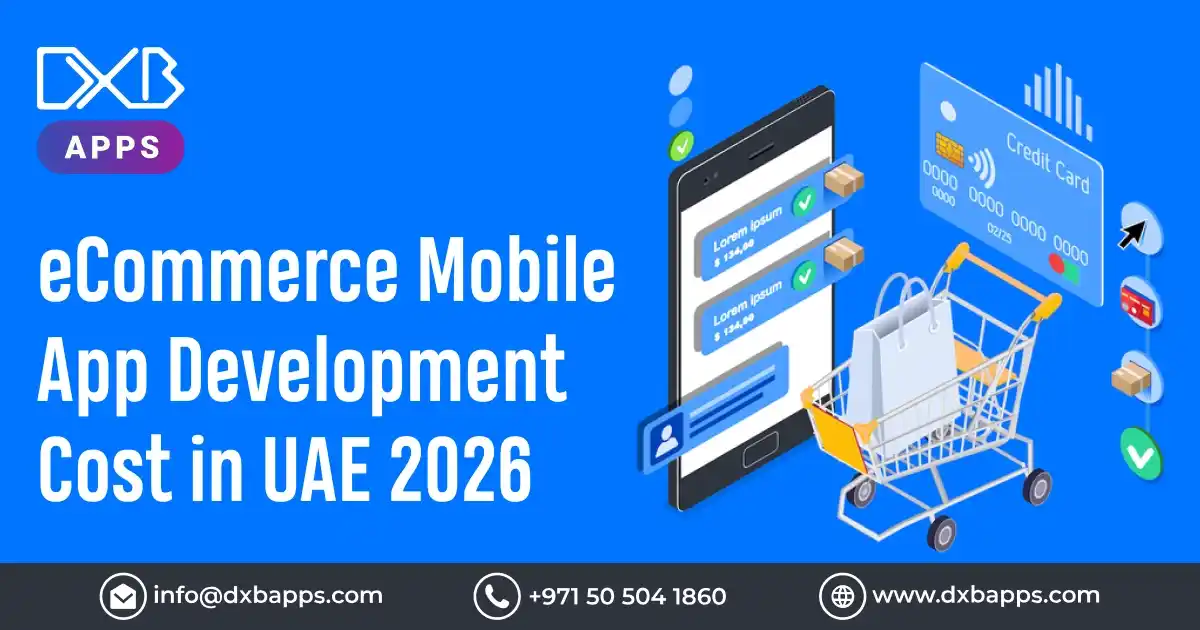
E-Commerce App Development
E-Commerce apps will enable building features such as product listings, shopping carts, secure checkout, payment and order management, as well as tracking reviews and discounts.
The cost of development will be impacted by the need to build multi-vendor support, a more complex search, and a loyalty program, as well as integrating warehouse and shipping services.
FinTech App Development
FinTech apps allow building features such as digital wallets, payment and money transfer, transaction and bill trackers, investment and budgeting tools.
In addition to the complexity of features, implementation of security and accuracy will increase the cost of development.
Real Estate App Development
Real Estate apps will allow the building of features such as property listings and searches, maps, profiles of real estate agents, virtual tours and booking of appointments.
The cost will depend on the size of the property database, the number of user profiles, and the features of administrative controls.
Food Delivery App Development
Food delivery apps will allow real time tracking features and online payment services, as well as building interfaces for customers, restaurant staff, and delivery staff.
Having multiple user interfaces and managing real time data will increase the cost of development.
Advanced Features That Increase Development Cost
Though using advanced technologies to build an app makes it more powerful and competitive, development time and costs will increase.
The following features will likely make the app more expensive to build:
- Artificial intelligence and machine learning
- Augmented and virtual reality
- Blockchain technology
- Internet of Things integrations
- Facial recognition
- Voice assistants
- Live video streaming
- Advanced analytics
These features will require more specialized developers and more dedicated testing along with a more rigorous and powerful backend.
Cost Based on Development Team Structure
Business owners have the option of hiring freelancers, employing in-house staff, or outsourcing the work to mobile application development firms.
Freelancers may suit small projects, but controlling lots of separate professionals may be tough. An in-house option means more control, but overlaps with the costs of hiring employees, salaries, costs of running the office, buying equipment, and day to day management.
A mobile app development agency has teams to handle most of these things as part of their services. This option may fit better in terms of communication, quality, and control, as well as offering support after the project is finished.
iOS vs Android App Development Cost in Dubai
Development costs for both operating systems will differ based on the requirements, intended audience, design, testing, and cross-device/app integration, etc.
iOS development consists of Apple app development with testing that only has to account for a small number of devices, with a resulting streamlined and efficient testing phase.
For Android development, testing has to account for a multitude of devices with different screen sizes, OS versions, and more; making development more difficult.
Developing apps for both OS’s separately will require a larger financial budget. Businesses that need to develop apps for both will find a larger budget required, unless they choose a cross-platform app.
The final decision will come down to the performance needs and requirements of the available budget combined with the target audience and the goals for the business in the future. Overall the business goals should come first.

Hidden Costs to Watch Out For
Many businesses consider only the development costs of the app and neglect costs that will appear post-launch.
App Maintenance
The security and performance of mobile apps can deteriorate over time. Apps may require maintenance to fix bugs, improve performance, and update app security.
Hosting and Cloud Services
Mobile apps that support real-time features and services that require a persistent database may incur additional costs with an increase in the number of app users.
App Store Fees
Mobile apps may require a payment to allow distribution in the app stores. Costs may also be incurred to comply with the app store requirements and to create a listing for the mobile app.
Third-party Services Charges
Many services charge a fee for API access. These services may charge a flat monthly fee or a fee based on usage.
Marketing and User Acquisition
The use of a mobile app may require an investment to improve the ranking of the app in the app stores and to provide advertisements or other promotions.
Future Development
The app will also require future investment for features and other improvements to comply with user and business expectations.
How to Reduce Mobile App Development Cost?
By creating a thoughtful plan that focuses on required components, a business can keep costs down while still providing quality services or products.
Launching a minimum viable product (MVP) yields one of the best returns on investments, as app functionality can be enhanced incrementally based on user feedback.
If an app needs to be compatible with both major operating systems, that mobile development may be less costly if a cross-platform solution is used. Keeping deadlines and eliminating scope creep will be achieved through good development practice and early prioritization of goals.
Additional advanced functions that do not serve an app’s core function should remain out of the app.
How to Choose the Right Mobile App Development Company in Dubai?
A selection of the right development partner can determine project success or failure. They must appreciate the business idea, understand the target market, know the tech the product will be built on, and the project’s distribution scope over time.
Examine the company’s portfolio and examine the quality of their designs, their technical and domain competency. Be sure to ask how they manage development, the communication channel and methods they use, and the engagement they provide during testing and after the launch of the product.
A good mobile development company will have a sound business model and provide an estimate with reasonable timelines. They will have an engagement model to keep you updated throughout the development process. The company will be able to develop a robust application considering scalability.
Why DXB APPS Is Dubai’s Most Trusted App Development Partner?
DXB APPS offers custom mobile application development and has a wide range of clients from start-ups and small and medium enterprises, and large enterprises. The development team has the expertise to devise app solutions that cater to the client’s needs with a focus on security and usability of the app.
Mobile App Development Value Chain
DXB APPS believes in owning the whole mobile app development value chain. Our experts offer idea incubation, prototyping, UI/UX design, app development, rigorous testing, roll out, and post-launch support services. Every mobile app development initiative is undertaken with the client’s specific business sector, potential customers, budgetary and technical constraints kept front-of-mind. This ensures the mobile app serves its intended business purpose.
Flexible Development Frameworks
DXB APPS targets the development of mobile apps on the iOS and Android ecosystems, as well as solutions that offer cross-platform utility. Our team works on a scalable, secure, user-centric, and business-performant development framework. DXB APPS has the capacity to provide tailored business solutions in the form of bespoke mobile apps for eCommerce, healthcare, booking services, real estate, FinTech, logistics, and enterprise solutions.
Conclusion
In 2026, several factors will likely affect the cost of mobile app development in Dubai, including integration, design, complexity, features, the platform, security, and the app’s upkeep. Costs will be lower when developing mobile apps as simple MVPs, while developing mobile apps for organizations will be more expensive as these apps tend to need more advanced infrastructure and comprehensive testing in order to meet the app’s purpose.
Companies need to have a clear vision for the app in order to control the development costs. Companies will need to select the app features that will meet the app’s purpose, choose the development platform, and estimate the costs of app upkeep. DXB APPS is one of several mobile app development service providers that can help companies meet these app development cost control goals.

FAQS
How Much Will Development of a Mobile App in Dubai Cost in 2026?
More app features typically mean more cost. Cost also correlates with the complexity of the app, the security requirements, design, patterns of integration, and the app's intended platform. Simple apps (i.e. simple MVPs) are significantly cheaper than enterprise apps. A detailed analysis of the app in question is required for better estimates.
How Long Will Development of a Mobile App in Dubai Take?
For simple apps, development can take a couple of months. For more complex apps, development can take several months. The final development duration will vary based on the design requirements, features (quantitative and qualitative), the app integration patterns, the testing phase, and the platforms involved.
Will Development of a Mobile App in Dubai be Cheaper With Cross-Platform Apps?
Development costs are cheaper because building a cross-platform app supports both iOS and Android with only one codebase. However, for apps that will utilize a lot of advanced features that require high performance and greater functionality, Native Development will be a better and more affordable option.