Dubai has become a global technology and innovation center, with increased demand for Mobile App Development Dubai as businesses and investors worldwide come to the city. Its strategic positioning, business friendly policies and excellent infrastructure such as state of the art transport, internet connection, and facilities provide a perfect business climate of digital expansion. Mobile App Development Dubai is important in this vibrant market. They are used to assist businesses to reach out to their customers, streamline their businesses and reach more effectively.
Apps of good quality can improve user experience, boost customer loyalty, and increase revenue. Dubai has a tech-savvy population and high smartphone use. This makes Dubai a great place to launch new digital solutions. Because of this, mobile app development is now key for many businesses. It helps them stay competitive and relevant in the region.
User experience (UX) and money are closely linked. If an app is easy and fast, people feel happy using it. They come back more often. They also buy more. That is why mobile app development in Dubai is growing fast. Companies want experts who can build apps that look good and work well. This blog shows how app development by a top mobile app development agency can improve UX and help revenue grow.
The Mobile App Landscape in Dubai
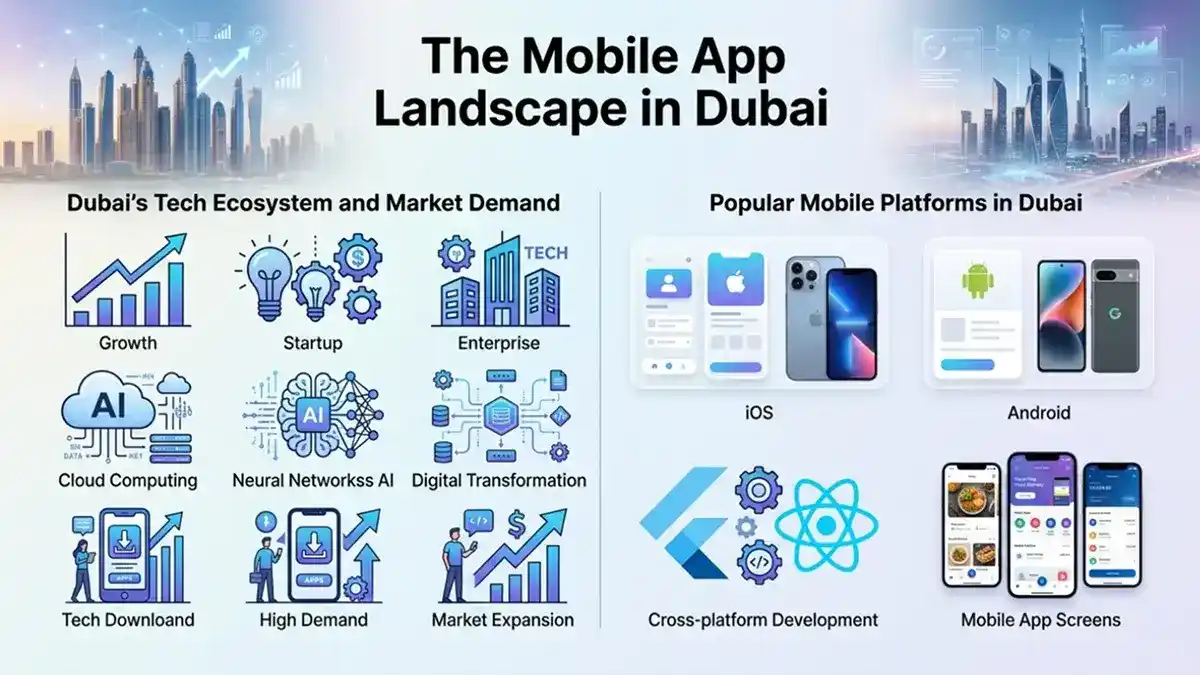
Dubai’s Tech Ecosystem and Market Demand
Dubai is a top tech city in the Middle East. Smart city projects increase the need for apps. Most people in the UAE use smartphones. So apps are a main way to serve customers. Apps also help companies stay ahead.
Key highlights:
- Smartphone use is over 98% among residents.
- Fast growth in online shopping, banking, healthcare, and tourism.
- Smart city projects push AI and IoT features in apps.
Popular Mobile Platforms in Dubai
Picking the right platform helps UX and revenue. iOS and Android are both popular. Android leads because many people buy cheaper phones. iOS is often used by people who want premium devices.
Essential points:
- Android works on many phones. iOS is known for strong speed and smooth use.
- Cross-platform apps can cost less and reach more users. Native apps are often faster and can be more secure.
Enhancing User Experience (UX) through App Development
Intuitive and Responsive UI Design
A clean and simple design helps users. It keeps them from feeling confused. Dubai teams often design for many cultures and languages. They keep screens modern and clear. Fewer steps make tasks easier.
Key points:
- Clean design with less clutter.
- Simple menus with fewer taps to reach key tools.
- Swipes, gestures, and small animations can keep users interested.
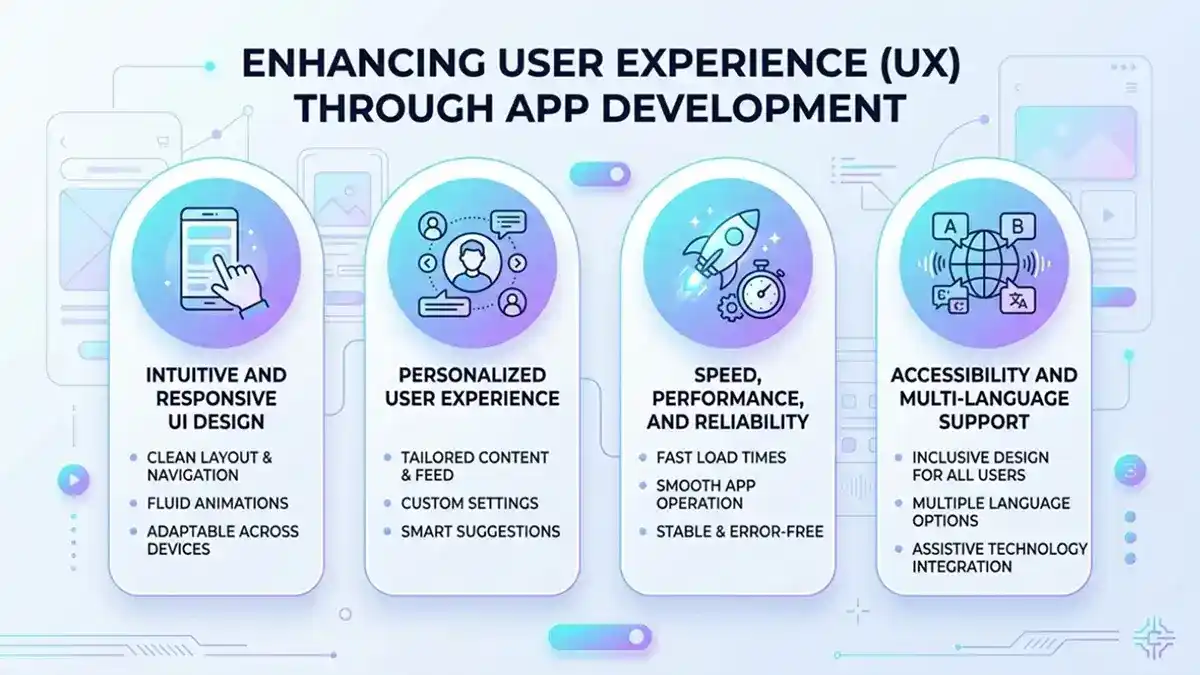
Personalized User Experience
Personalization is getting bigger in Dubai apps. Many teams use AI to show users what they may like. Notifications can share helpful updates. Location tools can show nearby options. This can bring users back again and again.
Key points:
- AI-based product or content suggestions.
- Push alerts for deals, reminders, and updates.
- Location tools for more useful, nearby experiences.
Speed, Performance, and Reliability
People in Dubai want apps that are fast. They also want apps that do not crash. A strong system behind the app helps it run well. Testing helps find bugs early. Good apps build trust.
Key points:
- Fast loading so users can start quickly.
- Fewer crashes with testing and updates.
- Smooth use even when many people use the app at once.
Accessibility and Multi-language Support
Dubai has many different people. Apps should work for everyone. Arabic and English support helps a lot. Accessibility tools help users with disabilities. Examples include screen readers and bigger text.
Key points:
- Language support for Arabic, English, and more.
- Support for common accessibility needs.
- Inclusive design helps more people use the app.

Driving Revenue through Mobile Apps
Custom mobile app solutions Dubai can improve UX and help businesses earn more. They can sell products. They can keep users active. They can also collect helpful data. Apps can also save time for teams.
Direct Monetization Strategies
There are many mobile app monetization strategies. They can sell items inside the app. They can charge monthly fees. Many apps are free at first, then charge for extra features. Shopping apps can let users buy in the app.
Key points:
- In-app purchases, subscriptions, and freemium plans.
- In-app shopping for quicker buying.
- Many Dubai companies see more sales through apps.
Improving Customer Retention and Engagement
When users stay active, businesses can earn more over time. Push alerts can bring users back. Rewards programs can help for revenue generation from mobile apps. Fun features like badges can keep people interested. Analytics can show where users quit. Then teams can fix those parts.
Key points:
- Push alerts, rewards, and game-like features.
- UX changes based on user data.
- Strong engagement can lead to more revenue.
Data-driven Marketing and Analytics
Apps collect data that can help marketing. Teams can group users by what they do in the app. They can also group by interests or location. Then offers can match what users want. Apps can also connect to CRM tools for follow-up messages.
Key points:
- App data helps create more personal ads and offers.
- Targeting can use behavior and location.
- CRM links can send smart, timely messages.
Reducing Operational Costs
Apps can save money by doing tasks automatically. They can take payments. They can handle bookings. They can answer support requests. This means less manual work. It also means fewer mistakes.
Key points:
- Automatic payments, booking, and support.
- Less manual work and fewer errors.
- Faster service and lower costs.
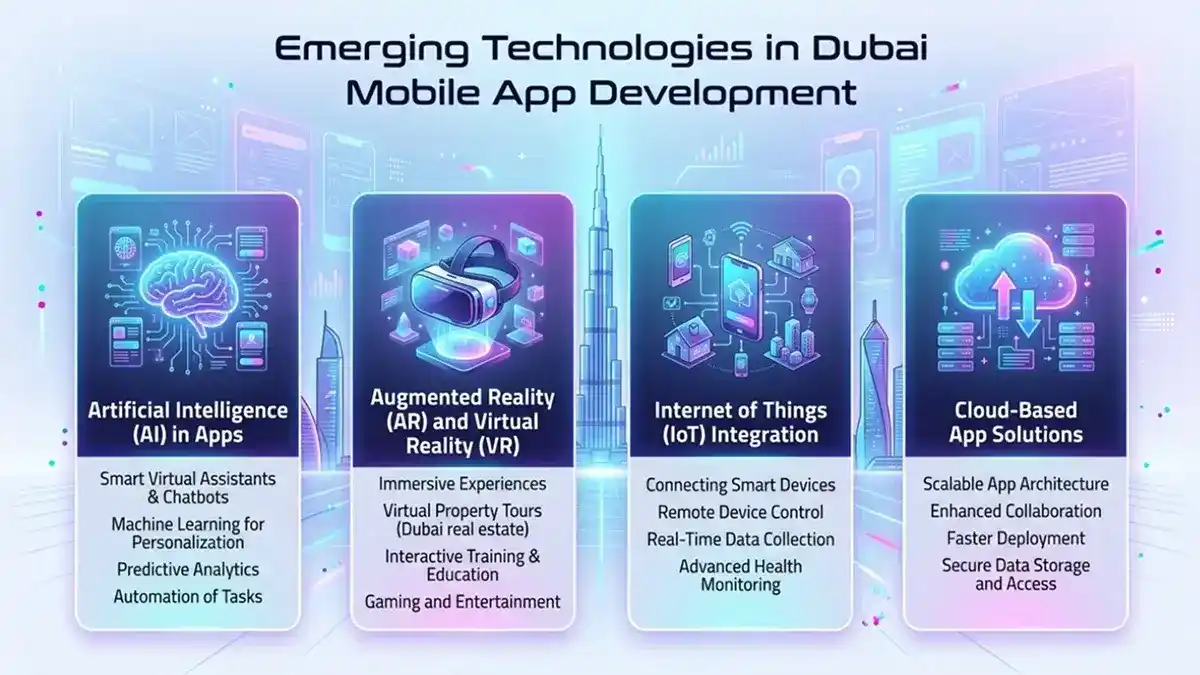
Emerging Technologies in Dubai Mobile App Development
Artificial Intelligence (AI) in Apps
AI is changing apps in Dubai. It helps apps feel smarter. It can make the app performance optimization more efficient. Many businesses use chatbots for fast help. AI can also study user actions to improve the app.
Key points:
- Smarter suggestions based on what users like.
- Chatbots and helpers for quick support.
- AI insights can improve UX and daily work.
Augmented Reality (AR) and Virtual Reality (VR)
AR and VR make apps more interactive. Stores use AR for virtual try-ons. Real estate apps use AR to show homes in new ways. VR can create tours for travel and learning.
Key points:
- AR helps with try-ons and home previews.
- VR creates immersive trips and lessons.
- These tools can increase interest and time in the app.
Internet of Things (IoT) Integration
IoT connects apps to smart devices. Users can control devices from the app. They can track health with wearables. They can manage smart homes. This makes the app useful every day.
Key points:
- Connects smart homes, wearables, and other devices.
- App controls make tasks easier and faster.
- Real-time updates help users stay involved.
Cloud-Based App Solutions
Cloud tools help apps grow safely. They can sync data across devices. This makes switching devices easier. Cloud support can also help apps run faster and stay stable.
Key points:
- Scalable and secure cloud systems.
- Real-time syncing across devices.
- Supports advanced features with better speed.
Also Read:- Finding the Best Mobile App Development Companies in Dubai
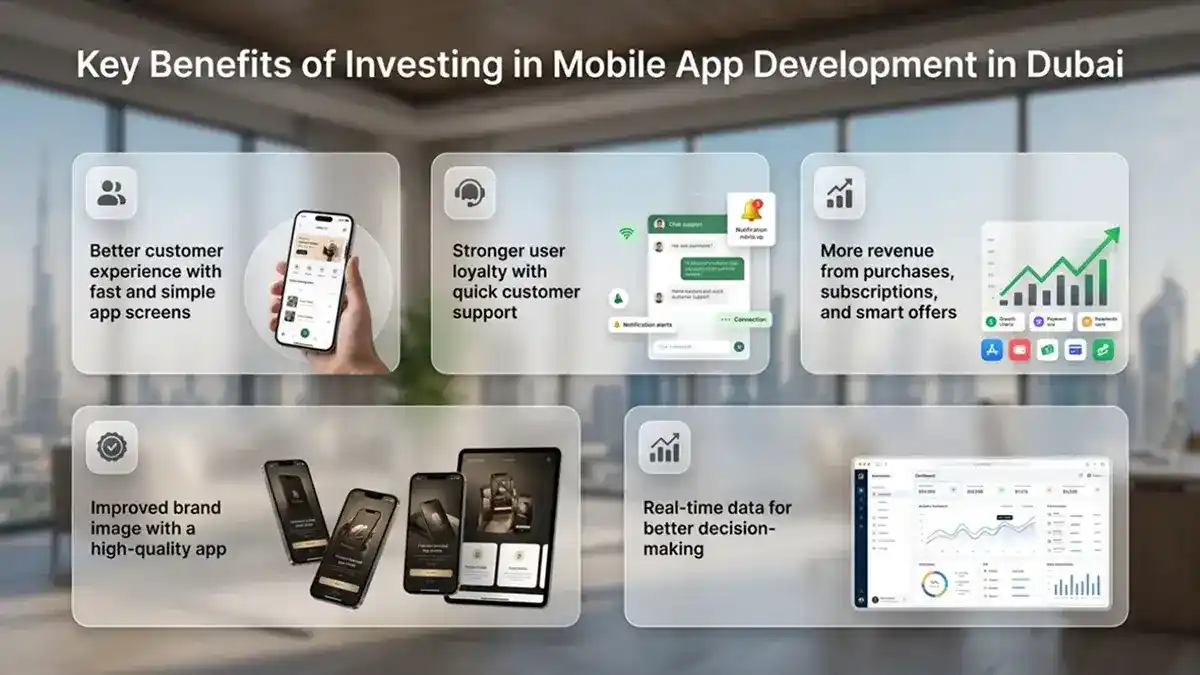
Key Benefits of Investing in Mobile App Development in Dubai
Building an app in Dubai by a best mobile app development company can bring strong value. Dubai moves fast in digital business. A good app can improve service. It can build trust and loyalty. It can also help companies earn more.
Key benefits include:
- Better customer experience with fast and simple screens.
- Stronger loyalty when users can get help quickly.
- More revenue from purchases, subscriptions, and smart offers.
- Better brand image with a high-quality app.
- Real-time data to guide better choices and planning.
Challenges and Solutions in Mobile App Development
Challenges
While mobile app development services can bring huge chances in Dubai’s digital space, companies still run into a bunch of real obstacles too. App stores are super competitive, so for brand new apps it can be tricky to get noticed. Also technology changes, almost like, every few weeks and apps must follow along otherwise they feel old fast. On top of that, people are more and more worried about security ,and privacy, so they want solid protection for their information.
Key challenges:
- Strong competition: the number of apps competing within the same user attention in the app stores run to thousands.
- Using technology: the field of technology is evolving and equal measure the new tools are being developed and frequently updated thus constant adjustment is literally inevitable.
- Security and privacy: you cannot afford to compromise on user privacy, especially sensitive information, in your quest to retain their confidence.
Solutions
To overcome those problems, companies should resort to these strategies, which will allow apps to remain meaningful, safe, and user-friendly. Agile development makes the teams operate with less friction, enabling them release the changes earlier hence continue releasing features. Receiving feedback on a regular basis would assist the app to grow in a manner that does not only meet the expectations, but also make an educated assumption. In the meantime, robust cybersecurity measures and adequate data protection systems can help to draw and sustain trust.
Key solutions:
- Agile development: it lets teams adjust quickly to shifting tech and changing user needs.
- Regular updates + user feedback: this keeps the app fresh, relevant, and user focused.
- Cybersecurity and data protection: strong safeguards support trust and also help with meeting the relevant rules.
Case Studies: Successful Dubai Mobile Apps
Dubai has, in the last few years, turned into a sort of hotspot for mobile app innovation, where tons of companies across different sectors achieved real traction by leaning on strong UX, new-ish technologies and a careful strategic approach to app development. Looking at these kinds of case studies, even if you skim them, you can get a clear view of what works and what tends to bring in revenue.
Banking Sector
Dubai-based banks, well they have pushed quite a lot of investment into their mobile apps to make digital banking feel smoother. Apps that use intuitive layouts, plus easy navigation, and they also offer real time transaction alerts, tend to do better with users. On top of that, AI-driven chatbots have been used more often to handle requests quickly, which improves customer engagement. Because of all that, adoption rates jumped, and digital transaction volumes went up as well, so it basically feeds into higher revenue streams directly.
Key takeaways:
- An intuitive UI and simple navigation tend to drive adoption
- AI chatbots support teams, and can cut down the time spent on routine requests
- Real-time updates create trust and keep people more engaged
E-commerce Sector
Retail brands in Dubai have also leaned into mobile apps to support smoother shopping journeys. Things like personalized recommendations, in-app payment options, and even AR-based product previews, make users spend more time browsing and they interact more. Then if the app connects to loyalty programs and adds push notifications, retention tends to rise, along with conversion performance. In multiple examples, this has shown notable growth in sales revenue too, not just engagement numbers.
Key takeaways:
- Personalized UX helps nudge repeat purchases
- AR plus mobile commerce tools make shopping feel more “real”
- Push notifications and loyalty rewards boost retention
Healthcare Sector
Healthcare providers have managed to use mobile apps for appointment booking , telemedicine, and also for patient monitoring. Apps that blend usability with speed and steady reliability have apparently made patients more satisfied, while the admin side gets less work. From the data you can pull out of app usage, providers get actionable glimpses, so they can fine tune services and increase operational efficiency.
Key takeaways:
- Efficient appointment scheduling along with telemedicine tends to boost engagement.
- Reliable high-performance apps, build trust with patients.
- Analytics for operations and service delivery, really help to optimize.

Best Practices for Mobile App Development in Dubai
Creating an effective mobile application in Dubai requires more than a brilliant idea, it requires a very tactical and user-centric thinking that is required. A top mobile app development company ought to actually put client requirements at the core, draw in conclusions of data and consequently ensure that the application is suited to the local anticipations, to ensure that customer engagement and adoption, and revenue keep the upward curve. With good best practices, the application can remain competitive and users can use it touchably on iOS, and Android, wherever they are.
Key best practices:
- Customer-centric design: Make the navigation look intuitive, the screens too, the functions have to make people do what they intend to do so they will be more satisfied and will want to spend more time there.
- Optimization, facilitated by analytics: Continue optimizing user experience, identify performance indicators where people are getting stuck, and so improve those areas of friction to the best ability.
- Multi-platform support: Have the application on iOS, Android, and even a web platform where it is appropriate to reach a wider group of users and observe various inclinations.
- Adherence to local laws and cultural standards: Ensuring the compliance of the application with local laws and cultural standards is crucial. Consider language options as well, and make the content relevant, as trust and acceptance is not optional.
By implementing these concepts, the businesses create mobile applications more than just technically sound: they are culturally appropriately, interesting, and actually profitable in the rapidly growing digitally in Dubai.
Also Read:- How much does it cost to develop a mobile app in Dubai?
Future of Mobile Apps in Dubai
The future of mobile app development in Dubai is promising, which is caused by the development of new technologies, changing user expectations, and the trend towards a complete transition to a digitized environment in the city. Businesses will also be more dependent on hi-tech technologies to provide high quality of immersion, customisation and seamless experiences to tech-based users.
Key trends shaping the future:
- Adoption of AI: Hyper-personalized suggestions, prophetic analytics, and smarter humanization will continue to operate via artificial intelligence in applications and improve their engagement and efficiency.
- AR/VR integration: AR and VR will allow products to experience and explore them in an interactive and immersive way, and will be used in education and tourism to allow more interaction with the user.
- IoT connectivity: Apps will offer the ability to control daily life and oversee real-time data on integration with smart homes, wearables, and connected devices, which will enhance convenience and lifestyle of users.
- Experiences that are 5G enabled: The introduction of 5G networks will enable the faster movement of data and low latency and high quality streaming experiences, enabling enhanced, real-time user app experiences, including AR, VR, and live commerce.
Choose DXB APPS As Leading App Development Company in UAE
DXB APPS, leading mobile app development company in Dubai is at the forefront of delivering innovative, high-quality mobile solutions for businesses across industries. With a skilled team of developers, designers, and strategists, DXB APPS specializes in creating native and cross-platform apps that combine sleek design, seamless functionality, and enhanced user experience.
The team expertise spans iOS and Android platforms, AI-powered applications, and cloud-integrated solutions, ensuring clients receive cutting-edge technology tailored to their unique business needs. By understanding local market trends and global digital standards, DXB APPS helps businesses strengthen their digital presence and engage users effectively.
DXB APPS, being the best mobile app development company in Dubai has earned a reputation for transforming business ideas into scalable mobile solutions that drive revenue and growth. Their approach focuses on user-centric design, agile development processes, and robust backend architecture, which allows for high performance, security, and reliability.
From startups to established enterprises, DXB APPS has successfully delivered apps that boost customer engagement, streamline operations, and provide measurable ROI. With a commitment to innovation, quality, and client satisfaction, DXB APPS continues to be the go-to mobile app development company for businesses looking to excel in Dubai’s competitive digital landscape.
Conclusion
Mobile app development Dubai has proven to be a powerful tool for enhancing user experience (UX) and driving revenue growth. By focusing on intuitive design, personalized features, high performance, and emerging technologies like AI, AR/VR, IoT, and cloud solutions, businesses can create apps that delight users, increase engagement, and foster loyalty. The success of Dubai-based banking, e-commerce, and healthcare apps demonstrates that well-designed mobile applications not only meet customer expectations but also provide measurable financial benefits.
For businesses aiming to thrive in Dubai’s competitive digital market, investing in tailored mobile apps by a top mobile app development company in Dubai is essential. By combining innovation with user-centric design and leveraging analytics for continuous improvement, companies can maximize adoption, strengthen brand presence, and unlock new revenue streams. Ultimately, the integration of technology, engagement strategies, and strategic planning ensures that mobile apps become a key driver of both customer satisfaction and long-term profitability.

FAQs
1. How much does mobile app development cost in Dubai?
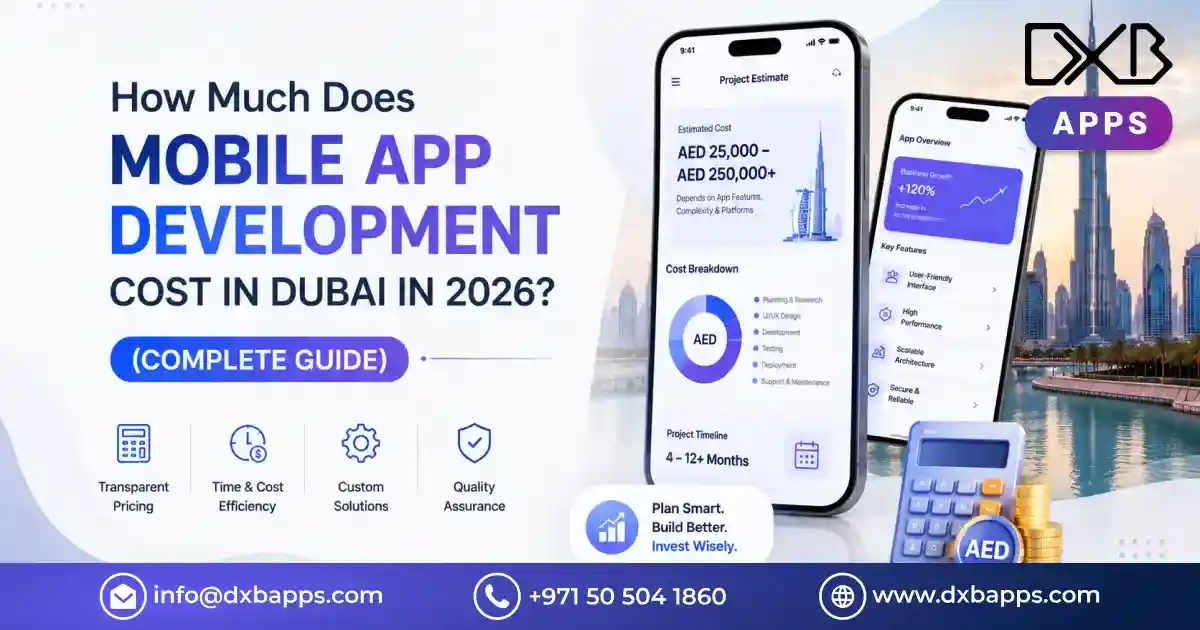
The cost of mobile app development in Dubai varies based on app complexity, platform choice, features, and design requirements. Simple apps may start from AED 20,000–50,000, while complex, feature-rich apps can exceed AED 200,000, including maintenance and updates.
2. Which industries in Dubai benefit most from mobile apps?
E-commerce, banking, healthcare, tourism, and real estate industries gain the most from mobile apps. Apps enhance customer engagement, streamline services, offer personalized experiences, and provide measurable insights, enabling businesses in these sectors to improve efficiency, retention, and revenue.
3. How can mobile apps increase customer retention and revenue?
Mobile apps enhance retention through personalized UX, push notifications, loyalty programs, and gamification. Engaged users are more likely to make repeat purchases, subscribe to services, and interact with promotions, directly contributing to higher revenue and long-term business growth.
4. What role does UX play in app success?
User experience (UX) is critical for app adoption and satisfaction. Intuitive navigation, responsive design, fast performance, and personalization create a seamless experience, increasing engagement, retention, and revenue while differentiating businesses in Dubai’s competitive mobile app market.
5. How do emerging technologies like AI and AR/VR benefit apps in Dubai?
AI enables personalized recommendations and chatbots, while AR/VR creates immersive experiences. Together, they enhance user engagement, improve operational efficiency, and differentiate apps in Dubai’s tech-savvy market, driving both user satisfaction and revenue growth.
6. Why is multi-platform development important for Dubai businesses?
Offering ios and android app development and web ensures maximum reach across diverse audiences. Multi-platform availability improves accessibility, boosts user adoption, and increases potential revenue streams by catering to both premium and mass-market segments in Dubai.
Also Read:- How to Develop an App in 15 Steps?