Ever had a great idea for a video but felt stuck because the software was too hard, or hiring a professional was too expensive?
You're not alone. The demand for eye-catching videos and images is exploding, but for a long time, creating them required skills, time, or a budget that most of us just don't have.
That's all changing. Right now, a creative revolution is happening, and it's powered by artificial intelligence. AI is becoming the go-to partner for creators everywhere, making what was once difficult suddenly simple.
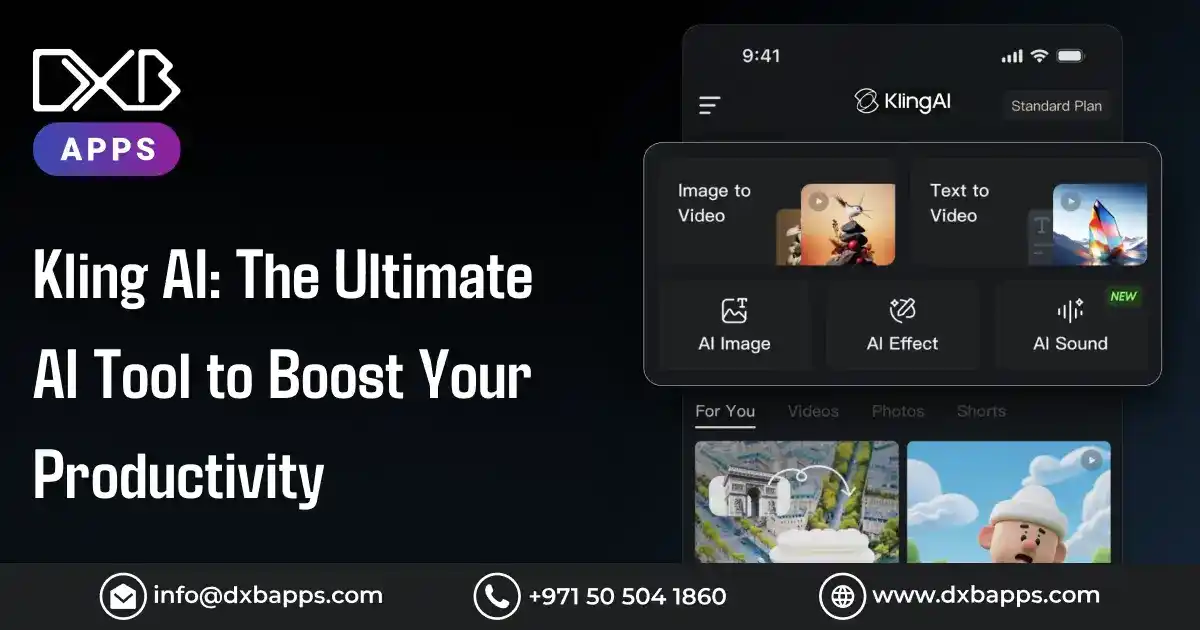
At the heart of this change is Kling AI. Think of it as your new creative studio in a browser tab. It’s built to take your words and turn them into professional videos and images in minutes. With its smart technology and easy-to-use design, Kling AI is breaking down the old barriers. It’s putting powerful creative tools into everyone's hands, no PhD or big budget required.
This guide explains what Kling AI is, how it works, its features, pricing, use cases, comparisons, and FAQs, so you can decide if it’s the right AI tool for you.
What Is Kling AI?
Kling AI is an advanced text-to-video artificial intelligence platform that generates high-resolution, realistic videos from written prompts using deep learning, motion prediction, and generative diffusion models.
Developed with backing from the Chinese technology company Kuaishou, this platform leverages the Kling large model and Kolors large model to deliver impressive visual outputs across various creative domains.
What sets Kling AI apart is its ability to serve as an all-in-one creative studio where users can not only generate content but also edit, refine, and share their creations within a vibrant community of fellow creators.
Who uses Kling AI?
- Beginners & Side Hustlers: Easy, drag-and-drop tools for quick experiments and small projects.
- Creative Professionals: Marketers, filmmakers, and designers use advanced controls like keyframing and APIs.
- Developers: Flexible APIs for building dynamic scenes and AI-powered workflows.
- Global Creators: Used worldwide, with strong adoption across Asia, Europe, and the Americas.
The platform serves creators, businesses, and AI enthusiasts, with over 10 million videos generated so far.
When Was Kling AI Launched?
Kling AI launched in June 2024 and has evolved rapidly. Within one year, it released 20+ updates, each adding major creative improvements.
Key Milestones
- June 2024: Kling AI officially launched
- Dec 2024: Version 1.6 introduced major engine upgrades
- April 2025: Version 2.0 enabled longer, high-quality videos
- May 2025: Version 2.1 added advanced start/end keyframing
- June 2025: First anniversary with major growth milestones
Kling AI’s fast progress reflects its strong focus on user feedback and continuous innovation.
Key Statistics of Kling AI
The following key statistics highlight the rapid expansion of the AI ecosystem in the United Arab Emirates and the global performance of tools like Kling AI as of late 2025:
UAE AI Adoption & Infrastructure
- Global Leadership: The UAE maintains the highest AI adoption rate in the world, with 97% of its workforce and federal entities utilizing AI tools.
- Daily Usage: Approximately 59.4% of the UAE's working-age population uses generative AI tools daily, outperforming other advanced digital economies like Singapore.
- National Investment: Total national investment in AI reached over AED 543 billion during the 2024–2025 period.
- Digital Talent: The country has successfully expanded its talent pool to over 450,000 programmers nationwide.
Kling AI Performance & Market Reach
- User Base: As of late 2025, Kling AI supports a global community of more than 45 million content creators.
- Revenue Growth: The Kling AI business reached a revenue target of $140 million in 2025, more than doubling its initial projections.
- Market Share: Kling AI has captured approximately 30% of the global text-to-video market, leading competitors like Runway and Google Veo 2.
Key Features of Kling AI
AI Video Generation Capabilities
- Kling AI’s standout feature is its text-to-video generation, which converts written prompts into dynamic video scenes.
- Users can describe actions, environments, camera styles, and moods in natural language, and the system interprets these inputs to produce animated visuals.
- Results range from realistic footage to stylized animations, with output quality strongly tied to prompt detail. More specific descriptions generally lead to better results.
- The platform also supports image-to-video generation, allowing users to animate static images. This is especially useful for creators who want to bring existing visuals to life or use reference images to control style and composition.
- Kling AI video extension feature claims support for videos up to three minutes, although most practical use cases involve shorter clips (typically 5–10 seconds), ideal for social media and short-form content.
AI Image Generation and Enhancement
- In addition to video creation, Kling AI offers text-to-image generation, producing high-quality visuals from written descriptions.
- Users can also perform image-to-image transformations, adjusting style, mood, or content within existing photos.
- Higher-tier plans reportedly include image upscaling, improving resolution for professional or commercial use.
- What sets Kling AI apart is its tight integration between image and video workflows. Users can generate static images and seamlessly animate them, maintaining visual consistency across formats.
- This unified pipeline is especially valuable for marketers, storytellers, and brand-focused creators who need consistent aesthetics across campaigns and visual assets.
Community and Collaboration Features
Kling AI supports a growing creative community, where users can share outputs, explore trending creations, and learn from others.
- A notable feature is prompt cloning, which allows users to study and experiment with prompts used in successful projects, making the platform both inspirational and educational.
- The platform also includes collaboration-oriented features, such as shared creative spaces and project-based workflows.
- While documentation on these tools is limited, the overall design reflects modern creative platforms that emphasize teamwork, feedback, and rapid ideation, especially useful for professional teams and agencies.
Want to launch a next-generation content creation app inspired by Kling AI?
From AI video generation to scalable cloud infrastructure, DXB APPS builds high-performance apps designed for creators and businesses.
Get a Free ConsultationHow to Boost Productivity with Kling AI?
Mastering Prompt Engineering
- Kling AI delivers its best results when users apply advanced prompt engineering. Strong prompts include details about lighting, composition, camera movement, emotions, and artistic style.
- For example, a detailed scene description with mood and environmental context will produce far more refined results than a simple object-based prompt.
- Experienced users often use sequential prompting, building scenes step by step to add narrative depth and continuity.
- Style modifiers (such as cinematic, cyberpunk, or vintage film) significantly influence output, while negative prompts help remove unwanted elements and refine visuals.
Workflow Optimization Strategies
- To maximize efficiency, many users develop prompt templates for recurring content types, ensuring consistent output for social media, branding, or educational videos.
- This approach reduces trial-and-error and speeds up production. Where available, batch generation allows users to create multiple variations at once, supporting rapid iteration and A/B testing.
- Because Kling AI operates on a credit-based system, effective resource management is essential.
- Productive workflows typically involve testing ideas with shorter, lower-cost generations before refining selected outputs.
- Many creators also prefer generating multiple short clips rather than one long video, as this modular approach offers greater control and smoother editing flexibility.
How to Get Started with Kling AI? (Step-by-Step)
Step 1: Create Your Account
- Visit the official Kling AI website or download the mobile app
- Sign up using a verified email address
- Gmail or Yahoo works best (some users report limited provider support)
Step 2: Complete the Setup
- Follow the on-screen registration flow
- The process is mostly quick and user-friendly
- International users may face minor access limitations
Step 3: Explore the Dashboard
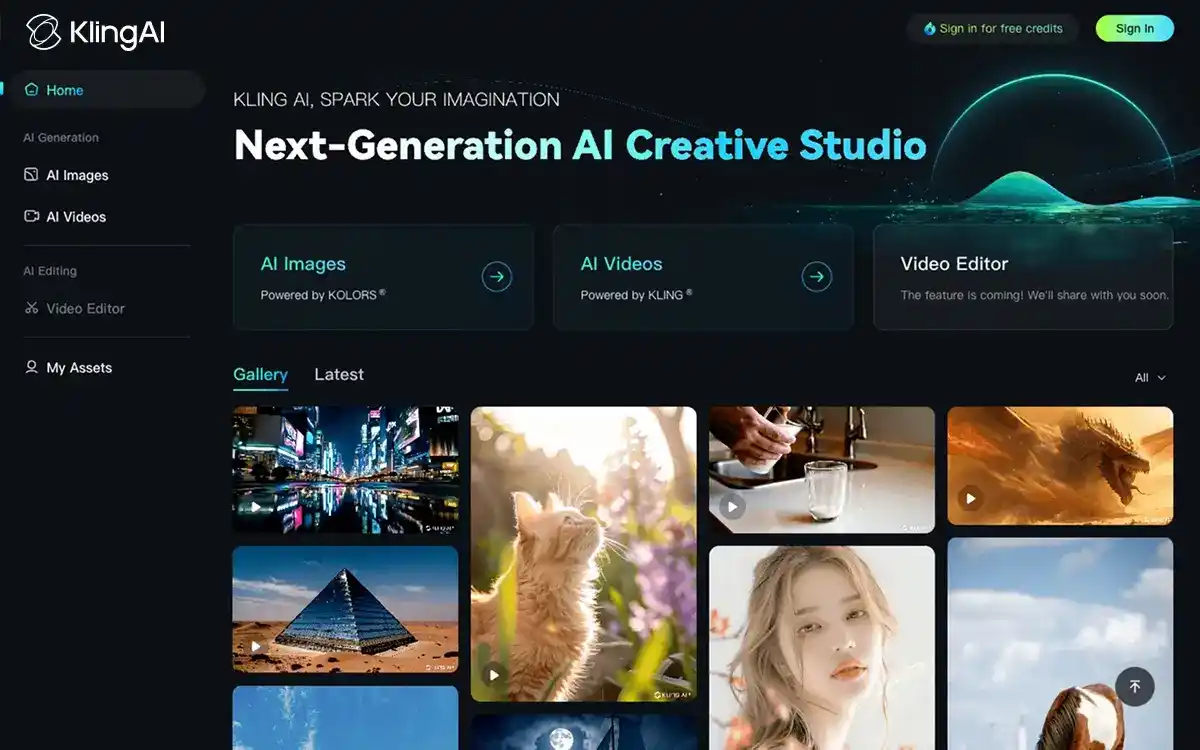
- After login, you’ll see a clean and minimal interface
- Main options include:
- Text-to-Video
- Image-to-Video
- AI Image Generation
-
Everything is placed front and center for easy access
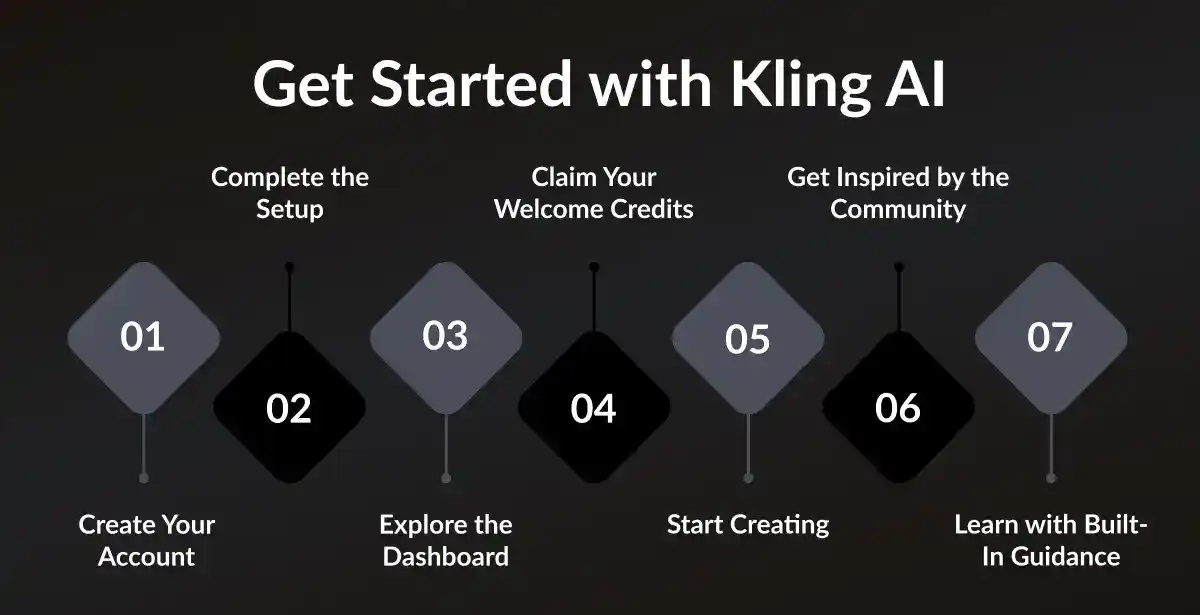
Step 6: Get Inspired by the Community
- Browse the community gallery to see other creations
- Learn what kind of prompts and styles work best
- Reuse ideas and improve your own outputs
Step 7: Learn with Built-In Guidance
- Kling AI provides prompt examples and subtle tips
- Helpful for beginners new to AI video generation
- Makes experimentation easier and faster
Always verify the source before installing the Kling AI APK to ensure a safe and authentic app experience.
Kling AI Use Cases Across Industries
Kling AI is rapidly becoming a go-to creative tool across multiple industries, helping teams and individuals produce high-quality visual content faster and more cost-effectively. From solo creators to large agencies, its use cases span marketing, e-commerce, entertainment, and social media.
Content Creators & YouTubers
Content creators and YouTubers use Kling AI to streamline video production without relying on complex editing tools or expensive setups. The platform enables fast content creation while maintaining strong visual quality. With the Kling AI video generator, users can produce engaging content faster than traditional video editing.
Common use cases include:
- Creating short-form videos for YouTube Shorts, Reels, and TikTok
- Producing explainer videos with animated visuals
- Enhancing storytelling with cinematic scenes
- Generating background visuals for talking-head videos
- Turning text ideas into engaging video sequences
Kling AI allows creators to stay consistent, post more frequently, and focus on creativity rather than technical work. Kling AI free lets creators test AI video generation without upfront costs, making it ideal for beginners in 2025.
Digital Marketers & Creative Agencies
Marketing teams and agencies rely on Kling AI to speed up campaign execution and reduce production timelines. It supports rapid experimentation and scalable creative output. Many marketers rely on the Kling AI app to speed up social media and ad video production.
Marketers use Kling AI to:
- Design ad creatives for paid campaigns
- Produce branded promotional videos
- Test multiple visual concepts before final rollout
- Create content variations for different regions and audiences
- Reduce dependence on video shoots and editing teams
This flexibility makes Kling AI ideal for fast-moving digital campaigns and performance-driven marketing strategies. Instead of using the Kling AI mod apk, creators are advised to try the official Kling AI free version for a safer experience.
E-Commerce Product Video Creation
Kling AI plays a major role in helping e-commerce brands create compelling product visuals without physical studios or models. Brands can generate high-impact videos that boost engagement and conversions.
Key benefits for e-commerce include:
- Showcasing products in motion and real-world scenarios
- Creating lifestyle-style visuals for listings and ads
- Producing promotional videos for sales and launches
- Generating social-ready ads quickly
- Scaling product videos across large catalogs
This approach helps brands maintain visual consistency while significantly lowering production costs.
Social Media & Influencer Content
For influencers and social media managers, Kling AI simplifies content creation across multiple platforms while keeping visuals fresh and trend-ready. The Kling AI download makes it easy for beginners to explore AI video generation features
Ideal for platforms such as:
- Instagram Reels
- TikTok videos
- YouTube Shorts
- Facebook and Meta ads
Influencers use Kling AI to experiment with creative ideas, follow trends quickly, and publish high-quality content without relying on professional editors.
Film, Gaming & Storyboarding
In creative industries like film and gaming, Kling AI supports early-stage visualization and concept development. It helps teams bring ideas to life before full production begins.
Common applications include:
- Visualizing story concepts and scenes
- Creating pre-production storyboards
- Designing game environments and atmospheres
- Testing lighting, camera angles, and moods
- Communicating creative ideas to stakeholders clearly
This makes Kling AI a valuable tool for ideation, pitching, and creative planning.
Planning to build an advanced AI video generator like Kling AI?
DXB APPS helps you turn ideas into powerful AI apps with features like text-to-video, image animation, and smart rendering.
Get a Free ConsultationWhat is Kling AI's Pricing and Plans?
Kling AI employs a credit-based system that determines how much content users can generate, with different subscription tiers offering varying credit allocations and feature access. This approach provides flexibility but has drawn criticism from some users who find the system confusing or restrictive.
Understanding the pricing structure is essential for determining whether Kling AI represents good value for specific use cases and workflows.
| Plan | Monthly Cost | Key Features | Best For |
|---|---|---|---|
| Free | $0 | 66 daily credits, watermarked outputs, basic tools | Experimentation, occasional use |
| Standard | $3.88 | More daily credits, faster processing, and watermark removal | Regular users needing consistent access |
| Pro | $12.88 | All Standard features plus Master Shorts Video Extension | Content creators focused on short-form video |
| Premier | $28.88 | All Pro features plus Image Upscale tool | Professionals needing high-resolution outputs |
Top Kling AI Alternatives to Consider
The competitive landscape for AI video generation has expanded rapidly, offering creators several alternatives with different strengths and specializations. With the app Kling AI, users can turn text prompts into engaging visual content.
When evaluating Kling AI against other options, considering these alternatives helps contextualize its position in the market and identify potential solutions for specific creative needs.
ImagineArt
It presents itself as a comprehensive alternative, offering access to multiple AI video models (including Kling AI itself) through a unified interface.
Its node-based workspace facilitates complex editing workflows and real-time collaboration, appealing to professional teams requiring sophisticated control over their creative process.
The platform's pricing structure, while credit-based like Kling AI's, reportedly offers more transparency and flexibility for high-volume users.
PixVerse v5
It emphasizes realistic outputs with improved physics simulation and audio synchronization capabilities. Users praise its ability to maintain visual consistency and interpret prompts accurately, though limitations on video duration (typically up to 10 seconds) may restrict certain applications.
The platform offers clearer subscription tiers with defined output resolutions and watermark policies, potentially addressing some of the transparency concerns raised about Kling AI's credit system.
Google Veo 3.1
It represents a premium option with advanced features like 4K support, sophisticated camera controls, and enhanced physics simulation. Its per-second pricing model provides clarity but may prove expensive for high-volume usage.
OpenAI's Sora 2
It promises strong narrative coherence and integration with the ChatGPT ecosystem, potentially offering more intuitive prompt interpretation through conversational interaction
| Platform | Key Strengths | Pricing Approach | Best For |
|---|---|---|---|
| Kling AI | Integrated image/video, community features | Credit-based subscriptions | Casual creators, social media content |
| ImagineArt | Multiple integrated models, node-based editing | Credit-based tiers | Professionals needing workflow flexibility |
| PixVerse v5 | Realistic outputs, audio synchronization | Tiered subscriptions | Marketing content, short films |
| Google Veo 3.1 | Cinematic quality, physics simulation | Per-second pricing | High-end production, filmmaking |
| Sora 2 | Narrative coherence, ChatGPT integration | ChatGPT Plus/Pro add-on | Storytelling, character-driven content |
Kling AI’s Strengths: Why It Stands Out for Content Creators?
- Kling AI makes it easy to generate multiple video ideas or variations in minutes, helping creators dramatically speed up their content production cycle. This rapid ideation is a major advantage for social media managers and marketers who need fresh visuals consistently.
- The platform also rewards well-crafted prompts. By clearly defining elements like artistic style, mood, camera angles, and pacing, creators can produce highly customized, near-studio-quality videos without advanced editing skills. Small tweaks in prompts can lead to noticeably better results.
- For independent creators and small businesses, Kling AI is especially powerful. It allows you to create large volumes of niche-specific video content without increasing production costs, making it easier to target different audiences across platforms.
- Kling AI also shines at content repurposing. Blog posts, articles, or podcast scripts can be transformed into animated explainer videos, giving existing content a fresh format and extending its lifespan.
- Perhaps the biggest win is ROI. By reducing video production time, equipment needs, and outsourcing costs, creators can produce better visuals while spending significantly less.
Kling AI’s Limitations: What to Know Before Using It
- While Kling AI aims for hyper-realistic visuals, it may still fall short for creators seeking a very specific artistic signature. Compared to more experimental or advanced tools, fine-grained control over every visual detail can feel limited.
- Rendering times and overall video quality can also be inconsistent. As of early 2025, some outputs may lack detail or take longer than expected, especially when aiming for polished, studio-level results.
- It’s also important to carefully review Kling AI’s terms of service. Understanding content ownership, usage rights, and commercial licensing is essential before monetizing or distributing generated videos.
- Since some features are still evolving, creators should expect a learning curve. Certain experimental tools may affect consistency, especially for those new to AI-driven video creation.
Is Kling AI Right for You? Choosing the Best Fit
- Kling AI is a great choice for solo creators, startups, and small businesses that want an affordable, flexible way to produce a high volume of video content without traditional filmmaking expertise.
- It works especially well for social media videos, marketing clips, product showcases, and educational content where speed and efficiency matter most.
- However, if your projects demand advanced animations, highly detailed character designs, or enterprise-level integrations, you may want to explore alternatives like Synthesia or HeyGen.
- Ultimately, Kling AI is best for creators who prioritize fast ideation and scalable content production over cinematic perfection. If you’re looking to experiment with AI video tools without a heavy budget, it’s a solid place to start.
Transform Your Business Vision Into a Powerful Mobile Application That Engages Customers and Drives Growth
Build your dream app with DXB APPS and go live on iOS and Android effortlessly. We specialize in creating intuitive, scalable mobile apps that enhance user experience, increase engagement, and grow your business.
Get Your Free ConsultationFuture of Kling AI and Development Trends
Development Roadmap
Upcoming updates focus on longer videos, better image quality, faster processing, and more creative controls.
Tech Integrations
Future versions are expected to connect with VR, AR, and metaverse platforms for immersive content creation.
Industry Impact
Kling AI is set to lower production costs, speed up workflows, and make professional-grade tools accessible to more creators.
Security & Ethical Considerations
Responsible Usage
Users must avoid misleading, harmful, or rights-violating content and be transparent about AI usage.
Privacy Protection
Strong data protection policies exist, but users should still be cautious with personal uploads.
Deepfake Prevention
Built-in safeguards help detect and reduce misuse and fake content generation.
What are the SEO Benefits of Kling AI?
Video SEO Boost
AI-generated videos increase engagement and dwell time, improving search rankings.
Audience-Focused Content
Quick personalization helps target different audience segments more effectively.
Multi-Platform Optimization
Easy resizing and duration control make content ideal for YouTube, Instagram, TikTok, and LinkedIn.
How to Develop an App Like Kling AI?
Building an app like Kling AI is a complex project that integrates advanced AI with user-friendly software. Here is a concise breakdown of the key technical and business stages involved.
Planning & Research: Define your app's purpose, target audience (e.g., marketers, educators), and conduct competitor analysis to identify market gaps.
UI/UX Design: Focus on a simple, intuitive interface that makes complex AI tools accessible. Include features like voice control and accessibility options.
Technical Architecture: Build a robust backend (using Python/Node.js) and a responsive frontend (using React/Vue.js). A microservices architecture is recommended for scalability.
AI Model Development & Integration: This is the core challenge. You will need to:
Develop or Integrate Models: Use frameworks like TensorFlow or PyTorch to build models, or integrate third-party APIs (e.g., for text-to-speech).
Focus on Critical AI Challenges: Prioritize solving for motion physics (natural movement), temporal coherence (stable video over time), and prompt understanding.
Train with Quality Data: Use large, diverse, and legally compliant video datasets for training, employing techniques like transfer learning.
Rigorous Testing: Test extensively, including AI model accuracy, app functionality under load, and user experience with diverse groups.
Deployment & Beyond: Launch on app stores and the web, implement marketing, and plan for ongoing maintenance, updates, and model retraining based on user feedback.
Tech Stack To Build An App Like Kling AI
Here is a concise breakdown of the technology stack you would need to build a video generation app like Kling AI, divided into core components and a recommended practical approach.
| Application Layer | Recommended Technologies | Key Purpose |
|---|---|---|
| Frontend | React, React Native, Vue.js | User interface for prompt input, video editing, and result display |
| Backend Server | Node.js, Python (Django / Flask) | Handles business logic, user management, and AI–frontend coordination |
| Database | MongoDB, PostgreSQL, Firebase | Stores user data, prompts, metadata, and video references |
| AI / ML Layer | Models: Kling AI, Runway Gen, Google Veo Frameworks: TensorFlow, PyTorch |
Core video generation using third-party APIs or custom models |
| Video & Media Processing | FFmpeg, OpenCV | Video encoding, decoding, and post-processing |
| Cloud & Infrastructure | AWS, Google Cloud, Azure | Scalable GPU compute, video storage, and app hosting |
| API Integration | Replicate (Kling AI API) | Integrates third-party AI models like Kling AI 1.6 Pro |
This is the most important technical and business decision. You have two main paths:
- Integrate Third-Party APIs: This is the fastest way to market. You can integrate powerful, pre-trained models like Kling AI 1.6 Pro via platforms like Replicate, Runway Gen-4.5, or Google Veo. You pay per use but avoid the massive R&D cost.
- Build Proprietary Models: This offers full control and differentiation but requires a world-class AI research team and a budget of hundreds of thousands to millions of dollars for data, training (on clusters of NVIDIA H100 GPUs), and iteration. Kling AI itself uses a Diffusion Transformer architecture to achieve its results.
Cost To Build An App Like Kling AI
Building an app like Kling AI requires a significant investment, primarily because developing or integrating a sophisticated AI video generation model is a complex and resource-intensive task. The total cost can vary dramatically based on your technical approach.
1. Build a Full App (MVP)
This approach involves developing the entire application from scratch with full control over features and design.
Primary Cost Drivers
- Custom development team
- UI/UX design
- Backend infrastructure
- AI model integration or training
Cost & Timeline
- Estimated cost: $55,000 – $140,000+
- Timeline: 6–12 months
2. Integrate Third-Party AI APIs
This method uses existing AI video models and focuses on building a user-facing application around them.
Primary Cost Drivers
- Ongoing AI API usage fees
- App development and maintenance
- API management and scaling
Cost & Timeline
- Operational cost: $2,000 – $10,000+ per month
- Initial app development required
- Faster to launch, but requires continuous monthly spending
3. Build a Custom AI Model (Proprietary)
This approach focuses on creating a fully proprietary AI system for video generation.
Primary Cost Drivers
- AI research and engineering team
- Large-scale GPU compute resources
- Data collection and labeling
- Long-term R&D efforts
Cost & Timeline
- Estimated cost: Hundreds of thousands to millions (USD)
- Timeline: Long-term, multi-year development
Trust DXB APPS As We Build the Best Mobile Apps in the UAE
DXB APPS has solidified its reputation as a premier mobile app development Dubai company by offering deep local insight with global technical excellence. The company doesn't just build top apps, it crafts tailored digital app solutions that address the specific needs of the diverse UAE market, from sleek consumer-facing applications for the retail and hospitality sectors to robust enterprise apps for finance and logistics.
Our app development Abu Dhabi solutions are defined by a user-centric philosophy, employing cutting-edge technologies like AI and IoT to ensure apps are not only intuitive and engaging but also scalable and future-proof.
By prioritizing clear communication, agile development methodologies, and rigorous post-launch support, DXB APPS has a team of the best mobile app developers that delivers more than just an app; it delivers a seamless, high-performance digital app experience. Businesses choose web development Dubai experts such as DXB APPS to create custom websites and web applications.
Need a Mobile App to Grow Your Business Digitally?
Transform your ideas into powerful mobile applications for Android, iOS, and hybrid platforms with DXB APPS.
Get Your Free ConsultationConclusion
Kling AI occupies a distinctive position in the rapidly evolving landscape of AI-powered creative tools. Its integrated approach to image and video generation, combined with community features and an accessible pricing structure, creates genuine value for specific user segments.
When functioning optimally, the platform delivers on its promise to democratize visual content creation, enabling users without specialized technical skills to produce impressive videos and images through intuitive text descriptions. For social media creators, small business marketers, educators, and creative experimenters, Kling AI represents a potentially transformative tool that can accelerate workflows and unlock visual possibilities previously requiring substantial resources.
FAQs
Is Kling AI suitable for beginners?
Yes. The interface is beginner-friendly and requires no technical skills.
Can Kling AI be used for social media content?
Absolutely. It supports formats suitable for YouTube, Instagram, TikTok, and ads.
What makes Kling AI different from other AI video tools?
Kling AI focuses on realistic motion, cinematic visuals, and long-form consistency, which many tools lack.
Is Kling AI free?
Kling AI usually offers limited free access with paid plans for extended features.