Dubai stands as a global leader in digital transformation, with its state-of-the-art infrastructure and progressive policies paving the way for tech innovation. As the mobile app development hub of the Middle East, Dubai has fostered an ecosystem ripe for businesses seeking to leverage mobile apps for growth. By 2026, Dubai’s rapid adoption of smart city technologies and mobile-first strategies has firmly placed app development in Dubai at the heart of its economic transformation.
In the UAE, mobile app development is a thriving sector, with businesses investing heavily in customized mobile app solutions to meet the demands of a tech-savvy population. The mobile market continues to expand, with mobile apps now accounting for a major chunk of consumer engagement and business operations. With mobile app developers in Dubai continuously pushing the envelope on innovation, businesses are realizing that mobile apps are no longer optional, they are essential.
According to industry statistics, the mobile app market in the UAE is expected to reach over $3 billion by the end of 2026. With mobile app development companies ramping up efforts to meet these demands, businesses are witnessing increased user engagement, higher revenue, and improved operational efficiency through the power of mobile applications. Whether it’s a retail app, healthcare app, or enterprise solution, mobile apps are the gateway to success in 2026.
In this comprehensive guide, you will understand why mobile apps are revolutionizing the business landscape in Dubai and how partnering with a top mobile development company can set your business up for future success.

Understanding Mobile App Development
What is Mobile App Development?
Mobile app development is the process of building applications that run on mobile devices such as smartphones and tablets. This involves designing, coding, testing, and launching apps that cater to user needs across platforms like iOS and Android.
Whether you’re looking for a native app development solution, a hybrid app, or cross-platform app development, the choice you make will have a significant impact on the app’s performance, user experience, and cost-effectiveness.
What are the Types of Mobile App Development? Understanding Your Options
1. Native App Development
Native apps are built specifically for a single platform (iOS or Android) using the platform’s native programming languages (e.g., Swift for iOS or Kotlin for Android).
These apps provide optimum performance, access to full device capabilities, and the best possible user experience (UX). However, developing a separate native app for each platform can be time-consuming and costly. Native apps are ideal for apps requiring high-performance graphics or complex functionalities.
| Category | Benefits | Development Considerations |
|---|---|---|
| Performance | Native apps are tailored for a particular platform, providing the fastest and best performance. | Developing for multiple platforms can be costly due to separate codebases. |
| Device Features | Easy access to and use of GPS, camera, and sensor hardware and software features. | Requires multiple development teams to handle different platforms. |
| User Experience | Follows platform-specific norms and requirements, offering a seamless user experience. | Longer development cycles due to the need for separate versions for different platforms. |
2. Hybrid App Development
Hybrid apps are built using web technologies like HTML5, CSS, and JavaScript, and are wrapped in a native container. They allow developers to write the app once and deploy it across multiple platforms, including iOS and Android.
While hybrid apps are quicker and more cost-effective to develop, they might not deliver the same level of performance or native UX as a dedicated native app.
| Category | Benefits | Development Considerations |
|---|---|---|
| OS Compatibility | Capable of supporting a variety of OS systems. | Hybrid apps might not provide the same level of performance as native apps. |
| Cross-Functionality | Allows for cross-functional compatibility across multiple platforms. | User experience may suffer due to non-compliance with platform-specific design standards. |
| Security & Performance | Enables native security and performance with the help of effective frameworks. | Hybrid apps may not be as fast or responsive as native apps, especially for advanced capabilities. |
| Efficiency | Improved product offerings and increased efficiency. | Challenges in optimizing the user experience for different platforms. |
3. Cross-Platform AppDevelopment
Cross-platform apps use frameworks like React Native or Flutter to write code that can be deployed on multiple platforms. This approach strikes a balance between native performance and cost-efficiency.
Cross-platform development allows developers to maintain a single codebase, speeding up the development process and reducing costs while ensuring a native-like user experience. It's a good choice for businesses with tight budgets or those looking to target both iOS and Android users without significant compromises.
| Category | Benefits | Development Considerations |
|---|---|---|
| OS Compatibility | Allows development for multiple platforms with a single codebase. | Performance may not match that of native apps due to the abstraction layer. |
| Cross-Functionality | Supports a variety of OS systems, enhancing compatibility. | May require additional plugins or frameworks for optimal functionality on different platforms. |
| Security & Performance | Can achieve native-like performance with the right tools and frameworks. | Performance might be slightly slower or less optimized compared to native apps. |
| Efficiency | Faster development cycle due to a unified codebase and easier maintenance. | Achieving a perfect user experience across platforms can be challenging. |
iOS vs. Android: Which Platform Should You Choose?
When deciding between iOS vs Android for your custom mobile app development Dubai, it's crucial to consider your target audience and business goals.
-
iOS is preferred in markets with high-income users, like Dubai, and tends to offer a more secure and stable environment for apps. Apple’s rigorous app review processes can ensure high-quality standards for your app. If your app targets premium consumers and you’re looking to offer a polished, high-end experience, iOS is often the preferred choice.
-
Android, on the other hand, is the dominant mobile operating system globally, especially in emerging markets. Android app development offers more flexibility and customization opportunities, especially with hardware integration. If you're looking to reach a broad user base and provide affordable apps across various devices, Android might be a better choice.

When Businesses Need Custom vs. Template Mobile App Development Solutions?
For businesses in Dubai looking to enter the mobile app market, understanding when to choose custom app development solutions versus template solutions is crucial.
-
Custom Solutions: If your business needs a highly unique app with specific features, functionalities, or integration with third-party services, custom app development is the way to go.
Custom apps allow you to tailor the app’s design, features, and user interface (UI) to suit your brand and audience, providing a personalized experience. For instance, an enterprise app requiring complex integrations with existing systems or custom payment solutions would require custom app development.
-
Template Solutions: For businesses on a tighter budget or those with simpler needs, template solutions might be more suitable. These are pre-built apps that can be quickly customized to fit your brand and content.
While template apps are faster and more cost-effective to develop, they might have limited features and lack the flexibility of custom apps. If you are looking for a basic e-commerce app or a business directory, template solutions may meet your needs without significant investment.
What are the Considerations to Keep in Mind for Mobile App Development in Dubai?
When developing a mobile app for the Dubai market, several Dubai-specific considerations should be factored in to ensure the app meets local expectations and regulatory requirements:
1. Multilingual Support:
Dubai’s diverse population speaks multiple languages, including Arabic and English. To cater to this multicultural audience, your mobile app should offer multilingual support.
This ensures a seamless experience for all users and helps expand your app’s reach. Many mobile apps in Dubai provide language options, making it essential for businesses to incorporate Arabic as a default language, alongside English, to maximize user engagement.
2. Payment Gateways
The UAE is known for its advanced digital payment infrastructure, and integrating secure payment gateways into your mobile app is crucial for success.
Popular payment systems such as Apple Pay, Google Pay, and local gateways like Telr or PayTabs should be integrated to cater to the local preferences. Offering secure, seamless payment options not only enhances the user experience but also builds trust with your customers.
3. Compliance with Local Regulations:
When developing a mobile app for the Dubai market, compliance with local regulations is critical. Dubai has stringent data privacy laws, and businesses must ensure their mobile apps meet the UAE’s data protection and security standards.
For instance, apps collecting personal data must comply with the UAE’s Personal Data Protection Law and other regulations set by Dubai’s Internet City. Ensuring legal compliance will avoid penalties and enhance your app’s credibility in the region.
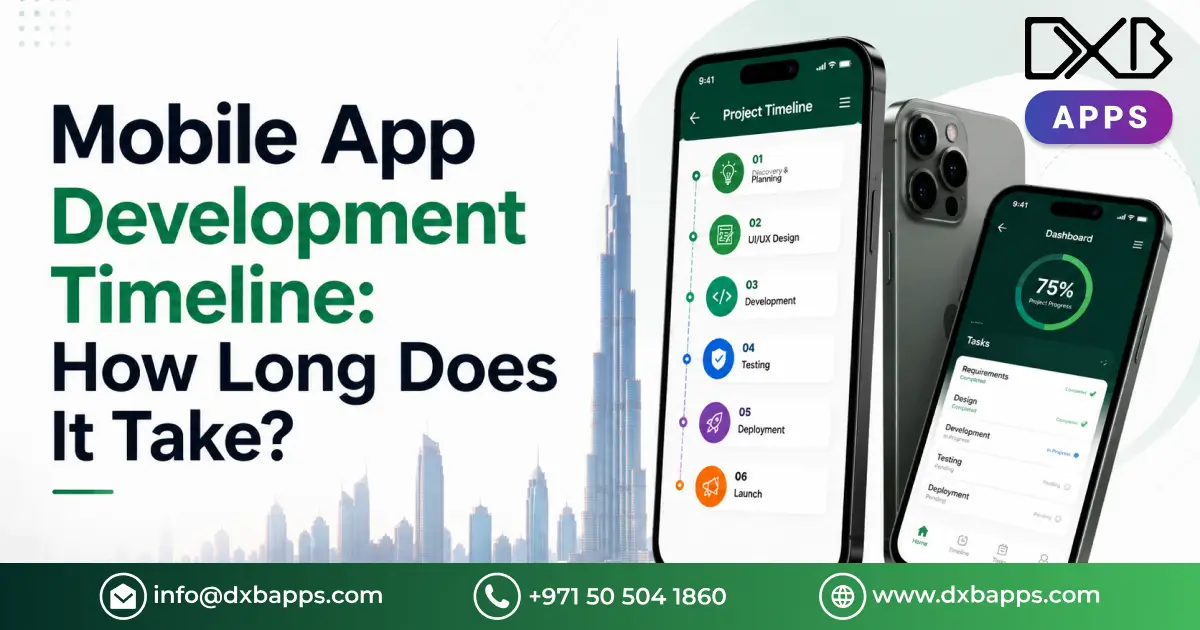
The Mobile App Development Dubai Process
1. Discovery and Strategy Phase
The discovery phase in the mobile app development process UAE sets the foundation for creating a successful digital product. During this phase, research and strategy are aligned with business objectives, ensuring the app meets user needs and market demands.
- Market Research in UAE Context: Conduct in-depth market research to understand trends in the UAE mobile app ecosystem. This includes identifying the app market size in the UAE, user preferences, and regional challenges such as internet connectivity and mobile device penetration.
UAE’s rapid technological advancements make it crucial to align apps with digital transformation trends, leveraging smart city initiatives like Dubai Smart City.
- Competitor Analysis: Analyze leading apps in the region, such as Careem and Noon, to identify gaps, strengths, and opportunities. Study their UI/UX design, user engagement strategies, and app performance to benchmark and innovate.
- Defining Target Users in Dubai/GCC: Segment the target audience based on demographics, tech-savviness, and regional behaviors. For example, Millennials in Dubai tend to prioritize convenience and speed, while older GCC residents may value more personalized services. Tailor your app’s user experience (UX) for different cultural groups within the GCC.
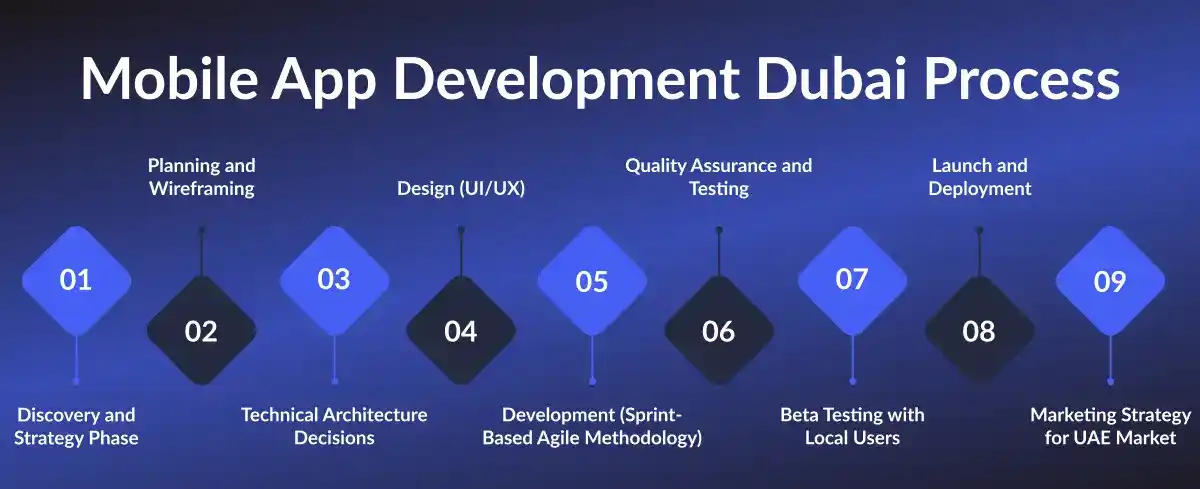
2. Planning and Wireframing
In this stage, feature prioritization and the app’s user flow mapping are created.
- Feature Prioritization: Use frameworks like MoSCoW (Must have, Should have, Could have, Won’t have) to prioritize app features. Consider features relevant to the UAE’s market, such as payment gateway integration (e.g., Apple Pay, STC Pay), geolocation services, and multi-language support (Arabic and English).
- Wireframing: Develop low-fidelity wireframes to visualize the app’s layout and structure. Tools like Figma or Adobe XD help design user interface (UI) elements, ensuring that every screen is functional, intuitive, and aligns with the intended user experience.
- User Flow Mapping: Map out clear and simple user journeys for key processes, ensuring smooth navigation and reduced friction in tasks like account creation, payment transactions, and in-app purchases.
3. Technical Architecture Decisions
Technical decisions in mobile app development are vital for ensuring the app’s scalability, security, and performance.
- Cloud-Based Architecture: Leverage platforms like AWS, Microsoft Azure, or Google Cloud for backend scalability and real-time data syncing. Serverless architectures (e.g., AWS Lambda) can help optimize resource usage and reduce costs.
- Database Structure: Choose a flexible and scalable database solution like Firebase or MongoDB to handle real-time data storage, ideal for apps requiring fast load times and scalability.
- Security Protocols: Ensure compliance with UAE’s data protection laws, such as GDPR and the UAE Data Protection Law, through encryption techniques, multi-factor authentication (MFA), and secure API integrations.
- Platform Choice: Decide whether to develop the app using native (Swift/Kotlin) or cross-platform frameworks (Flutter, React Native), considering performance and development time.
4. Design (UI/UX)
A well-designed UI/UX enhances the app's appeal and usability in the UAE market, considering both cultural nuances and design trends.
- Arabic and English Interface Considerations: Implement right-to-left (RTL) support for the Arabic language. Choose fonts like Noto Sans Arabic or Dubai Font, widely used in local apps, to maintain readability and clarity. Ensure that Arabic content fits within the design without cluttering, while English interface should maintain visual harmony.
- Cultural Design Preferences: UAE users are accustomed to minimalist and elegant design principles. Incorporate luxury aesthetics with subtle patterns, sleek buttons, and clear iconography. Avoid overly complex designs and focus on clean layouts, emphasizing easy navigation and user-centric interactions.
- Mobile-First Design Principles: Ensure the design is optimized for mobile devices, with considerations for fast load times, responsive design, and touch-friendly interfaces. Use frameworks like Bootstrap or Material Design to make the design adaptable across various screen sizes and resolutions.
5. Development (Sprint-Based Agile Methodology)
The development phase in mobile app development follows agile principles, ensuring iterative and flexible progress.
- Sprint-Based Agile Methodology: Implement scrum or kanban methodologies to break down tasks into manageable sprints, focusing on continuous delivery and iterative testing. This method enhances team collaboration, accelerates development cycles, and allows quicker pivots based on feedback.
- Backend Development: Choose programming languages like Node.js, Python, or Java for backend functionality. Use GraphQL or REST APIs for seamless communication between frontend and backend systems.
- Frontend Development: Leverage React Native or Flutter app development UAE or Swift/Kotlin for native apps. Ensure API integrations are seamless for third-party services like payment systems (e.g., PayPal, Visa, Mastercard) or location tracking.
6. Quality Assurance and Testing
Thorough testing ensures the app is bug-free, user-friendly, and functional.
- Automated Testing: Use frameworks like JUnit, Appium, or Selenium for automated testing. Test edge cases and critical app functionalities, including user authentication, payment transactions, and GPS functionality.
- Usability Testing: Conduct usability tests with real UAE users to assess the app’s navigation flow, ease of use, and overall experience. Tools like Lookback.io and Hotjar can help gather feedback on user interactions.
- Cross-Device Testing: Ensure the app is compatible with various devices, including iPhones, Android smartphones, and tablets commonly used in the UAE and GCC region.
7. Beta Testing with Local Users
Engage local users in testing before the full-scale launch to ensure the app is tailored for the regional market.
- Beta Testing in UAE: Recruit local testers in Dubai and other parts of the GCC. Use platforms like TestFairy or BetaTesting to facilitate seamless testing. Collect valuable feedback on features like payment gateways, language preferences, and cultural relevance.
- Feedback Collection: Integrate feedback forms and surveys within the app to gain insights into user satisfaction and areas for improvement. Utilize analytics tools such as Google Analytics or Firebase Analytics to track user engagement and behavior.
8. Launch and Deployment
The launch phase is crucial for creating buzz and ensuring a smooth rollout.
-
App Store and Google Play Submission: Prepare all necessary assets, including app descriptions, screenshots, and keywords tailored for the UAE audience. Ensure compliance with app store guidelines and optimize app metadata using SEO-friendly descriptions and localized keywords.
-
App Store Optimization (ASO): Optimize the app for the UAE market by focusing on relevant keywords, incorporating cultural references, and ensuring that the app’s icon and title resonate with the local audience.
9. Marketing Strategy for UAE Market
A tailored marketing strategy ensures the app reaches the right audience in the UAE and GCC region.
- Influencer Marketing: Partner with local social media influencers on platforms like Instagram and TikTok to promote the app. Influencers can introduce the app in an engaging and culturally relevant way.
- Paid Advertising: Utilize Facebook Ads, Google Ads, and Instagram Ads, targeting users based on demographics, interests, and location to drive downloads.
- Localization: Focus on localized content that resonates with the UAE market. Use Arabic and English language ads, highlighting the app’s relevance to local culture and lifestyle
Mobile App Development Costs in Dubai
What are the Factors Affecting App Development Costs?
When estimating mobile app development cost in UAE, several factors come into play. These factors not only influence the initial development price but also contribute to ongoing operational and maintenance costs.
- App Complexity: The complexity of the app is one of the most significant factors influencing development costs. Apps with basic functionalities such as simple UI, limited features, and basic backend systems cost significantly less than more intricate solutions.
- Platform Choice: Whether developing for iOS, Android, or both (cross-platform development), costs vary. Native app development for each platform increases the cost, while cross-platform frameworks like React Native or Flutter offer more cost-efficient solutions for building apps for multiple platforms simultaneously.
- UI/UX Design: Apps with intricate or custom UI/UX design will have higher costs, especially when considering the localization needs for the UAE market, including Arabic language support (right-to-left layouts) and culturally sensitive design principles.
- Backend Infrastructure: The complexity of the backend architecture and integrations with third-party systems (e.g., payment gateways, cloud services like AWS or Microsoft Azure) adds significant costs, especially for apps requiring real-time data synchronization or data-heavy operations.
- App Development Team Location: Developers located in high-cost regions like Dubai or Abu Dhabi generally charge higher rates due to local living standards and business expenses. Offshore development may reduce costs but can come with challenges like communication delays or quality concerns.
- Testing and Quality Assurance (QA): Proper QA ensures the app functions optimally. Comprehensive testing for multiple devices and operating systems, especially in diverse environments like the UAE, can add to the cost. Automated testing tools, like Appium or Selenium, also incur additional costs.
- Maintenance and Updates: After the app is launched, there are ongoing costs for app maintenance (bug fixes, updates) and server hosting. Apps with frequent updates or those requiring new features post-launch will have higher costs.

The Cost Breakdown of Mobile App Development Dubai by App Complexity
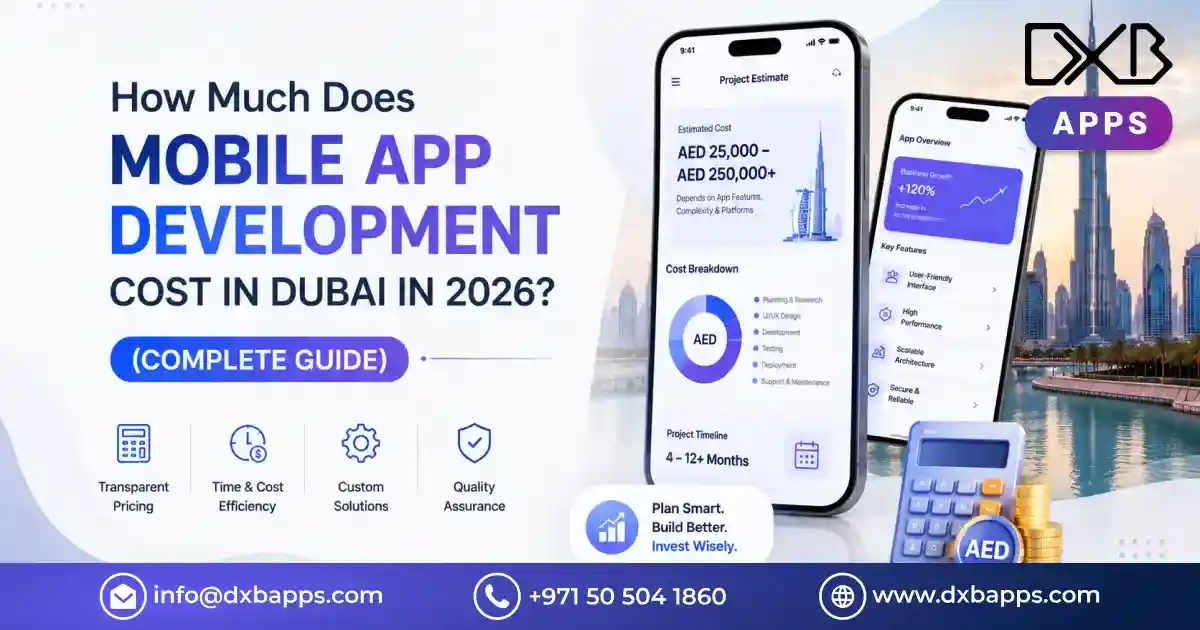
The cost of mobile app development Dubai depends significantly on the complexity and scope of the app’s features and functionalities. In the UAE, development costs can vary based on several factors like app features, platform choice, and backend infrastructure. Below is a detailed breakdown of app costs based on their complexity.
1. Basic Apps: AED 25,000 – AED 50,000
Basic apps are often simple and serve a specific, limited purpose. These apps usually do not require advanced features, and their focus is on delivering a clean, straightforward user experience.
Features Included:
- Simple UI/UX design
- Static content pages (e.g., contact information, basic user profile)
- Limited backend functionality (e.g., no real-time data synchronization or minimal data storage)
- Single-platform development (iOS or Android)
- Basic user authentication (if needed)
- Minimal third-party integrations (e.g., social media login, static map integration)
Example Apps:
- Small business apps for showcasing products or services
- Simple portfolio apps for professionals like photographers or artists
- Event apps providing details, dates, and venue info with a registration function.
Estimated Timeline: 2-3 months
Team: Small team (1-2 developers, 1 designer)
2. Medium Complexity Apps: AED 50,000 – AED 150,000
Medium complexity apps involve more advanced features, requiring a robust backend system and a more dynamic user experience. These apps are often designed for businesses that need more functionality but not at the enterprise level.
Features Included:
- Advanced UI/UX design with custom graphics
- User authentication (with social media logins, email verification)
- Real-time data sync (e.g., chat functionality, notifications)
- Backend database management (e.g., user data, transaction history)
- API integrations (e.g., payment gateways like Stripe or PayPal, location services like Google Maps)
- Multiple screens with more complex navigation and flow
- Integration of some third-party services, such as analytics tools (Google Analytics, Firebase)
Example Apps:
- E-commerce apps with basic product catalog, payment gateway integration, and cart features
- Fitness apps with personalized tracking, user data management, and basic integrations with third-party services (e.g., Google Fit, Apple Health)
- Event management apps that handle registration, ticketing, and user preferences.
Estimated Timeline: 4-6 months
Team: Medium-sized team (2-4 developers, 1-2 designers, 1-2 QA testers)
3. Enterprise Apps: AED 150,000 – AED 500,000+
Enterprise-level apps are large, complex applications typically designed for corporations, large businesses, or organizations that require advanced functionality, scalability, and security. These apps are built to handle high volumes of users and often include integration with multiple internal systems.
Features Included:
- Custom UI/UX design that aligns with corporate branding guidelines
- Advanced backend architecture for data management, processing, and security (e.g., integration with cloud services like AWS or Microsoft Azure)
- Real-time data processing (e.g., live chat, video conferencing, live tracking, geo-fencing)
- Enterprise integrations (e.g., CRM, ERP systems, inventory management, B2B functionalities)
- Multi-platform support (native development for both iOS and Android)
- High levels of security protocols, including encryption, multi-factor authentication (MFA), and compliance with GDPR and local UAE data protection laws
- Push notifications, custom analytics dashboards, integration with business intelligence tools
- Advanced user roles and permissions for enterprise use (e.g., admin panel for internal management)
Example Apps:
- Enterprise Resource Planning (ERP) systems for managing multiple aspects of a business (inventory, sales, HR, etc.)
- Custom CRM apps designed to streamline communication, sales, and customer support for businesses.
- B2B apps with contract management, real-time bidding systems, and advanced reporting tools.
Estimated Timeline: 6-12 months or more
Team: Large team (5-10 developers, 3-5 designers, 3-4 QA testers, 1-2 project managers, 1-2 business analysts)
Additional Breakdown of Mobile App Development Dubai Costs for Enterprise Apps
For enterprise-level apps, there are additional considerations that contribute to the high-end cost range (AED 150,000+). Here’s a more detailed look at what contributes to the higher end of the pricing spectrum:
- Backend and Server Infrastructure: Enterprise apps often require dedicated servers, cloud storage (e.g., Amazon S3), and database management systems (e.g., SQL Server, NoSQL databases like MongoDB). The cost of server hosting and maintenance can add significantly to the total.
- Security: Security is paramount for enterprise apps due to sensitive business data. Data encryption, firewalls, penetration testing, and mobile app compliance UAE with regional data protection laws like GDPR and the UAE Data Protection Law are crucial.
- Scalability: Enterprise apps need to be scalable to handle increased traffic and users as the business grows. This often involves building an app architecture with load balancing and auto-scaling capabilities.
- Ongoing Maintenance and Updates: Post-launch, enterprise apps require continuous support to manage server load, ensure security patches, and add new features. These apps also need regular updates to remain relevant in a rapidly evolving market.
| App Complexity | Estimated Cost (AED) | Features | Example |
|---|---|---|---|
| Basic Apps | AED 25,000 – AED 50,000 | Simple UI, static content, limited backend, single-platform (iOS/Android), minimal integrations. | Small business apps, event apps |
| Medium Complexity Apps | AED 50,000 – AED 150,000 | Custom UI/UX, real-time data sync, basic backend, payment gateway integration, third-party APIs (social media login, Google Maps). | E-commerce apps, fitness apps |
| Enterprise Apps | AED 150,000 – AED 500,000+ | Custom UI/UX, advanced backend infrastructure, multi-platform support, real-time features, enterprise integrations (CRM, ERP), security, scalability, compliance. | ERP systems, custom CRM, B2B apps |
Hidden Costs to Consider For Mobile App Development in Dubai
Several hidden costs can affect your app development budget:
- Third-Party API Integration: Services like Google Maps API, payment gateways (e.g., Stripe, PayPal), and social media logins can add costs based on API usage limits.
- App Marketing and Launch: App Store Optimization (ASO), ads, influencer collaborations, and promotional content will increase your budget in the UAE market.
- Security and Data Protection: Compliance with local regulations and data encryption, multi-factor authentication (MFA), and ensuring GDPR compliance are crucial, adding extra costs.
- Legal and Regulatory Fees: Budget for licenses, legal fees for terms of service and privacy policies, and compliance with UAE tech regulations.
- Ongoing Server and Hosting Costs: Cloud hosting or dedicated servers will incur continuous costs, depending on the app’s functionality.
ROI Expectations and Timeline
Timeline:
- Basic apps: 2-3 months
- Medium complexity apps: 4-6 months
- Enterprise apps: 6-12 months
ROI: Calculate ROI by considering Cost per Acquisition (CPA) and Lifetime Value (LTV) of each user. Apps with strong engagement, like in-app purchases or subscriptions, will generate higher ROI. Use tools like Google Analytics or Firebase to track performance.
Breakeven Point: Smaller apps may take 1-2 years to break even, while enterprise apps can take 3-5 years based on their features and monetization strategies.
How to Get Accurate Quotes from Expert Mobile App Developers?
Follow these tips to get accurate quotes for your app project:
- Provide Clear Specifications: Include app features, platform preferences, UI/UX design, and target audience.
- Set Clear Milestones: Outline project phases with specific deliverables.
- Understand the Pricing Model: Choose between fixed-price contracts or hourly rates based on your project's scope.
- Request Detailed Breakdown: Ask for a breakdown of development, testing, design, and deployment costs.
- Evaluate Developer Expertise: Ensure the developer has experience in the UAE market, Arabic localization, and compliance with local regulations.
Technologies and Frameworks for Advanced Mobile Apps in 2026
As we move further into 2026, mobile app development continues to evolve with the integration of new technologies and innovative frameworks that improve both user experience (UX) and developer efficiency. Below are some of the most popular technologies shaping the mobile development landscape:
1. Swift and SwiftUI for iOS
Swift, Apple’s powerful programming language, remains the dominant choice for iOS app development. Swift is known for its performance, safety, and modern syntax, making it ideal for building high-performance apps for iPhones, iPads, and Apple Watches.
SwiftUI is Apple's framework for UI design that simplifies the development of intuitive, responsive user interfaces across all Apple platforms. It uses a declarative syntax, allowing developers to easily create and maintain UI elements that automatically adjust to different screen sizes.
Key Benefits:
- Faster development cycle
- Seamless integration with Apple’s ecosystem
- Dynamic user interface updates with minimal code
- Support for dark mode, animations, and accessibility features
| Technology | Description | Key Benefits |
|---|---|---|
| Swift | Apple's programming language for iOS, iPadOS, macOS, watchOS, and tvOS development. Known for its performance and modern syntax. | - Faster development cycle - Seamless integration with the Apple ecosystem - Safe and performance-optimized |
| SwiftUI | A declarative framework for building user interfaces on Apple platforms. | - Minimal code for UI design - Automatic layout adjustments for different screen sizes - Built-in accessibility features |
2. Kotlin and Jetpack Compose for Android
Kotlin is Google’s preferred programming language for Android development, and its use has surged due to its concise syntax, null safety, and interoperability with Java.
Jetpack Compose is a modern UI toolkit that uses Kotlin to simplify UI development with a declarative approach. It enables developers to create responsive and expressive Android apps with less code, a more flexible layout system, and real-time UI changes.
Key Benefits:
- Native performance and rich user interfaces
- Unified codebase for UI and logic
- Better compatibility with Android Studio
- Extensive libraries for navigation, state management, and animations
| Technology | Description | Key Benefits |
|---|---|---|
| Kotlin | A modern programming language preferred by Google for Android app development, offering concise syntax and null safety. | - Increased productivity - Interoperable with Java - Robust and safe |
| Jetpack Compose | A UI toolkit for building Android UIs using Kotlin. Emphasizes a declarative approach to UI design. | - Less boilerplate code - Unified UI codebase - Real-time UI changes |
3. Flutter and React Native for Cross-Platform Development
Cross-platform development frameworks like Flutter and React Native have become highly popular for building apps that work seamlessly across both iOS and Android with a single codebase.
Flutter: Developed by Google, Flutter is a UI toolkit for building natively compiled applications from a single codebase. It allows for high-performance, visually rich apps, and supports a wide range of devices.
Key Benefits:
- Fast development with hot reload
- Expressive UIs with customizable widgets
- Native-like performance due to direct compilation
React Native: Created by Facebook, React Native uses JavaScript and React to create cross-platform apps. It allows developers to write components in JavaScript while still delivering performance that’s close to native apps.
Key Benefits:
- Large developer community
- Code reuse across iOS and Android
- Native modules support for improved performance
| Technology | Description | Key Benefits |
|---|---|---|
| Flutter | An open-source UI toolkit from Google for building natively compiled applications from a single codebase for mobile, web, and desktop. | - Hot reload for fast development - Highly customizable widgets - Native-like performance |
| React Native | A JavaScript framework for building mobile apps using React. Ideal for creating cross-platform apps with near-native performance. | - Code reuse across iOS and Android - Large developer community - Native modules support for optimal performance |
4. Backend Technologies and Cloud Services
With the increasing demand for real-time functionality, scalability, and data storage, backend technologies and cloud services have become integral to modern mobile apps.
Backend Technologies:
- Node.js remains one of the most popular choices for building scalable backend services, especially when real-time data processing is needed.
- Django and Flask (Python frameworks) are ideal for API development and data-driven applications.
- Ruby on Rails is preferred for rapid prototyping and building feature-rich applications.
Cloud Services:
- AWS and Google Cloud are leading cloud platforms, providing scalable hosting, storage, and serverless architectures (e.g., AWS Lambda, Google Functions).
- Firebase by Google offers real-time database, authentication, and cloud messaging, making it an excellent choice for mobile app backends.
- Microsoft Azure provides cloud hosting, data storage, and machine learning services, suitable for enterprise-level mobile app solutions.
| Technology | Description | Key Benefits |
|---|---|---|
| Node.js | A JavaScript runtime built on Chrome's V8 engine for building scalable, fast backends. | - Non-blocking event-driven architecture - Ideal for real-time apps - Extensive package ecosystem |
| Django | A high-level Python web framework for building robust backend services with built-in security features. | - Rapid development - Scalable and secure - Extensive documentation |
| Firebase | A Google-backed platform that provides tools for app backend services like real-time databases, authentication, and cloud messaging. | - Real-time data sync - Backend-as-a-Service (BaaS) - Seamless integration with Google products |
| AWS | Amazon's cloud platform offering extensive backend services, including cloud storage, database management, and serverless architectures. | - Scalability and flexibility - Global infrastructure - Wide range of services for all app needs |
5. AI and ML Integration Trends
Artificial Intelligence (AI) and Machine Learning (ML) have become a driving force in app development, especially as they enhance personalized user experiences, predictive capabilities, and automation. The integration of AI and ML in mobile apps offers numerous advantages:
- AI-Powered Chatbots: Chatbots and virtual assistants are widely integrated into apps to provide instant customer support and user interaction.
- Personalized Recommendations: AI is increasingly used for personalized content and product recommendations based on user behavior, location, and preferences.
- Predictive Analytics: Apps that analyze user data in real time and predict future behaviors (e.g., sales forecasting, trend analysis).
- Image and Voice Recognition: Technologies like Google Vision API and Apple’s CoreML are allowing apps to process images, videos, and speech for enhanced user interaction and security features (e.g., face recognition).
| Technology | Description | Key Benefits |
|---|---|---|
| AI-Powered Chatbots | Intelligent systems integrated into apps to provide automated customer support and user interaction. | - 24/7 support - Reduced response times - Improved customer experience |
| Personalized Recommendations | AI algorithms analyze user behavior and preferences to offer tailored suggestions. | - Enhanced user engagement - Increased sales (for e-commerce apps) - Improved user retention |
| Image and Voice Recognition | AI technologies like Google Vision API and CoreML help recognize images and speech, improving user interactions. | - Enhanced security (e.g., face recognition) - Convenient app navigation - Automatic content categorization |
6. Emerging Technologies: AR/VR, Blockchain, IoT
Augmented Reality (AR) and Virtual Reality (VR) are transforming industries such as gaming, e-commerce, and education. AR allows users to experience immersive content within their real-world environment, while VR takes users into a completely simulated world.
ARKit (iOS) and ARCore (Android) enable developers to integrate AR experiences directly into apps, revolutionizing shopping experiences, virtual try-ons, and interactive education.
Blockchain is gaining traction for building decentralized apps (DApps) that enhance security, transparency, and trust in areas such as finance, supply chain, and digital identity. Blockchain-based apps can ensure immutable transactions and are increasingly used in smart contracts.
Internet of Things (IoT) continues to grow, connecting everyday devices to the internet. Mobile apps are often used as the central hub to control IoT devices, such as smart home systems, wearable tech, and connected vehicles.
Technologies like MQTT, Bluetooth Low Energy (BLE), and Zigbee are frequently integrated to enable real-time device communication and data synchronization.
| Technology | Description | Key Benefits |
|---|---|---|
| Augmented Reality (AR) | AR overlays digital content on the physical world. Frameworks like ARKit (iOS) and ARCore (Android) make it easier to integrate AR into apps. | - Immersive shopping experiences - Virtual try-ons - Interactive education |
| Virtual Reality (VR) | VR immerses users in a completely virtual environment. Mobile apps for gaming, education, and training increasingly use VR. | - Highly engaging user experience - Applications in education and remote work - Enhanced entertainment |
| Blockchain | Decentralized systems used for secure transactions, smart contracts, and digital identity verification. | - Enhanced security - Transparent and immutable data - Ideal for financial apps and supply chain management |
| Internet of Things (IoT) | IoT connects physical devices to the internet, enabling mobile apps to control smart home systems, wearables, and connected vehicles. | - Real-time data synchronization - Remote device control - Smart homes and healthcare innovations |
How to Choose the Right App Development Company in Dubai?
Selecting the right app development partner in Dubai is crucial to your app’s success. With numerous options available, ensuring that the company you choose has the right expertise, experience, and approach is vital for achieving your business goals.
This guide outlines key considerations for making an informed decision when choosing a development partner, including potential red flags, essential questions to ask, portfolio evaluation, contract terms, and expectations for post-launch support.
Avoiding Common Red Flags
When selecting an app development company, it's important to recognize potential red flags early to avoid poor outcomes:
- Unrealistic Promises: Beware of companies offering exceptionally low prices or quick delivery times. Quality app development takes time and resources, and cutting corners can compromise the result.
- Lack of Transparency: If the company is vague about project timelines, costs, or communication methods, it’s a sign of potential issues.
- Insufficient Experience: Ensure the company has experience in the UAE market and understands local regulations and user behavior, including Arabic and English interface requirements.
- Poor Reviews: Negative client feedback, especially concerning project delivery or app quality, is a significant red flag.
Key Questions to Ask Potential Development Partners
Asking the right questions helps assess whether an app development company UAE is the right fit for your project:
- What is your experience with developing apps for the UAE market?
- Can you share case studies or references from similar projects?
- What is your approach to UI/UX design, especially considering cultural factors?
- How do you handle project timelines and manage milestones?
- What technologies do you specialize in (e.g., Swift, Kotlin, Flutter, React Native)?
- What does post-launch support look like?
Evaluating Portfolios
A strong portfolio demonstrates a company’s capabilities and expertise. Consider these evaluation criteria:
- Industry Relevance: Does the company have experience in your industry (e.g., e-commerce, finance, healthcare)?
- App Quality: Assess the quality of their apps based on design, functionality, and user experience. Look for cross-platform solutions if relevant.
- User Reviews and Ratings: Check app reviews in the App Store or Google Play to gauge user satisfaction and app performance.
- Diversity of Clients: A diverse client portfolio indicates versatility and the ability to adapt to different requirements.
Understanding App Development Agreements
The development agreement sets expectations and protects both parties. Key elements to understand include:
- Scope of Work (SoW): Ensure the SoW is detailed, covering features, timelines, and deliverables to avoid scope creep.
- Payment Terms: Establish clear payment milestones tied to project phases (design, development, testing, launch).
- Intellectual Property: Ensure you retain full ownership of the app and its intellectual property upon project completion.
- Confidentiality: A confidentiality clause safeguards your business idea and sensitive data.
- Performance Standards: Define quality standards and how issues will be addressed post-launch.
Post-Launch Support and Maintenance
Effective post-launch support ensures your app remains functional, secure, and up to date. Key post-launch considerations include:
- Bug Fixes and Updates: Ensure the company offers ongoing bug fixes and security updates as part of their support package.
- App Monitoring: Regular monitoring of app performance and user behavior ensures prompt issue resolution.
- User Feedback Integration: The company should be able to incorporate feedback and improve the app’s features based on real-world usage.
- Maintenance Fees: Clarify ongoing maintenance costs, including updates and server hosting.
Industry-Specific Mobile App Development
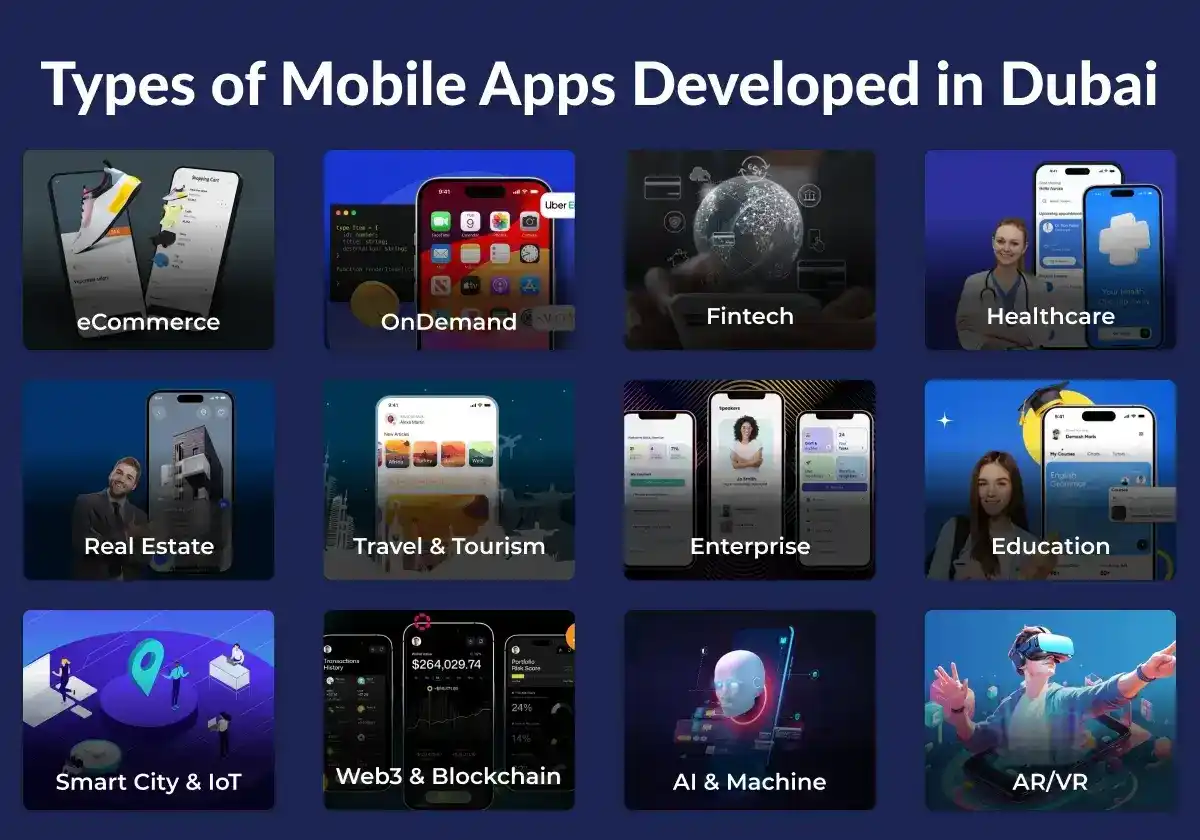
In 2026, mobile app development cost Dubai continue to be tailored to specific industries, creating innovative solutions that meet unique business needs. From healthcare to e-commerce, each industry has its own set of requirements and challenges, which need to be addressed through custom app development.
Below, we explore some of the key sectors that benefit from specialized mobile applications, highlighting trends, challenges, and key features that drive success.
1. Healthcare and Telemedicine Apps
Healthcare app development is booming, especially in the wake of the global pandemic. Telemedicine and digital health apps enable remote consultations, patient monitoring, and seamless access to healthcare services, reducing the need for in-person visits.
Key Features:
- Real-time video consultations and chat-based communication
- Appointment scheduling and digital prescriptions
- Remote patient monitoring with integration to wearable devices
- Health data management (e.g., EMR, EHR)
- Integration with health insurance providers and billing systems
Trends:
- Growing demand for AI-driven diagnostics, personalized healthcare, and mental health support apps
- Compliance with HIPAA and GDPR for secure data handling
- Telemedicine platforms integrating with wearable health tech (e.g., smartwatches, fitness trackers)
2. E-Commerce and Marketplace Platforms
E-commerce apps have become a central part of retail businesses, allowing consumers to shop conveniently from anywhere. Whether building a single-brand app or a multi-vendor marketplace, these apps must offer a seamless and secure shopping experience.
Key Features:
- User-friendly product catalogs and search functionality
- Integrated payment gateways (e.g., PayPal, Stripe)
- Shopping cart, wishlist, and checkout functionality
- Order tracking and customer reviews
- Push notifications for promotions and discounts
- Product recommendations driven by AI and machine learning
Trends:
- AR (Augmented Reality) for virtual product try-ons (e.g., makeup, furniture)
- Social commerce features for selling directly via Instagram or Facebook
- Enhanced personalization using AI to suggest products based on browsing habits
3. FinTech and Mobile Banking Solutions
The FinTech industry is seeing explosive growth, with more businesses seeking mobile apps to manage everything from personal finance to business banking. These apps offer secure transactions, real-time money transfers, and investment management.
Key Features:
- Secure payment gateways with multi-factor authentication (MFA)
- Account management, bill payments, and transaction history
- Investment tracking and portfolio management tools
- Real-time notifications for transactions and account activity
- Peer-to-peer (P2P) payments and mobile wallets
Trends:
- Integration with blockchain for secure, decentralized transactions
- Rise in neo-banking apps offering alternative banking solutions
- AI-powered fraud detection and chatbots for customer service
4. Food Delivery and Logistics Apps
Food delivery apps and logistics apps have seen significant demand in recent years. With users expecting quick, reliable, and efficient service, businesses need apps that streamline ordering, delivery, and logistics management.
Key Features:
- Real-time order tracking and driver tracking
- Multiple payment methods and wallet integration
- Push notifications for order updates and offers
- Geo-location tracking for delivery drivers and restaurants
- Customer reviews and feedback integration
Trends:
- On-demand delivery apps integrating with AI for route optimization
- Integration with GPS navigation for real-time delivery tracking
- Sustainability features like eco-friendly packaging and reduced delivery times
5. Education and E-Learning Platforms
With e-learning becoming a vital part of education worldwide, mobile apps are essential for creating engaging, interactive, and scalable learning environments for students, educators, and institutions.
Key Features:
- Video conferencing and live lectures
- Course management, quizzes, and exam proctoring
- Interactive learning tools like gamification and virtual classrooms
- Student progress tracking and certifications
- Push notifications for class reminders and new content
Trends:
- Integration of AI-driven learning tools for personalized education
- Gamification elements to engage students
- Virtual Reality (VR) and Augmented Reality (AR) to enhance immersive learning experiences
6. Real Estate and Property Management
The real estate sector has embraced mobile apps for property management, virtual tours, and seamless transactions between buyers, sellers, and agents. These apps simplify complex processes, increasing efficiency and improving user experiences.
Key Features:
- Property search and filters based on location, price, and amenities
- Real-time availability and virtual tours
- In-app messaging and document sharing for property transactions
- Payment gateway integration for rent or purchase transactions
- Agent management and property listing features
Trends:
- Use of Augmented Reality (AR) to give users virtual property tours
- Integration with smart home technology to control properties remotely
- Blockchain for transparent property transactions and land registries
Legal & Regulatory Considerations of Mobile App Development in Dubai
Adhering to legal and regulatory requirements is crucial for any mobile app development company in the UAE. Let's explore why this is essential:
1. Data Privacy & Protection
Dubai enforces strict regulations to safeguard user data and personal information. Under the UAE’s Data Protection Law, businesses must handle personal data with the utmost care, ensuring privacy and compliance with established standards.
| Consideration | Action Needed |
|---|---|
| Serious fines and legal action for non-compliance | Ensure compliance with UAE’s Data Protection Law to avoid legal penalties and hefty fines. Regularly consult with legal experts to stay updated on regulations. |
| Routine audits and updates | Conduct regular data audits to ensure data handling procedures align with legal standards. Update privacy policies and procedures as laws evolve. |
| Data security practices | Implement advanced security protocols (e.g., encryption, multi-factor authentication) to protect sensitive user data. |
| Employee training on data protection | Provide ongoing training for employees on data privacy laws and best practices for secure data handling. |
| Data breach protocols | Develop a data breach response plan and ensure it’s tested periodically. Notify authorities and users promptly in case of a breach. |
2. Intellectual Property Rights
The code, design, and content of your app are considered intellectual property (IP). Safeguarding these assets is essential to prevent unauthorized use, duplication, or infringement. Protecting your IP ensures that your app’s unique elements remain secure and under your ownership.
| Consideration | Action Needed |
|---|---|
| Financial damages and legal issues from IP infringement | Work closely with legal experts specializing in intellectual property (IP) to ensure proper protection and compliance with IP laws. |
| Securing IP Rights | Register your app’s trademarks, copyrights, and patents to safeguard its design, code, and content. |
| IP management and enforcement | Implement robust IP management strategies, including regular monitoring for infringement and clear enforcement policies to address violations. |
| Employee agreements and confidentiality | Ensure that employees and contractors sign non-disclosure agreements (NDAs) and IP assignment agreements to protect app-related IP. |
| Global IP protection | For apps targeting international markets, consider registering IP in other jurisdictions to protect your app globally. |
3. Regulatory Compliance
Mobile apps must comply with industry-specific regulations, particularly in sectors such as e-commerce, healthcare, and finance. In Dubai, adhering to these legal and regulatory requirements is essential for both the creation and operation of mobile applications. Maintaining compliance not only demonstrates your company’s commitment to security and integrity but also helps you avoid potential legal issues.
| Consideration | Action Needed |
|---|---|
| Violation of rules may result in app removal and fines | Regularly review app store guidelines and industry regulations to stay informed of updates or changes. |
| Need for regular updates to maintain compliance | Implement a robust update process to ensure your app complies with evolving regulations. |
| Risk of non-compliance | Establish internal policies and procedures for app development and updates to ensure ongoing adherence to regulations. |
| Potential impact of non-compliance on app reputation | Monitor changes in industry-specific regulations and legal standards to proactively address compliance issues. |
Conclusion
In 2026, mobile app development Dubai continues to thrive, driven by technological advancements and an increasingly digital-first business environment. From design and development to post-launch support, businesses must adopt a comprehensive approach to ensure their apps are functional, secure, and user-friendly. Key considerations such as regulatory compliance, data protection, intellectual property rights, and industry-specific requirements are essential for navigating the complexities of the UAE market.
Choosing the best mobile app development company in Dubai, understanding legal frameworks, and staying updated on the latest technologies are critical to delivering successful, high-performance apps. By focusing on these factors, businesses can ensure iOS and Android app development Dubai meets both user expectations and legal requirements, positioning themselves for long-term success in the competitive Dubai market.
For a professional, tailored approach to app development, consider reaching out for a free consultation with DXB APPS, where our team can help turn your app idea into reality.

FAQS
How much does mobile app development cost in Dubai in 2026?
In 2026, the cost of mobile app development in Dubai typically ranges from AED 25,000 to AED 50,000 for basic apps, AED 50,000 to AED 150,000 for medium-complexity apps, and AED 150,000 to AED 500,000+ for enterprise-level or feature-rich apps. The actual cost depends on factors such as the app's scope, features, platforms (iOS/Android), backend complexity, design requirements, and any integrations like payment gateways or APIs.
How long does it take to develop a mobile app in Dubai from idea to launch?
The development time for a mobile app in Dubai typically ranges from 2-3 months for basic apps, 4-6 months for medium-complexity apps, and 6-12 months or more for enterprise-level apps. The timeline depends on the app’s complexity, features, platform (iOS/Android), and testing requirements.
What factors affect the cost of mobile app development in Dubai?
The cost of mobile app development in Dubai is influenced by factors such as the app's complexity, required features, platform choice (iOS/Android), UI/UX design, backend infrastructure, third-party integrations, and the development team's expertise. Additionally, post-launch support and maintenance can also affect the overall cost.
What are the legal requirements for launching a mobile app in Dubai?
Launching a mobile app in Dubai requires compliance with data protection laws, securing intellectual property rights, and adhering to industry-specific regulations (e-commerce, healthcare, finance). Developers must follow app store guidelines, content restrictions, and consumer protection laws, while ensuring proper user consent and data security.
Should I choose iOS, Android, or cross-platform app development in Dubai?
Choosing between iOS, Android, or cross-platform development in Dubai depends on your target audience, budget, and features. iOS is ideal for a premium user base, Android offers a broader reach, and cross-platform development is a cost-effective solution for both platforms, though it may sacrifice some performance and customization.
Can AI be integrated into mobile apps developed in Dubai?
Yes, AI can be integrated into mobile apps developed in Dubai. AI technologies such as machine learning, natural language processing (NLP), and computer vision can enhance app functionality with features like personalized recommendations, chatbots, voice assistants, and image recognition. Integrating AI can improve user experience and enable advanced capabilities, making apps smarter and more interactive.
Is mobile app development in Dubai worth the investment in 2026?
Yes, mobile app development in Dubai is worth the investment in 2026. With a growing digital economy, high smartphone usage, and demand across industries like e-commerce, healthcare, and FinTech, apps can offer strong ROI, increased market reach, and enhanced customer engagement.
How do I choose the right mobile app development company in Dubai?
To choose the right mobile app development company in Dubai, look for a team with proven UAE market experience, a strong portfolio and client reviews, clear communication, and expertise in the technologies your project needs. Ask about their development process, post‑launch support, and compliance with local regulations. A good partner should provide transparent pricing, detailed timelines, and a structured approach to design, development, testing, and maintenance.
What industries benefit most from mobile app development in Dubai?
Industries that benefit most from mobile app development in Dubai include e-commerce, healthcare, FinTech, logistics, education, and real estate. With Dubai’s growing digital economy, these sectors leverage mobile apps for enhanced customer engagement, efficiency, convenience, and innovative services, driving business growth and improving user experience in a competitive market.
What types of pre-launch testing are required before launching a mobile app in Dubai?
Before launching a mobile app in Dubai, key pre-launch tests include functional, usability, performance, and security testing to ensure proper functionality, user experience, and data protection. Additionally, compatibility testing for devices, localization testing for Arabic and English, and compliance testing with local regulations and app store guidelines are essential for a successful launch.
Can I update my app after launch?
Yes, you can update your app after launch. Regular updates are essential for adding new features, fixing bugs, improving performance, and ensuring compatibility with the latest iOS or Android versions. Updates also help maintain security, address user feedback, and comply with changing regulations or app store requirements.